
Cozy Minimalist Living Room
Learn more about manual excerpts↗
Transforming your lounge for Eid is not about stuffing every corner with decorations or chasing trends that look impressive for five minutes online. Most Eid spaces fail because they confuse luxury with excess. True elegance comes from balance, warmth, layered textures, thoughtful lighting, and a space that actually feels welcoming when guests sit down. A refined Eid lounge should encourage conversation, comfort, and atmosphere while still feeling visually polished enough for memorable celebrations and beautiful Pinterest-worthy moments.The best Eid lounges combine timeless materials, cozy textiles, ambient lighting, and intentional styling choices that feel elevated without becoming overwhelming. Neutral palettes, sculptural decor, warm metallic accents, soft candlelight, and carefully layered furniture arrangements create a sophisticated environment that feels both festive and relaxing. These elegant Eid lounge styling tips focus on realistic luxury, cozy editorial-inspired interiors, and high-end details that make your home feel warm, inviting, and beautifully curated throughout the celebration season.
Soft Beige Serenity
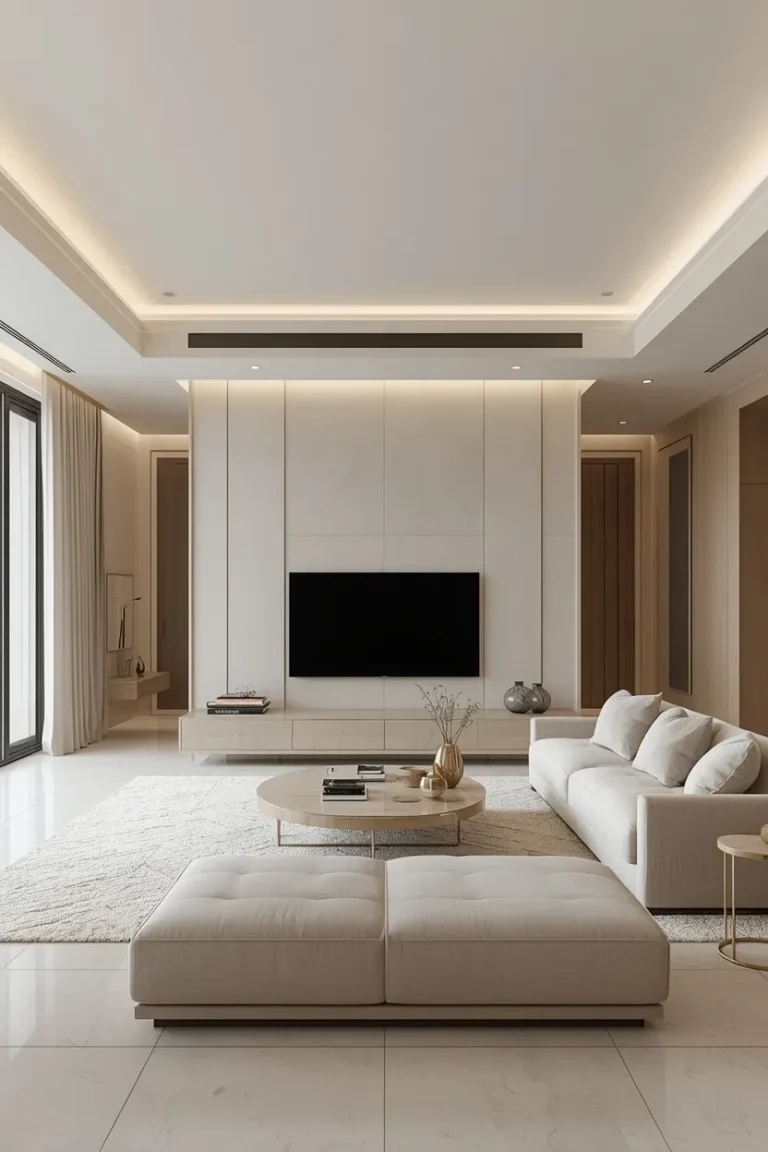
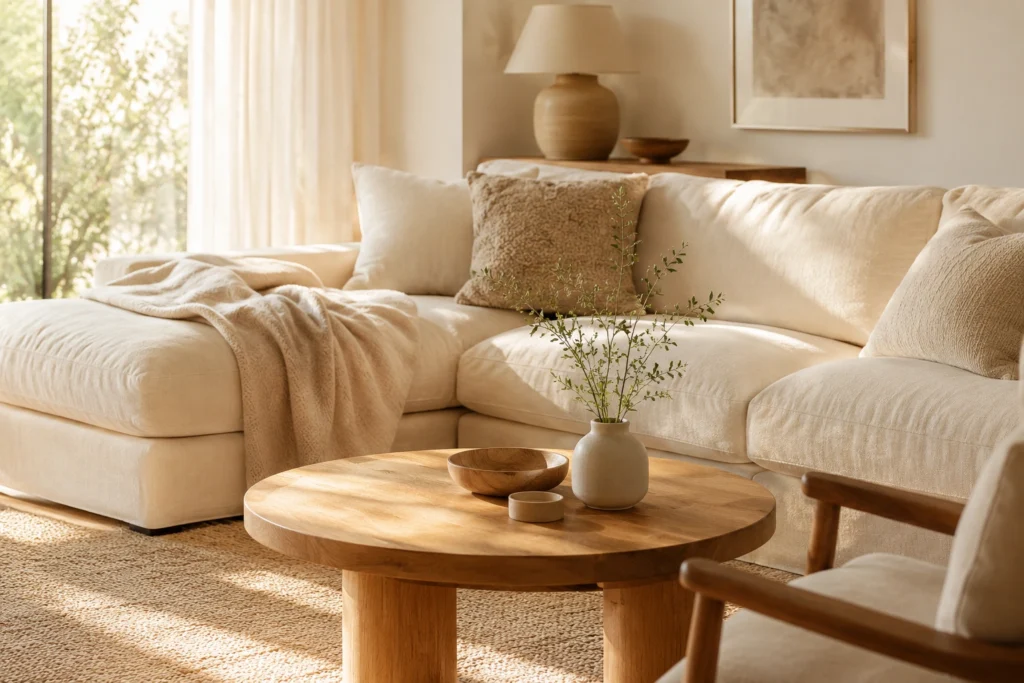
A soft beige palette instantly creates a calm and welcoming minimalist living room without making the space feel cold or empty. Focus on layered textures instead of excessive decor by combining linen upholstery, boucle cushions, woven baskets, and natural oak finishes. A low-profile sofa paired with a simple coffee table keeps the layout visually open while still feeling warm and comfortable. Warm daylight filtering through sheer curtains adds softness and depth to the entire room.Minimalism works best when every item feels intentional rather than decorative clutter. Use a neutral area rug with subtle texture to ground the room while maintaining a clean aesthetic. Avoid glossy finishes or oversized statement furniture that can overpower the cozy atmosphere. Small ceramic vases, a single branch arrangement, and warm ambient lighting create personality without disrupting the simplicity. The result feels airy, peaceful, and highly Pinterest-worthy without looking staged or artificial.
Japandi Warmth Corner
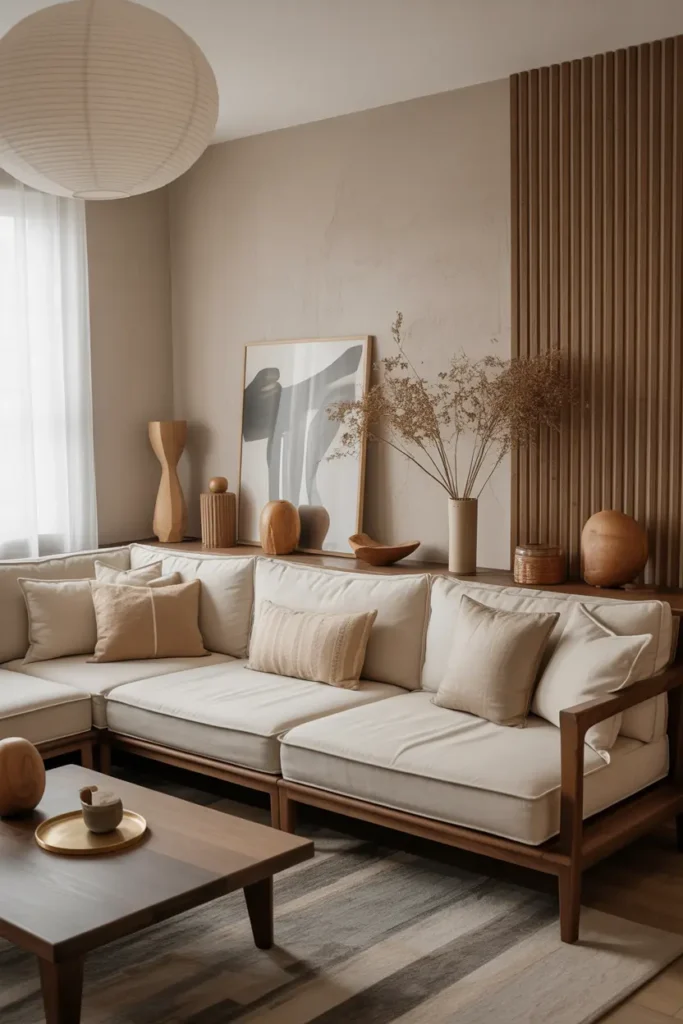
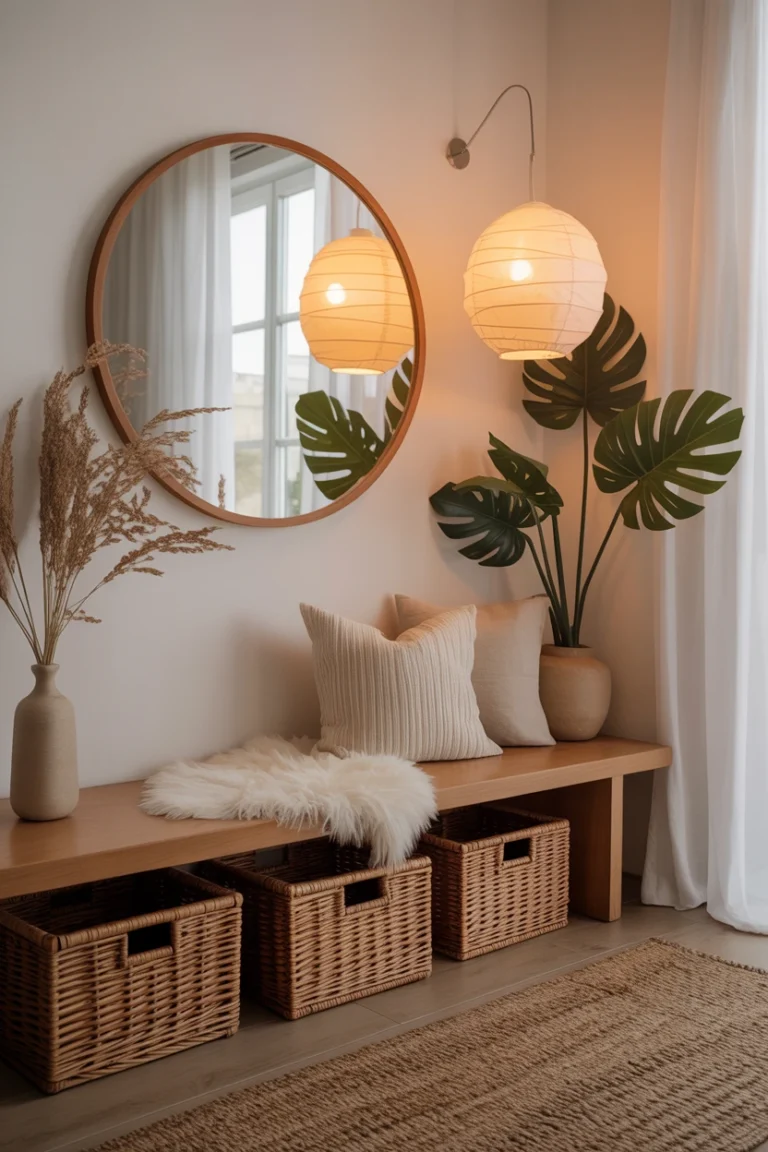
Japandi interiors combine Japanese simplicity with Scandinavian warmth, creating one of the most timeless cozy minimalist living room styles. Choose low wooden furniture with clean silhouettes and pair it with soft neutral fabrics to maintain visual balance. A muted color palette featuring cream, walnut, taupe, and soft clay tones creates a calming environment that feels both sophisticated and deeply relaxing. The room should feel grounded, uncluttered, and naturally inviting rather than overly styled.Texture becomes the defining feature in this design approach. Plaster walls, woven rugs, linen drapery, and handcrafted ceramics add warmth while preserving minimalism. Instead of filling shelves with decorative objects, display only a few meaningful pieces that enhance the peaceful atmosphere. Soft paper lantern lighting or warm wall sconces create a gentle glow during evenings. This style succeeds because it values simplicity while still feeling emotionally warm and livable for everyday comfort.
Earth Tone Retreat
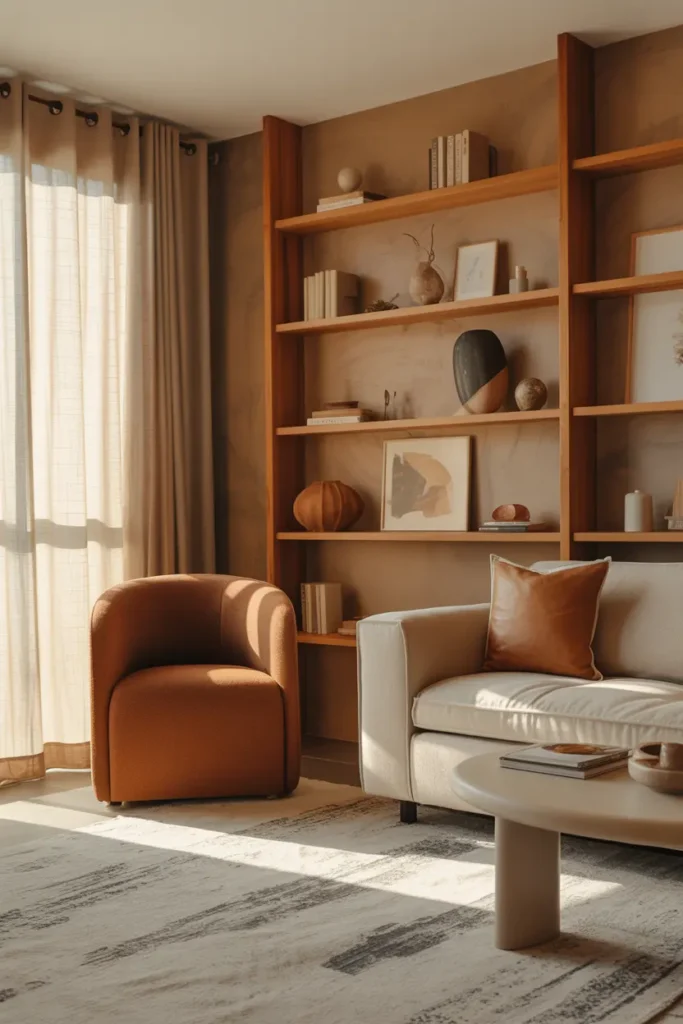
Earth tones instantly make minimalist interiors feel warmer and more grounded. A combination of sandy beige, muted brown, clay, and warm caramel creates visual depth without overwhelming the space. Use a comfortable neutral sofa as the centerpiece and introduce earthy accents through pillows, artwork, or textured throws. Wooden shelving and handmade ceramics help maintain a natural atmosphere that feels calming and organic rather than trendy or over-designed.The key to making this palette work is restraint. Too many dark earthy colors can make the room feel heavy instead of cozy. Balance richer tones with light walls, airy curtains, and soft natural lighting to keep the environment visually open. Layering textures such as boucle fabric, woven baskets, and matte pottery gives the room character without adding clutter. The final result feels warm, peaceful, and effortlessly elegant for modern minimalist living.
Window-Flooded Minimalism
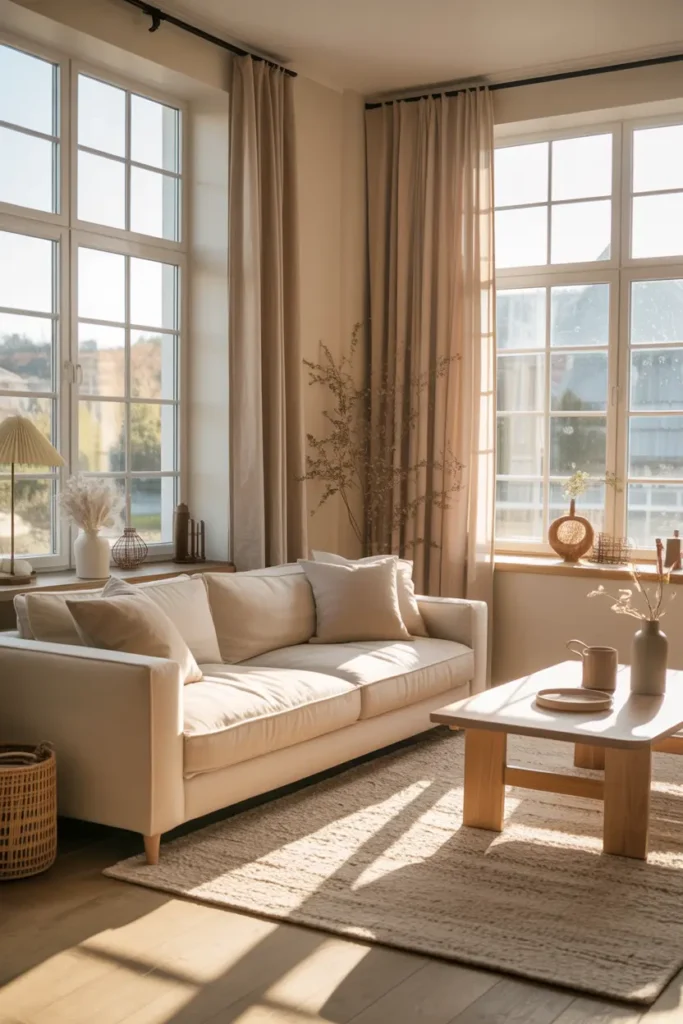
Natural light can completely transform a minimalist living room from sterile to deeply inviting. Large windows paired with sheer curtains create a bright and breathable atmosphere that highlights every texture within the space. A cream sofa, light wood furniture, and soft woven textiles help reflect sunlight naturally, making the room feel larger and more peaceful. Keeping the decor minimal allows the changing daylight to become part of the room’s visual character.Avoid overcrowding window areas with bulky furniture or excessive accessories. Instead, let the openness become the focal point of the room. Add warmth through textured rugs, soft cushions, and natural wood finishes that glow under sunlight. A few carefully chosen decorative elements such as a ceramic vase or dried branches provide enough personality without creating visual noise. The entire space feels calm, elevated, and perfectly aligned with modern Pinterest-inspired minimalism.
Cream and Walnut Harmony
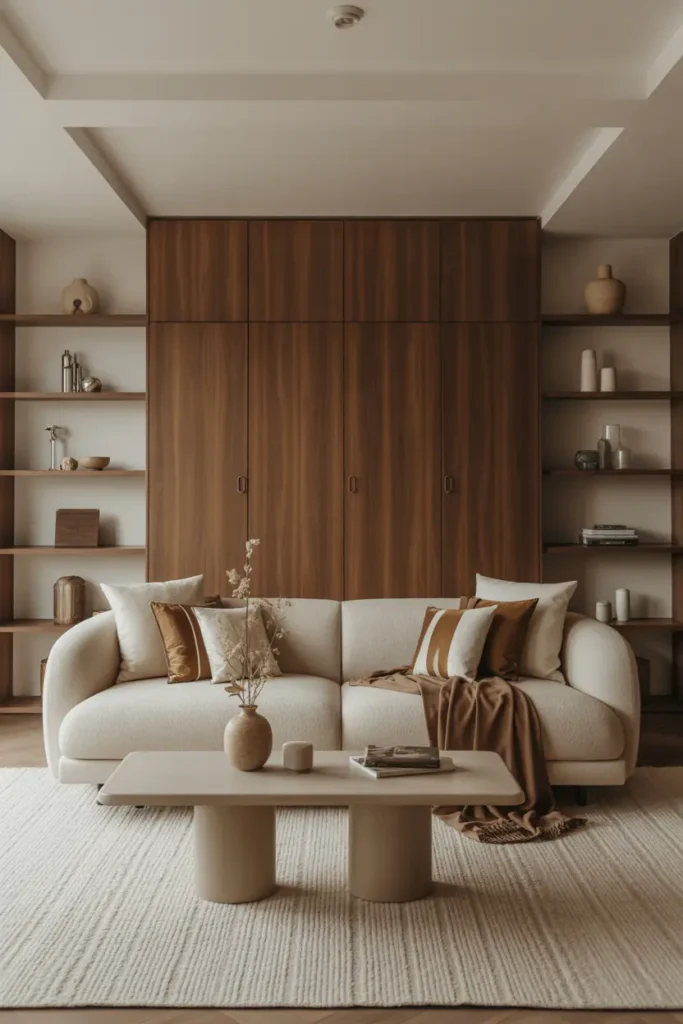
Cream and walnut create one of the strongest combinations for a cozy minimalist living room because the contrast feels warm instead of dramatic. Soft cream upholstery keeps the room bright while rich walnut tones add visual depth and sophistication. A balanced mix of these materials creates a luxurious atmosphere without relying on excessive decor or trendy accents. The room feels timeless, comfortable, and refined while still maintaining a simple aesthetic.Focus on clean-lined furniture with subtle curves to avoid harshness in the overall design. Walnut shelving, coffee tables, or sideboards introduce richness without overwhelming the neutral palette. Use soft rugs, linen curtains, and warm lighting to soften the darker wood elements and maintain coziness. Minimal wall art and uncluttered surfaces help preserve the calm feeling that minimalist interiors require. The finished space feels curated yet highly livable for daily relaxation.
Small Space Cozy Minimalism
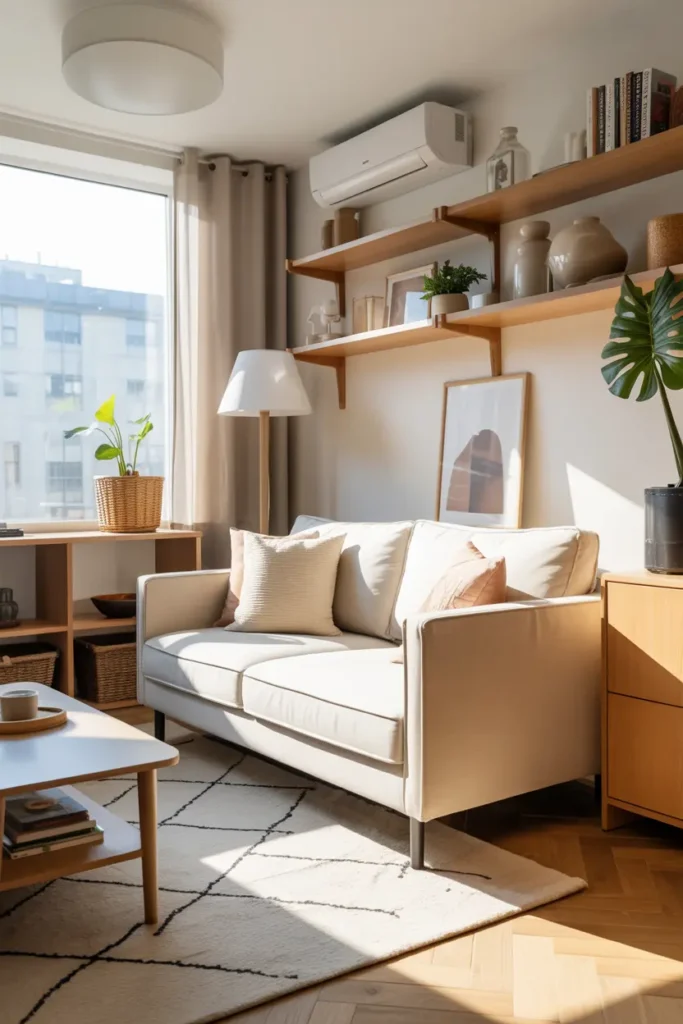
A small living room benefits greatly from minimalist styling because clutter instantly makes compact spaces feel stressful. Use multifunctional furniture like storage ottomans or slim-profile coffee tables to maximize functionality without overcrowding the room. A light neutral palette visually expands the area while layered textures keep the environment cozy and welcoming. Floating shelves instead of bulky cabinets preserve openness and allow the room to breathe naturally.The biggest mistake in small minimalist spaces is making them too empty or cold. Introduce warmth through soft fabrics, warm wood tones, and ambient lighting to create balance. Keep decorative objects minimal but meaningful so the room still feels personal. Mirrors can reflect natural light and increase the feeling of spaciousness without adding visual clutter. The goal is a compact room that feels peaceful, stylish, and surprisingly comfortable despite limited square footage.
Linen Layered Lounge
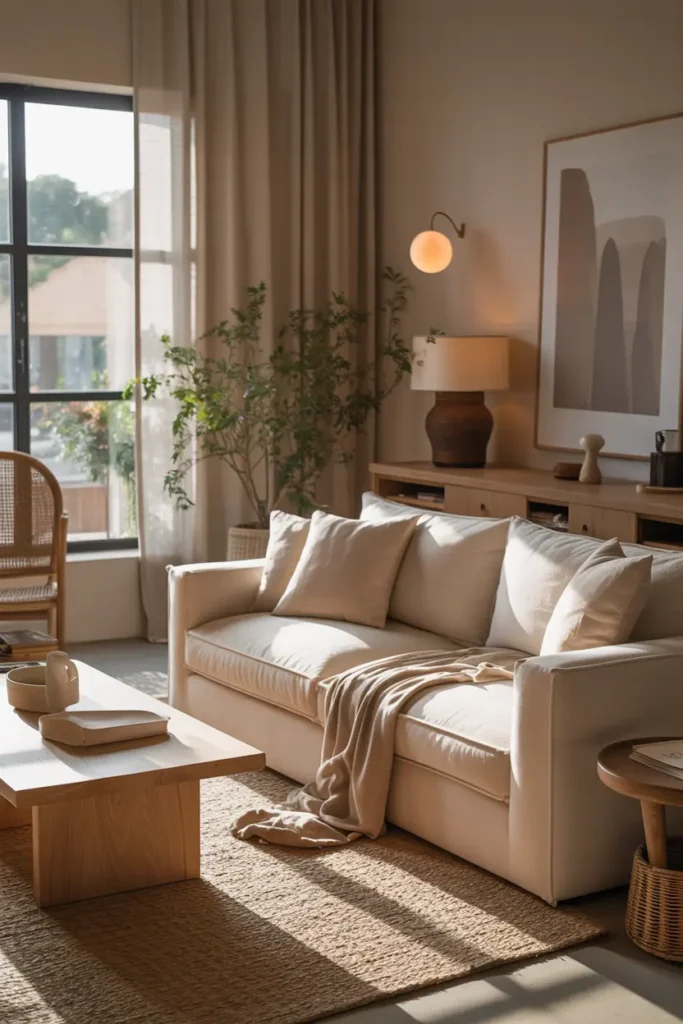
Linen is one of the best materials for creating a cozy minimalist living room because it introduces softness and movement naturally. Wrinkled linen curtains, slipcovered sofas, and textured cushions make the space feel relaxed instead of perfectly staged. Neutral linen fabrics pair beautifully with warm wood finishes and soft lighting, creating an environment that feels calm and effortless. The room should appear comfortable enough for everyday living rather than resembling a showroom.Balance the softness of linen with structured minimalist furniture to avoid making the room look overly casual. A simple oak coffee table or streamlined shelving keeps the aesthetic grounded and visually clean. Stick to warm neutral tones like cream, oat, sand, and beige for consistency throughout the space. Minimal decorative pieces and open surfaces allow the textures themselves to become the visual focal point. The result feels organic, elegant, and genuinely inviting.
Minimalist Fireplace Comfort
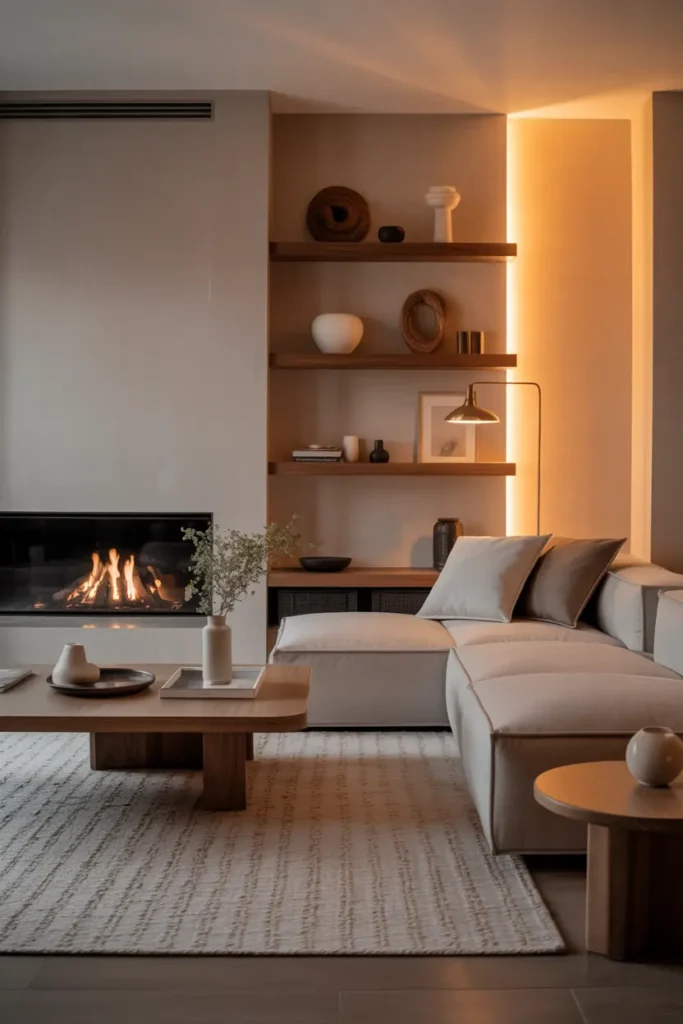
A fireplace naturally becomes the emotional center of a cozy minimalist living room when styled correctly. Instead of adding excessive mantel decor, keep the area simple with subtle ceramics, neutral artwork, or a single organic branch arrangement. A comfortable sectional facing the fireplace creates an intimate seating arrangement perfect for relaxed evenings. Warm ambient lighting enhances the softness of the room while preserving a clean minimalist atmosphere.Avoid heavy traditional styling that can make minimalist spaces feel visually crowded. Choose streamlined fireplace designs with simple textures such as plaster, stone, or smooth concrete. Layer the surrounding space with cozy fabrics and warm wood furniture to prevent the room from appearing cold. The combination of firelight, natural textures, and restrained decor creates a balanced environment that feels luxurious, calming, and highly photogenic for Pinterest-inspired interiors.
Organic Modern Simplicity
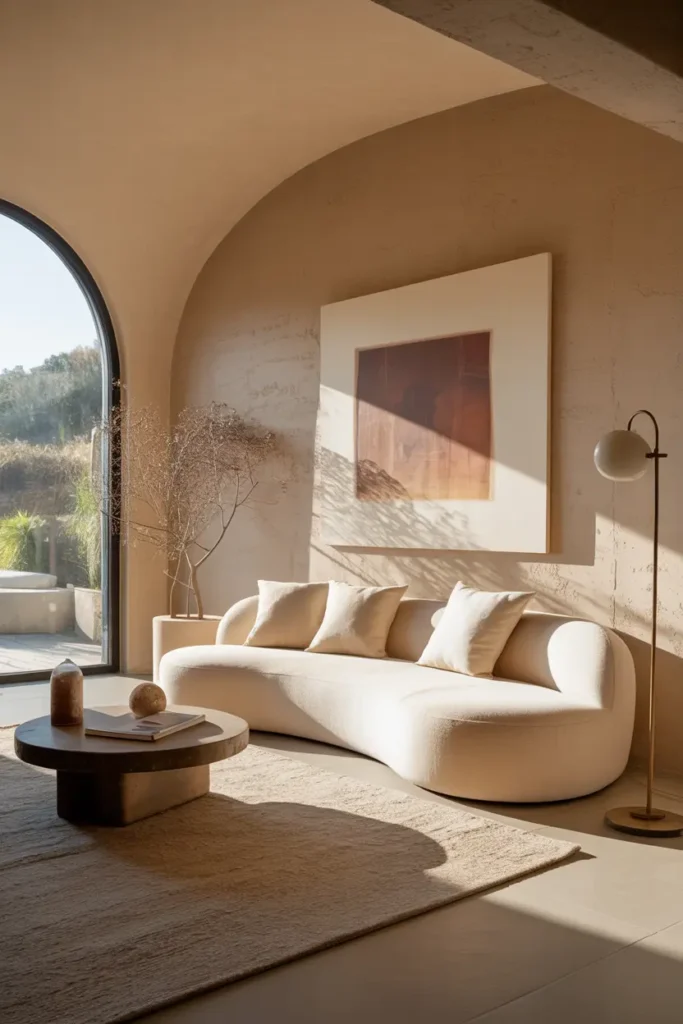
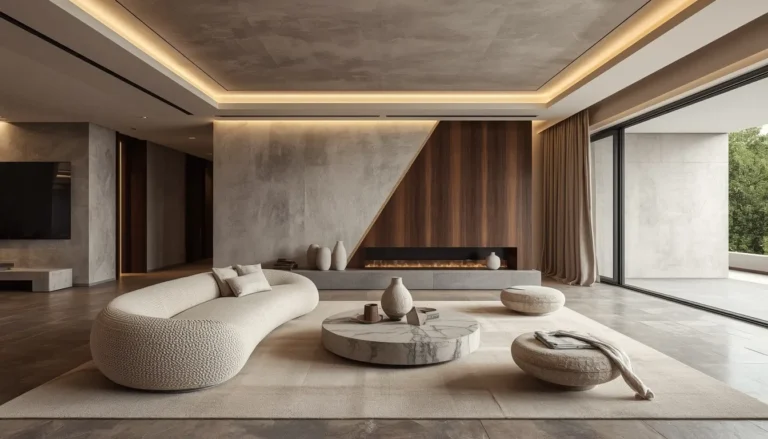
Organic modern interiors soften minimalism through natural shapes and earthy materials. Curved furniture, textured plaster walls, and handcrafted decor create warmth while maintaining simplicity. The space should feel calm and connected to nature rather than rigid or overly modern. Neutral colors mixed with organic textures help establish a grounded atmosphere that encourages relaxation without sacrificing sophistication or visual elegance.Avoid sharp contrasts or overly glossy finishes that disrupt the softness of the room. Focus instead on tactile surfaces like linen, wood grain, stone, and matte ceramics. A few oversized decorative pieces create more impact than multiple small accessories scattered throughout the room. Natural lighting is essential because it enhances the texture variations and subtle color shifts within the neutral palette. The overall aesthetic feels peaceful, expensive, and beautifully timeless.
Moody Neutral Minimalism
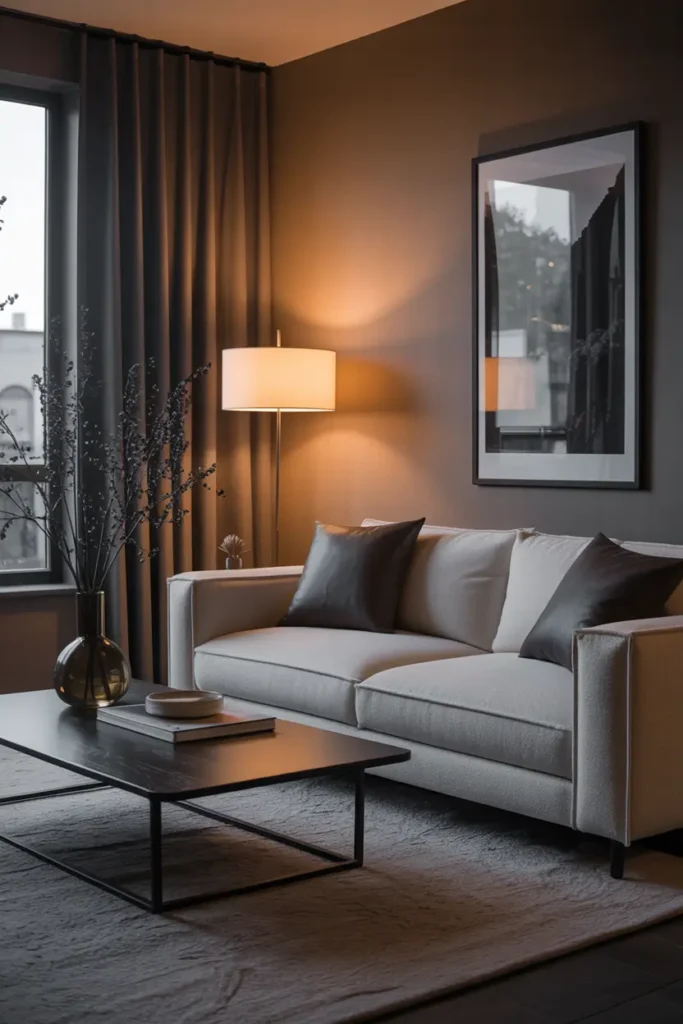
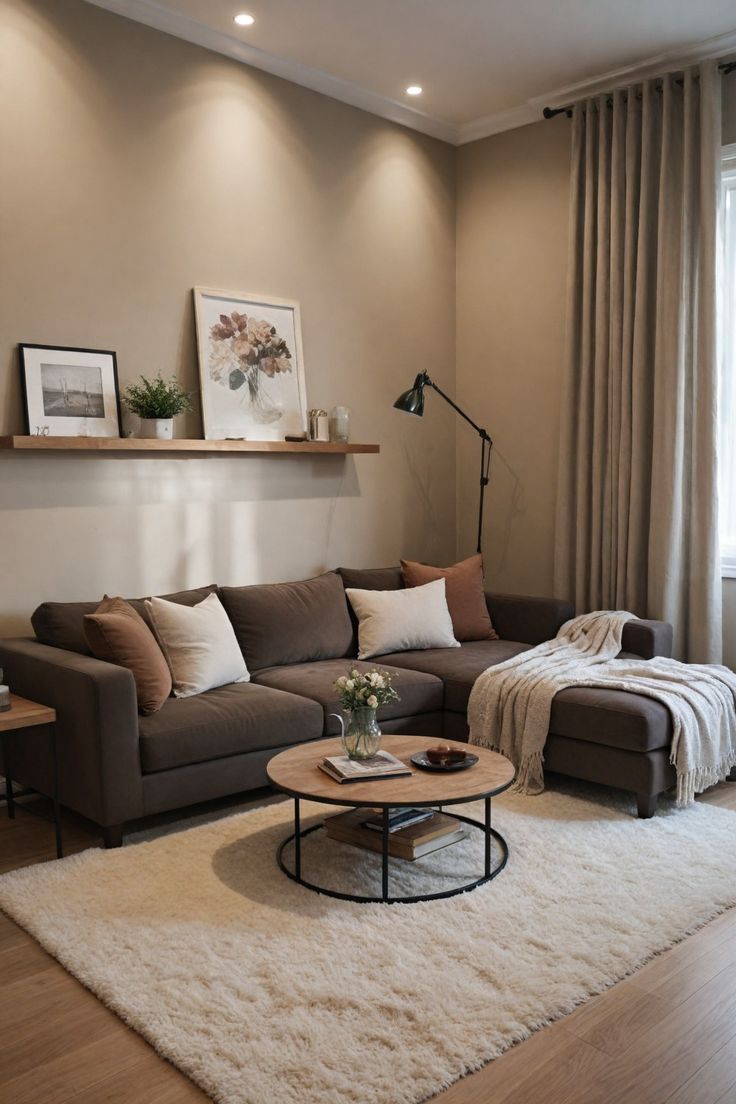
Minimalist living rooms do not always need to be bright white spaces. A moody neutral palette featuring taupe, charcoal, mushroom, and warm brown tones can feel equally cozy while adding dramatic sophistication. Keep furniture silhouettes simple and balanced so the darker palette does not overwhelm the room. Warm lighting becomes especially important because it softens the moodiness and creates a comforting evening atmosphere.Texture prevents dark minimalist interiors from feeling flat or lifeless. Use boucle seating, textured rugs, linen curtains, and matte wall finishes to create depth within the limited color palette. Limit decorative objects to maintain visual calm and allow the atmosphere itself to become the focal point. Large-scale art with subtle tonal variation can add interest without disrupting the minimalist concept. The room ultimately feels intimate, luxurious, and visually calming.
Scandinavian Cozy Layers
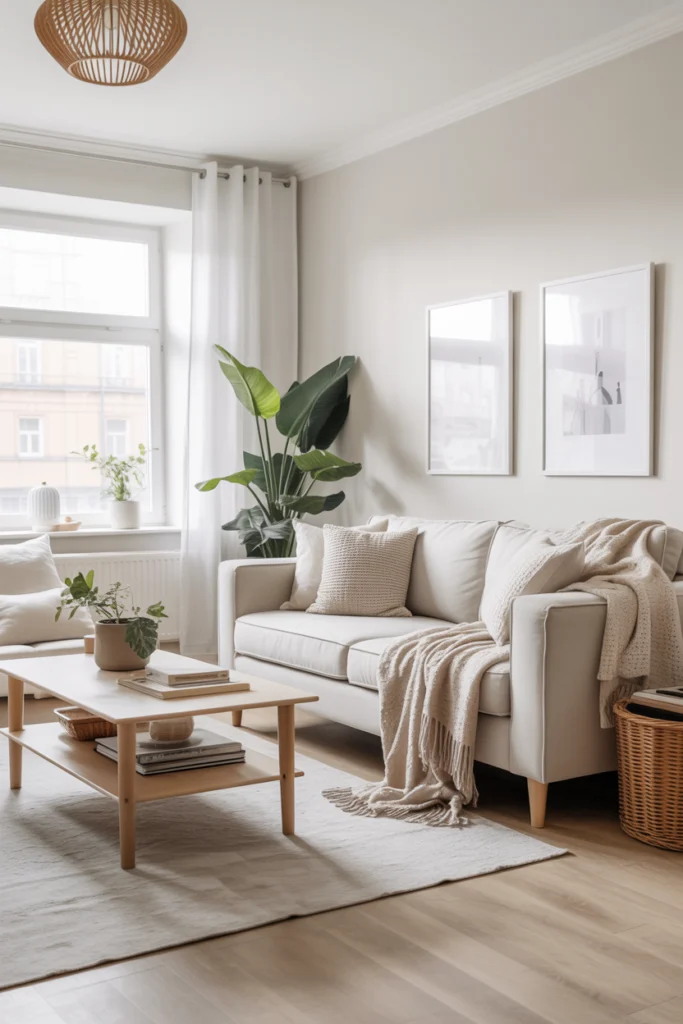
Scandinavian interiors remain popular because they combine simplicity with genuine comfort. Pale wood flooring, soft neutral textiles, and clean-lined furniture create a bright yet cozy environment ideal for minimalist living rooms. Layering knitted throws, textured cushions, and woven accents introduces warmth without cluttering the space. Every element should feel functional, comfortable, and visually calm rather than decorative for the sake of filling empty areas.Natural light plays a central role in Scandinavian-inspired interiors. Keep window treatments light and airy to maximize brightness throughout the day. Minimal decor paired with carefully selected textures allows the room to feel peaceful without becoming sterile. Indoor plants or subtle black accents can provide gentle contrast while preserving the soft aesthetic. The overall design feels approachable, fresh, and effortlessly stylish for everyday modern living.
Desert-Inspired Minimalism
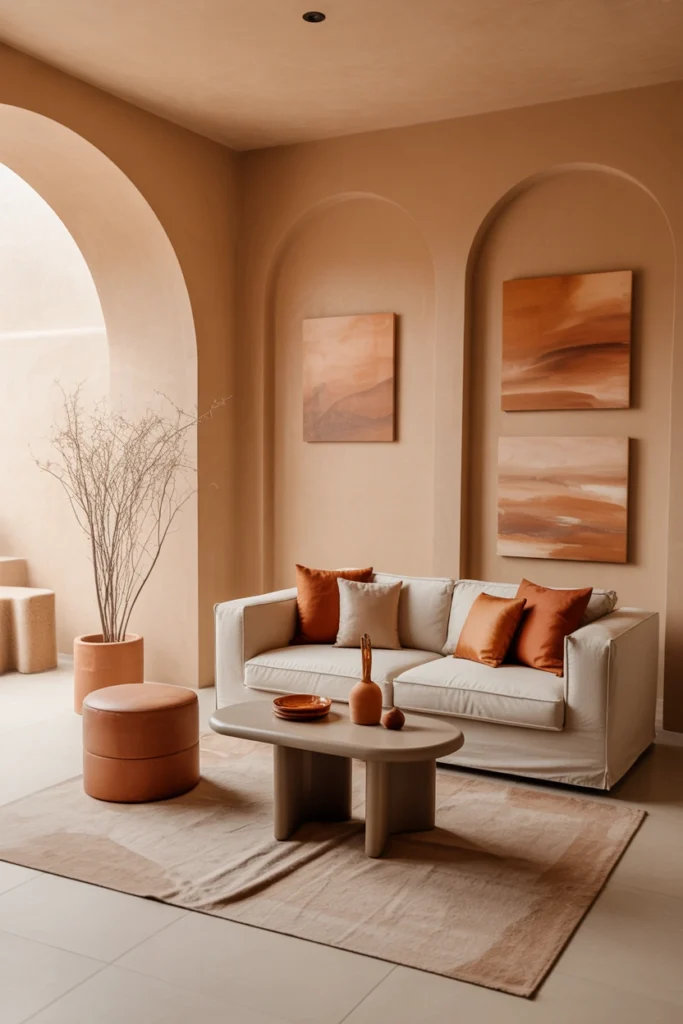
Desert-inspired minimalism uses warm earthy tones and organic textures to create an inviting atmosphere filled with softness and warmth. Sandy beige walls, terracotta accents, and natural wood furniture instantly establish a grounded environment. Curved architecture and textured plaster surfaces add visual movement while preserving the simplicity of the room. The palette feels sun-washed and calming, making the space appear naturally relaxed and highly comforting.Avoid overly colorful accessories that interrupt the earthy harmony of the room. Instead, focus on layered materials like linen, jute, clay, and matte ceramics to create richness through texture rather than decoration. Warm sunset-inspired lighting enhances the desert aesthetic beautifully during evenings. A few oversized decorative objects create stronger visual impact than numerous smaller accessories. The finished room feels artistic, tranquil, and effortlessly connected to nature.
Cozy White Minimalism
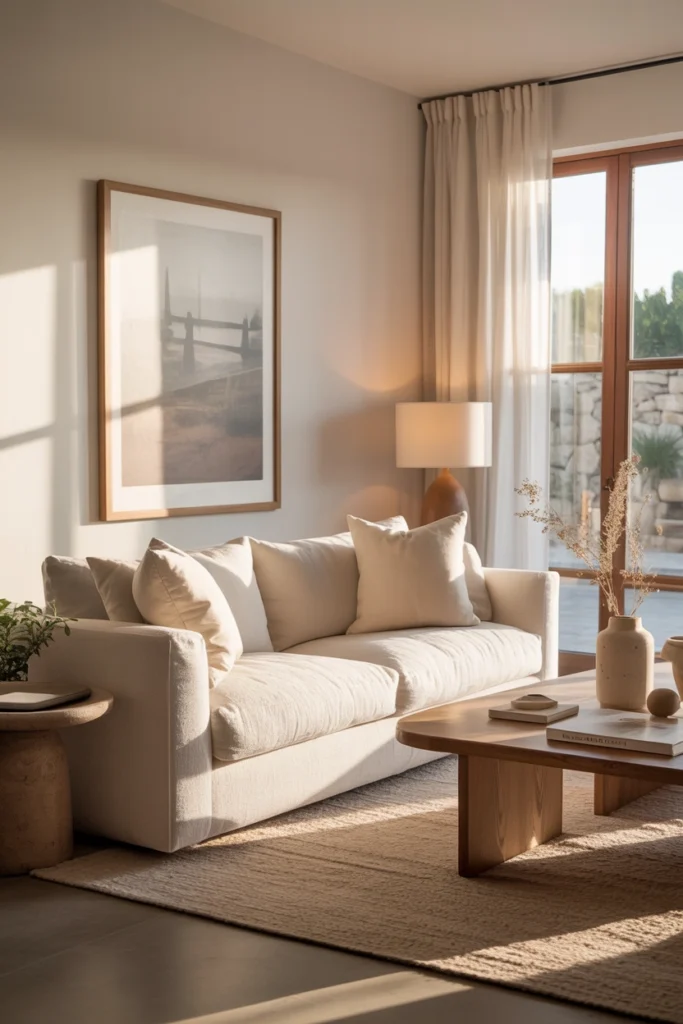
White minimalist interiors often fail because they prioritize perfection over warmth. The solution is using layered textures and warm undertones instead of stark bright whites. Cream upholstery, textured rugs, oak wood finishes, and soft lighting transform an all-white room into a cozy retreat. The space should feel soft and inviting rather than sharp and clinical. Natural materials are essential because they add warmth without disturbing the clean visual aesthetic.Balance simplicity with comfort by including tactile fabrics and subtle decor variations. Linen curtains, boucle chairs, and woven baskets create visual depth while preserving minimalism. Avoid excessive contrast or glossy surfaces that can make the room feel cold. Keep decorative objects intentional and limited to maintain a peaceful atmosphere. The final result feels bright, calming, and luxurious while remaining highly livable for everyday routines.
Curved Furniture Softness
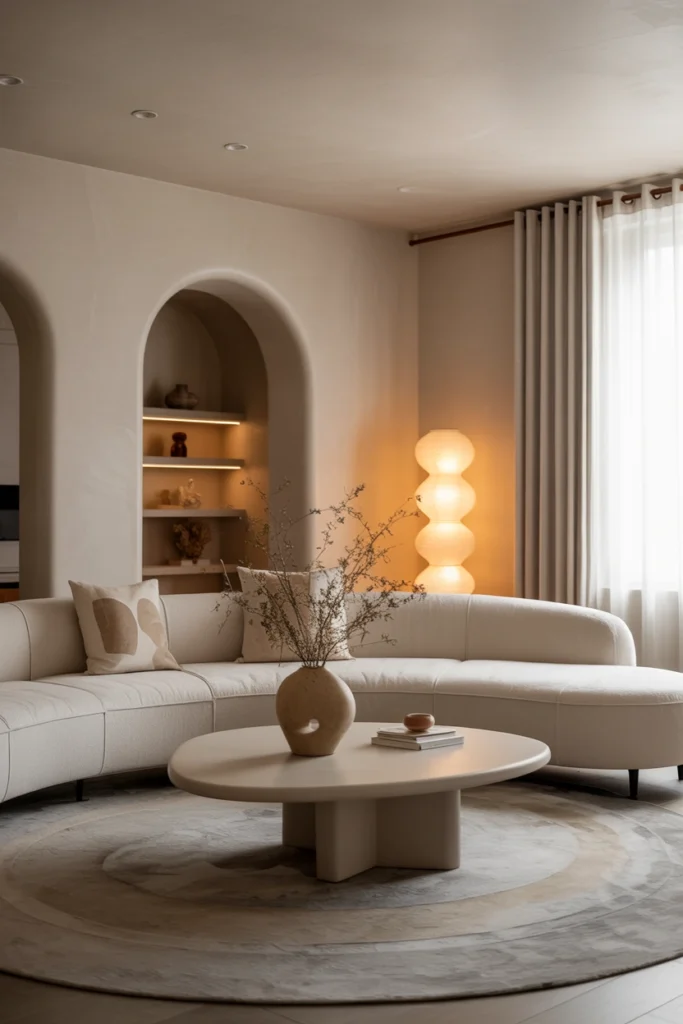
Curved furniture softens minimalist interiors by reducing harsh visual lines and creating a more welcoming atmosphere. Rounded sofas, circular coffee tables, and arched floor lamps add movement without increasing clutter. These organic shapes make the living room feel relaxed and modern while maintaining simplicity. Pair curved forms with soft neutral colors to create a balanced aesthetic that feels elegant yet approachable.Too many sculptural shapes can make the room appear trendy instead of timeless, so moderation matters. Combine curved furniture with clean architectural lines and restrained decor to maintain visual harmony. Warm lighting enhances the softness of the rounded silhouettes, especially during evenings. Textured fabrics and natural wood accents help ground the design and prevent it from feeling overly futuristic. The overall atmosphere becomes calming, cozy, and visually refined.
Cozy Apartment Minimalism
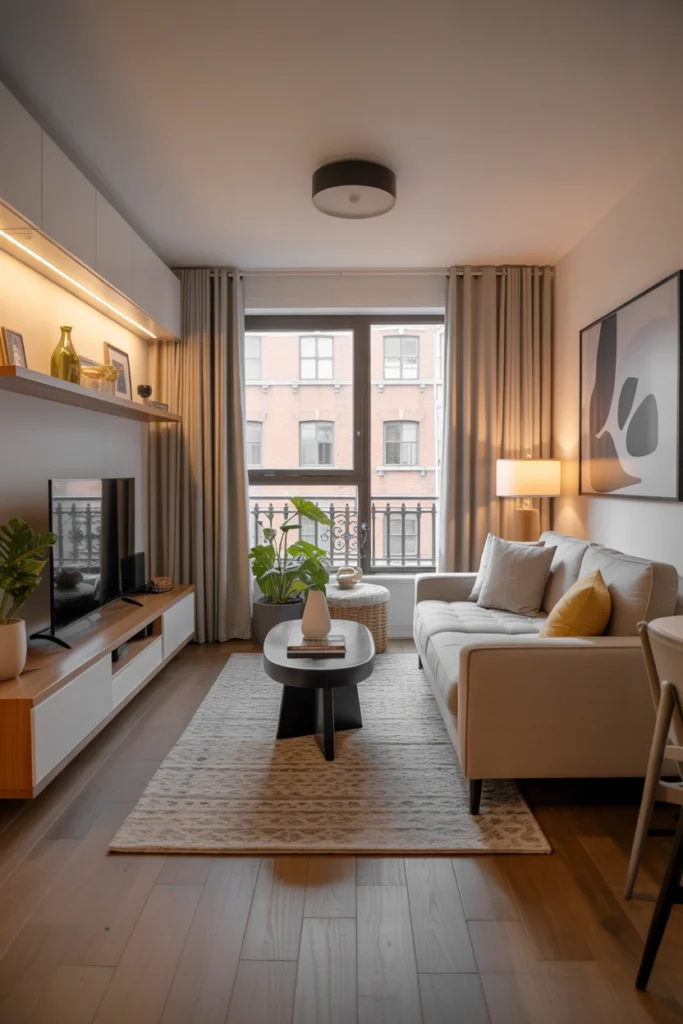
Apartment living rooms require careful styling because limited space can quickly feel cluttered. Minimalism helps create openness, but comfort must remain the priority. Choose compact furniture with slim silhouettes and use vertical storage solutions to maximize floor space. A neutral palette combined with warm textures creates an airy atmosphere while still feeling inviting enough for daily relaxation and social gatherings.Lighting dramatically influences the mood of smaller apartment interiors. Use layered lighting with floor lamps, table lamps, and warm bulbs instead of relying solely on overhead fixtures. Textured rugs and soft fabrics prevent the room from appearing too stark or empty. Decorative accents should remain intentional and limited to avoid visual chaos. The final design feels practical, stylish, and genuinely comfortable despite the compact footprint.
Rustic Minimalist Balance
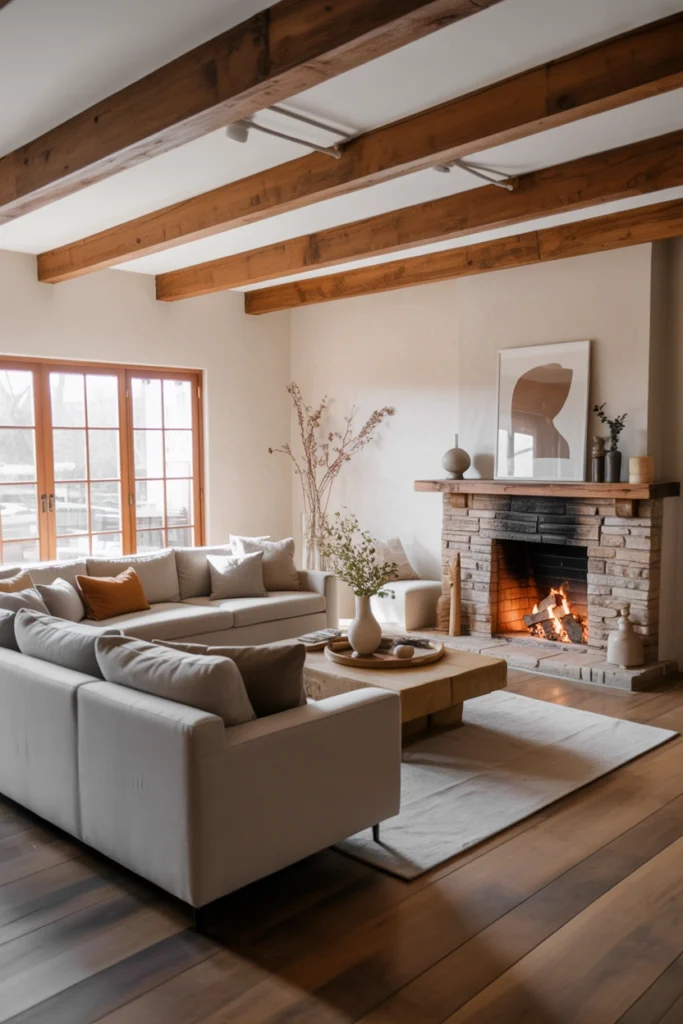
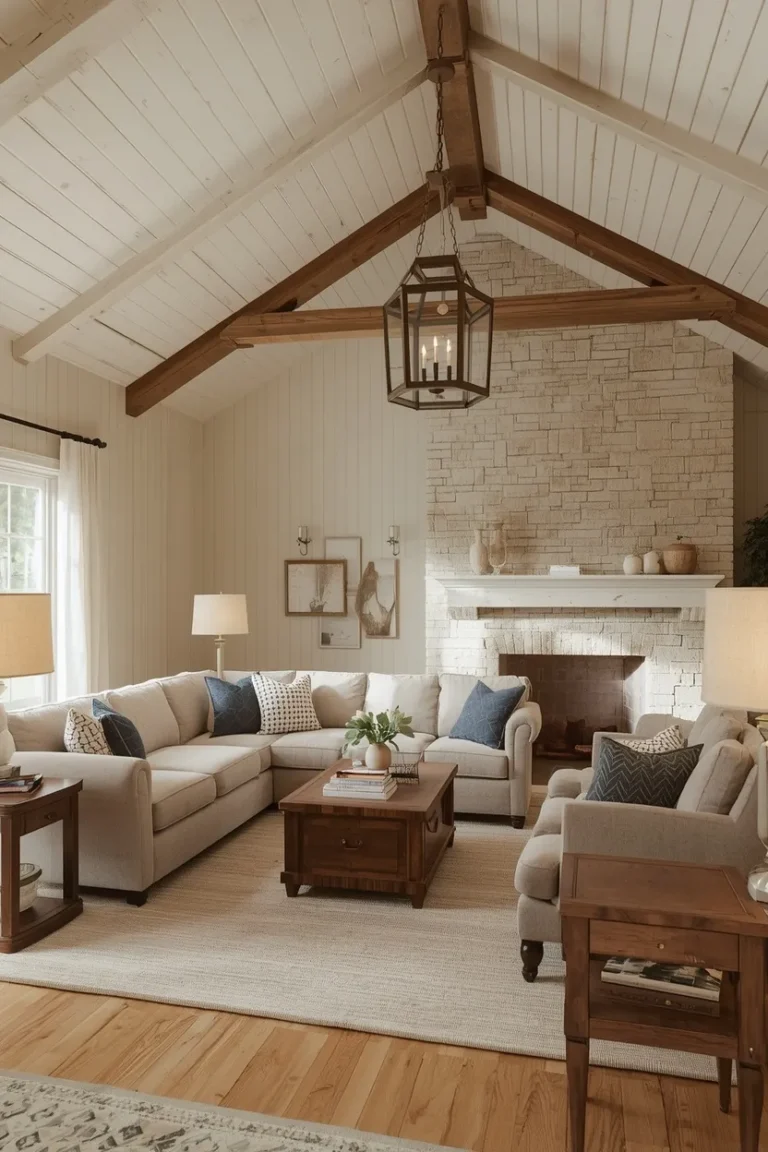
Rustic minimalism blends raw natural materials with clean modern simplicity to create a deeply cozy atmosphere. Reclaimed wood beams, textured stone, and neutral fabrics introduce warmth while maintaining visual restraint. The room should feel authentic and lived-in rather than heavily decorated or themed. Simple furniture silhouettes help balance the rustic textures and prevent the space from becoming visually overwhelming.Focus on natural imperfections because they add personality and warmth to minimalist interiors. Weathered wood, textured stone, and handmade pottery create richness without relying on excessive accessories. Soft neutral fabrics and warm lighting keep the room feeling comfortable and approachable. Avoid overloading the space with farmhouse decor that can quickly feel outdated or cluttered. The finished room feels timeless, grounded, and effortlessly welcoming.
Greenery and Minimal Calm
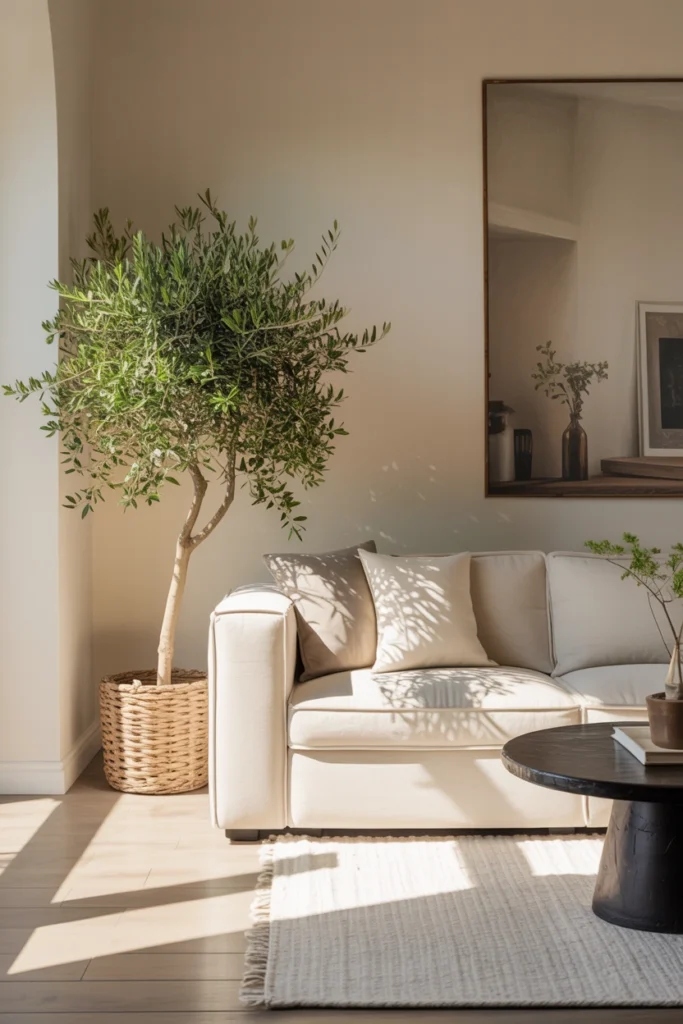
Indoor greenery instantly softens minimalist interiors and creates a more peaceful atmosphere. A large olive tree or a few carefully placed plants add organic movement and freshness without cluttering the room. Pair greenery with neutral furniture, natural textures, and soft lighting to maintain balance. The plants should enhance the simplicity of the space rather than dominate it visually.Avoid filling every corner with plants because excessive greenery can make minimalist interiors feel chaotic. Choose a few sculptural plants with elegant shapes that complement the room’s architecture. Natural light is important because it highlights the softness of the greenery and enhances the calming atmosphere. Combined with linen fabrics and warm wood finishes, the room feels fresh, grounded, and beautifully connected to nature.
Textured Neutral Layers
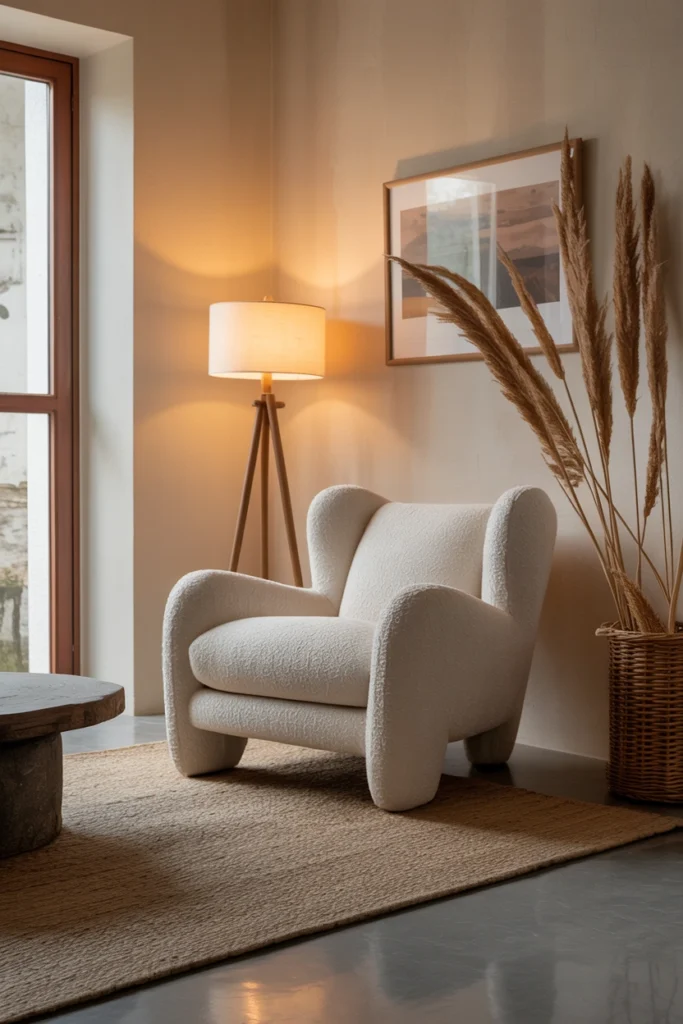
Neutral minimalist interiors become visually interesting through texture rather than color. Boucle seating, woven rugs, plaster walls, and linen drapery create subtle depth while preserving a calm aesthetic. Layering multiple soft textures within a similar color palette makes the room feel rich and inviting instead of flat or sterile. Every surface should contribute warmth and softness to the overall environment.The challenge with textured minimalism is maintaining restraint. Too many materials or patterns can quickly disrupt the peaceful atmosphere. Keep the palette cohesive and focus on quality over quantity when selecting furniture and decor. Warm natural lighting enhances texture beautifully by creating gentle shadows and tonal variation throughout the room. The final design feels elegant, cozy, and highly sophisticated without relying on bold decorative statements.
Open Shelf Styling Simplicity
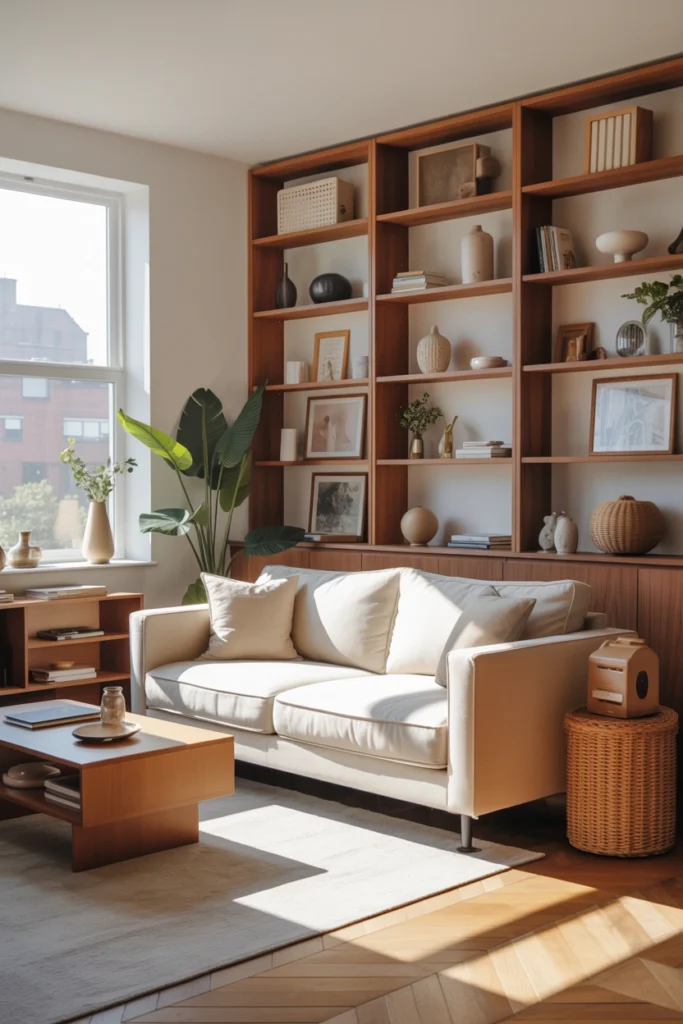
Open shelving in minimalist living rooms works only when styling remains intentional and restrained. Instead of overcrowding shelves with decorative items, display a few carefully selected objects such as ceramics, books, and organic sculptures. Negative space is just as important as the items themselves because it preserves the calm visual flow of the room. Warm wood shelving helps soften the clean minimalist aesthetic naturally.The most common mistake is treating shelves as storage instead of visual composition. Keep colors cohesive and avoid excessive decorative clutter that distracts from the simplicity of the room. Layering textures and varying object heights creates subtle interest without chaos. Soft lighting near the shelves can enhance the cozy atmosphere during evenings. The overall effect feels curated, elegant, and effortlessly stylish for modern minimalist interiors.
Soft Gray Cozy Living
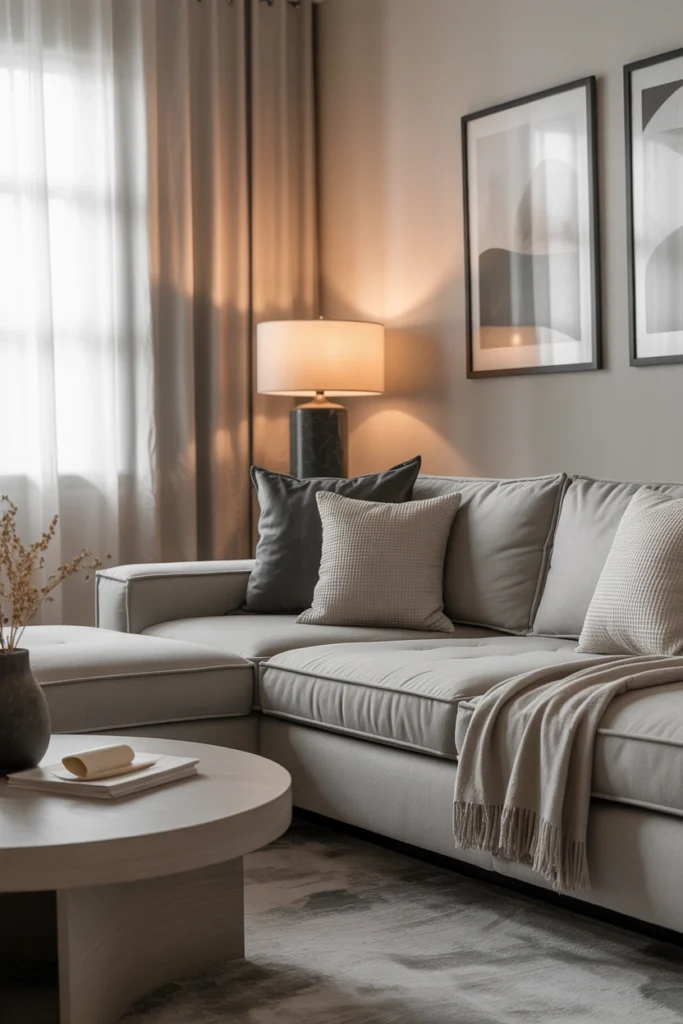
Gray minimalist interiors can feel extremely cozy when warm undertones and textures are used correctly. Soft gray walls paired with textured fabrics, warm wood accents, and ambient lighting create a calm and sophisticated atmosphere. A charcoal accent chair or dark decorative elements add depth while preserving the neutral palette. The room should feel serene and balanced rather than overly monochromatic or cold.Texture becomes especially important within gray color schemes because it prevents visual flatness. Use woven rugs, linen curtains, and boucle upholstery to create softness throughout the space. Keep decorative accessories minimal so the layered tones remain the focus. Warm lighting transforms gray interiors dramatically by adding comfort and intimacy during evenings. The final design feels modern, peaceful, and effortlessly elegant.
Cozy Minimalist Reading Nook
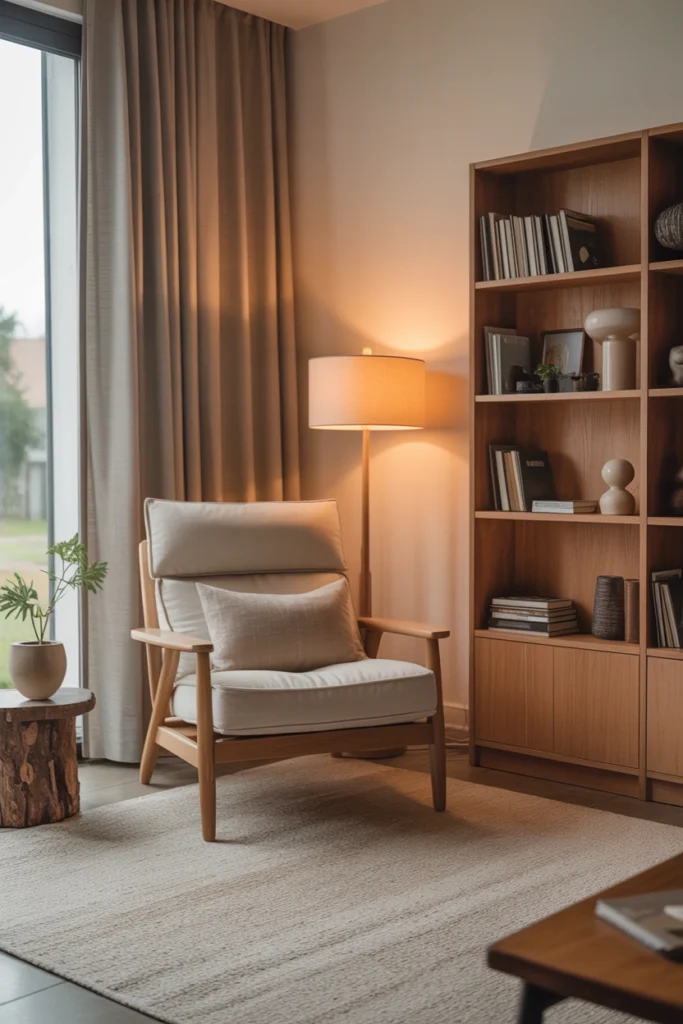
A dedicated reading nook adds personality and functionality to a cozy minimalist living room without requiring excessive decor. A comfortable lounge chair, soft throw blanket, and warm floor lamp instantly create an intimate relaxation corner. Natural wood shelving with carefully arranged books maintains visual simplicity while adding warmth and character. The space should feel peaceful, comfortable, and intentionally designed for quiet moments.Avoid overcrowding the nook with decorative accessories that reduce its calming effect. Focus instead on comfort through layered textures and warm lighting. Position the seating near natural light whenever possible to create a brighter daytime atmosphere. Neutral colors and soft materials help integrate the nook seamlessly into the minimalist aesthetic of the living room. The result feels thoughtful, inviting, and beautifully practical for everyday living.
Sunset Glow Minimalism
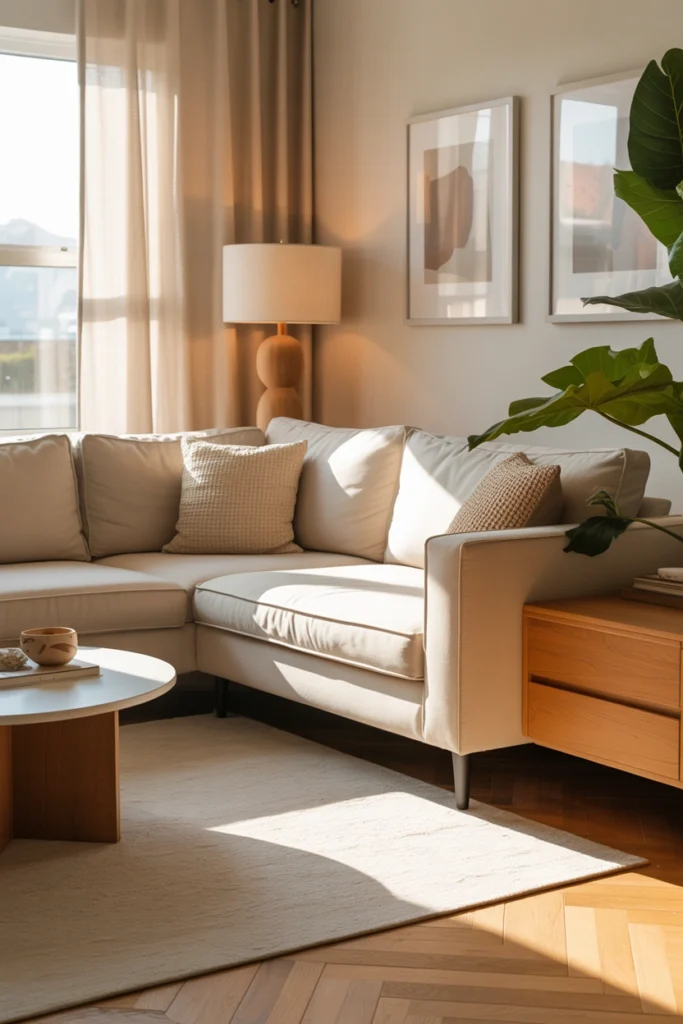
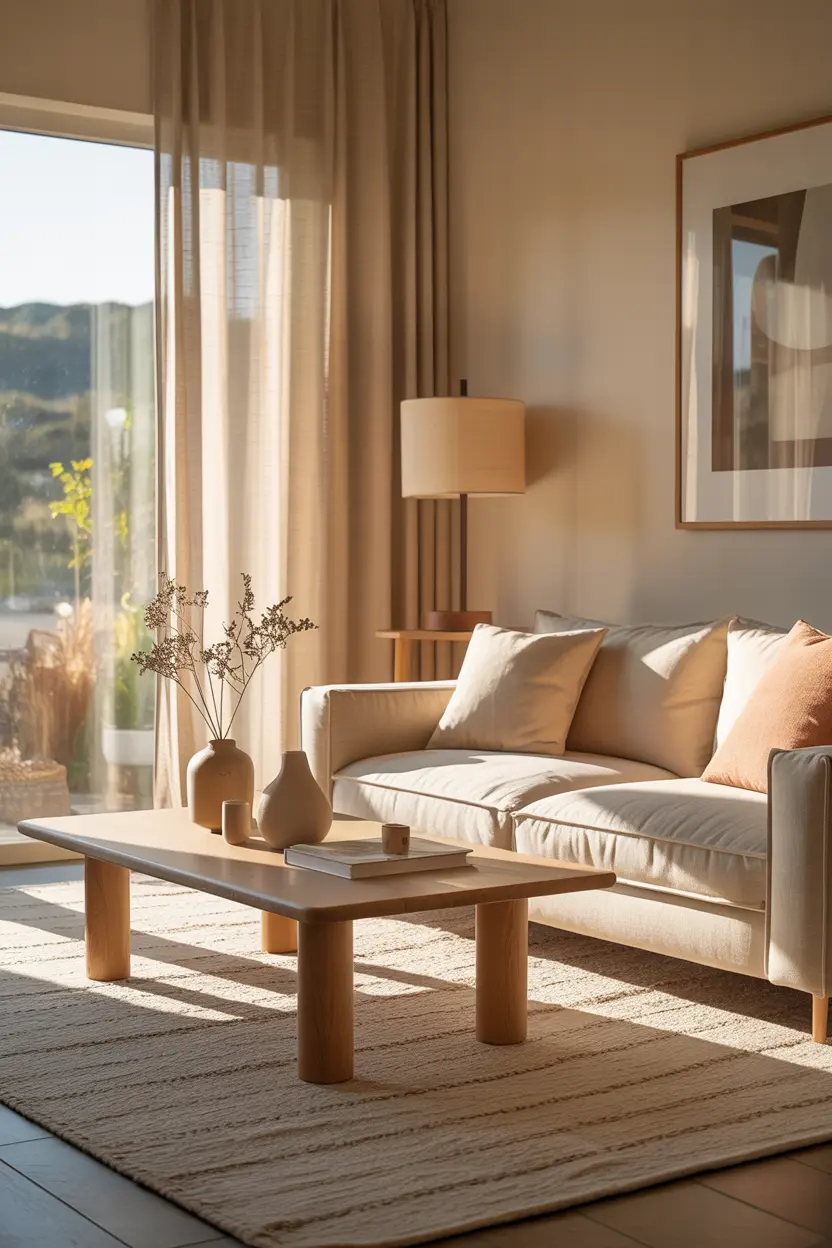
Golden-hour lighting transforms minimalist interiors into warm and emotionally inviting spaces. A living room designed to capture sunset light naturally feels softer and more relaxing throughout the evening. Neutral furniture, textured fabrics, and warm wood finishes reflect the sunlight beautifully, creating a glowing atmosphere without requiring excessive decoration. The simplicity of the room allows the lighting itself to become part of the visual experience.To maximize the effect, keep window treatments light and avoid heavy furniture blocking natural light paths. Layer warm textures such as linen, boucle, and woven materials to enhance the cozy atmosphere further. Minimal decor helps maintain openness and allows the shifting evening light to remain the focal point. The final result feels calm, luxurious, and deeply comforting while perfectly matching modern Pinterest aesthetics.