22 Dark Boho Living Room Ideas That Feel Cozy
A dark boho living room blends moody tones with relaxed textures, creating a space that feels both grounded and inviting. Instead of bright whites and airy palettes, this style leans into deep charcoals, earthy browns, and rich jewel tones layered with natural materials. The key is balance—keeping the room from feeling heavy while still embracing its cozy, cocoon-like vibe.
Minimalist sophistication within a dark boho setting comes from restraint. You’re not filling the space with random decor—you’re choosing intentional pieces with texture, history, and warmth. Think woven accents, soft lighting, and curated details that make the room feel lived-in but not cluttered. Below are 22 ideas that push beyond surface-level styling and actually help you design a space that works.
Moody Charcoal Walls with Warm Textiles
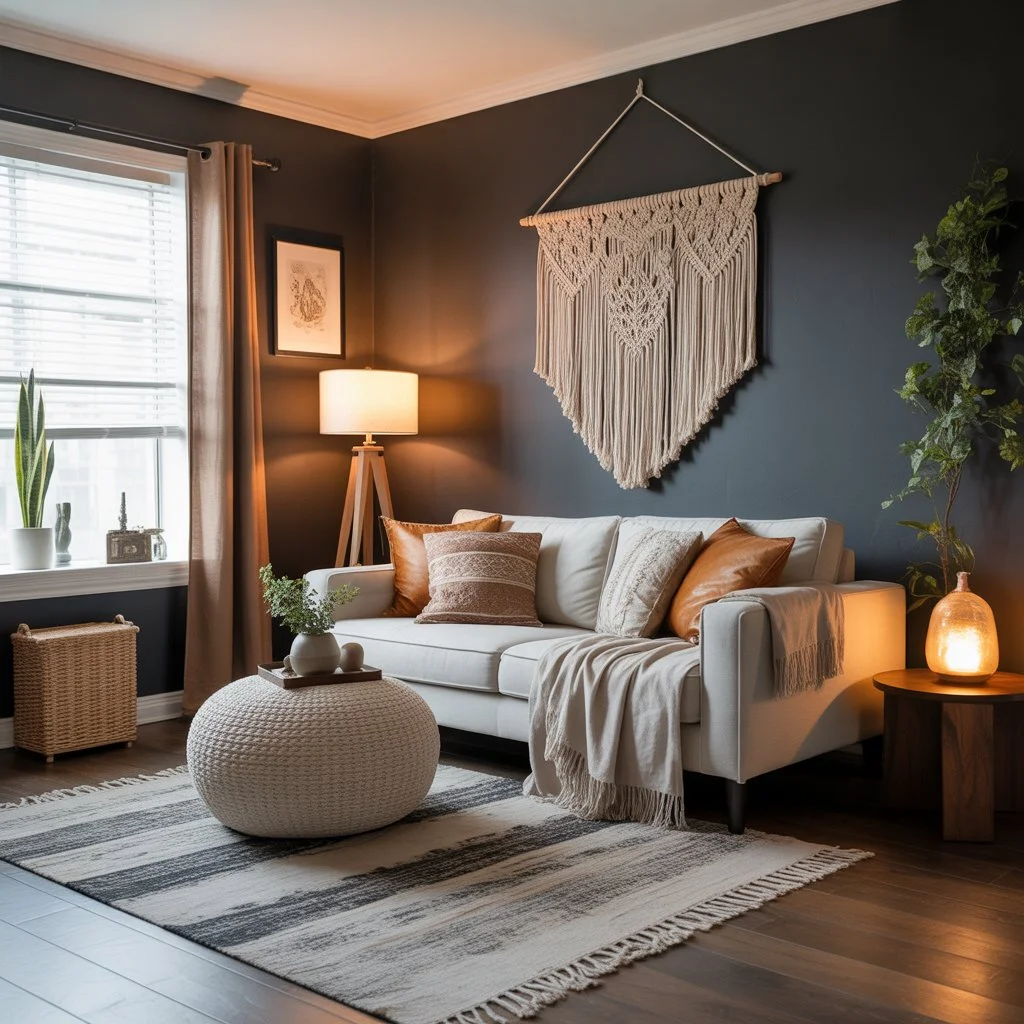
Charcoal walls instantly anchor a dark boho living room, but most people get this wrong by stopping there. Without contrast, the room feels flat. You need layered textiles—rugs, throws, and cushions—to break that heaviness. Choose warm tones like rust, beige, and muted gold to soften the darkness while maintaining a cohesive palette.The trick is texture, not color overload. A thick woven rug, chunky knit throws, and linen cushions create depth without chaos. Lighting matters just as much—use warm, low lighting to prevent the charcoal from feeling cold or lifeless. This isn’t about making it dark; it’s about making it intentional.
Deep Brown Leather with Natural Wood
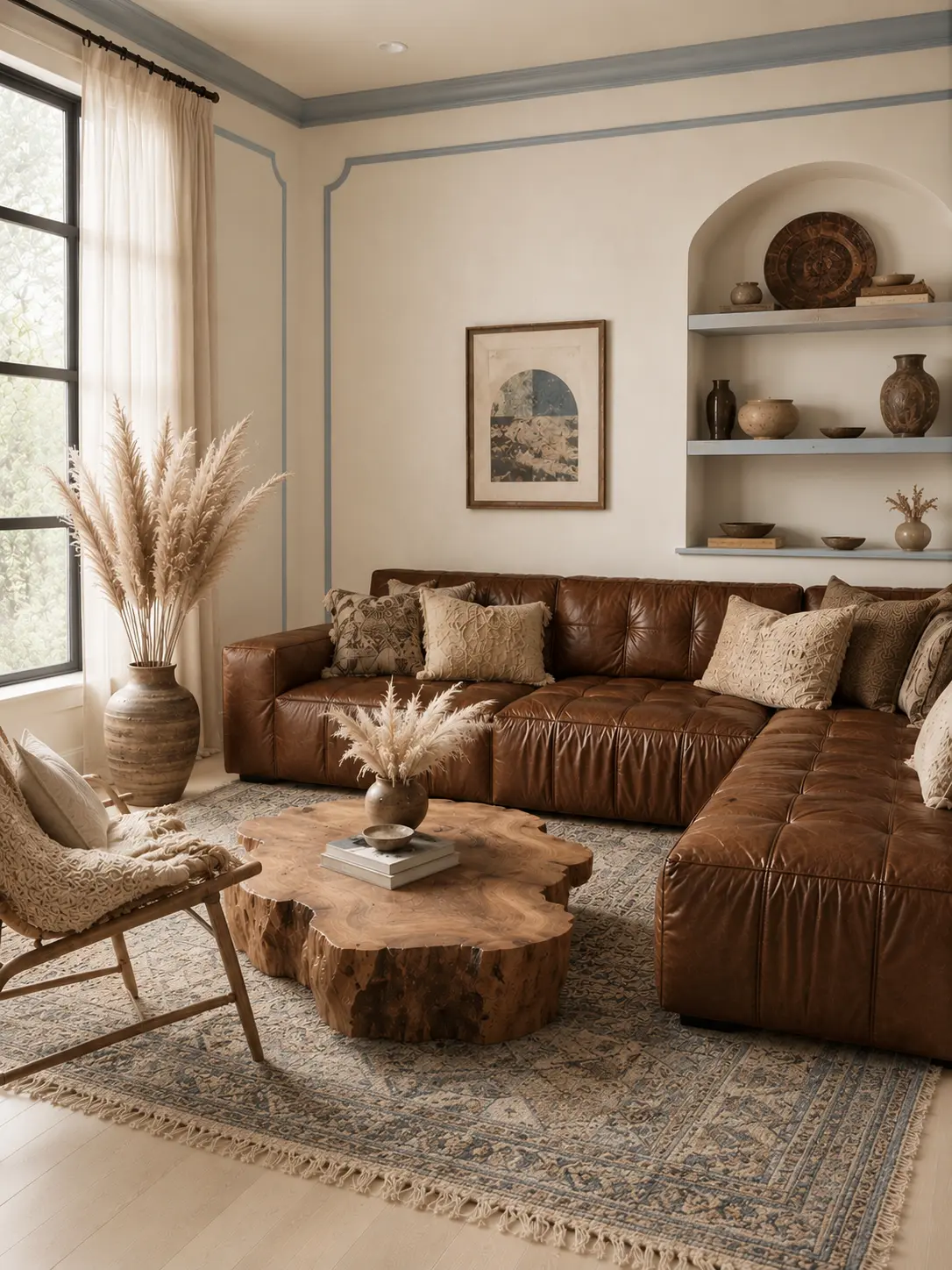
A deep brown leather sofa brings richness, but pairing it incorrectly will make your room feel outdated. Avoid heavy, traditional styling. Instead, combine it with raw wood elements—like an unfinished coffee table or open shelving—to keep things grounded and organic. Balance the heaviness of leather with soft elements like linen curtains and woven baskets. Add subtle greenery or pampas grass to break the density. The goal is contrast between structured and relaxed materials, not just stacking dark tones on top of each other.
Black Accent Wall with Boho Art
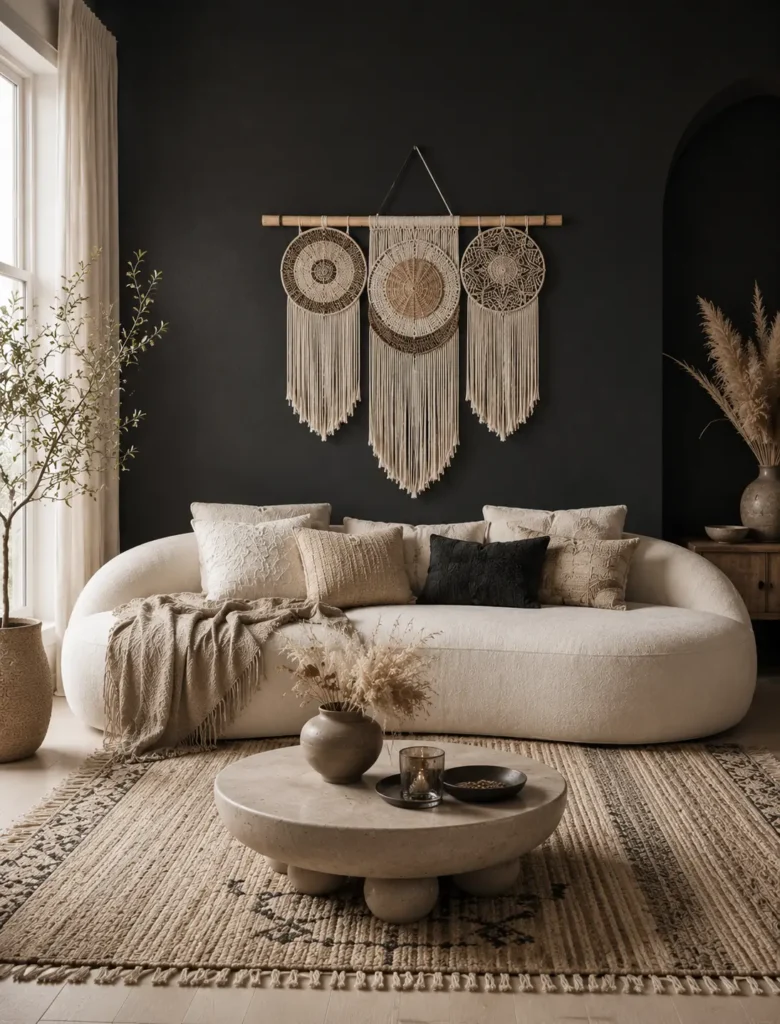
A black accent wall can elevate your space, but only if you treat it as a backdrop, not the main feature. Most people overload it with decor. Instead, choose a few meaningful pieces—woven art, abstract prints, Aor handmade textiles—and let them breathe. Keep surrounding furniture minimal and neutral so the wall doesn’t overwhelm the room. A soft beige or cream sofa works well here. This is where minimalist discipline matters—edit aggressively, or your “boho” quickly turns into clutter.
Layered Rugs for Depth
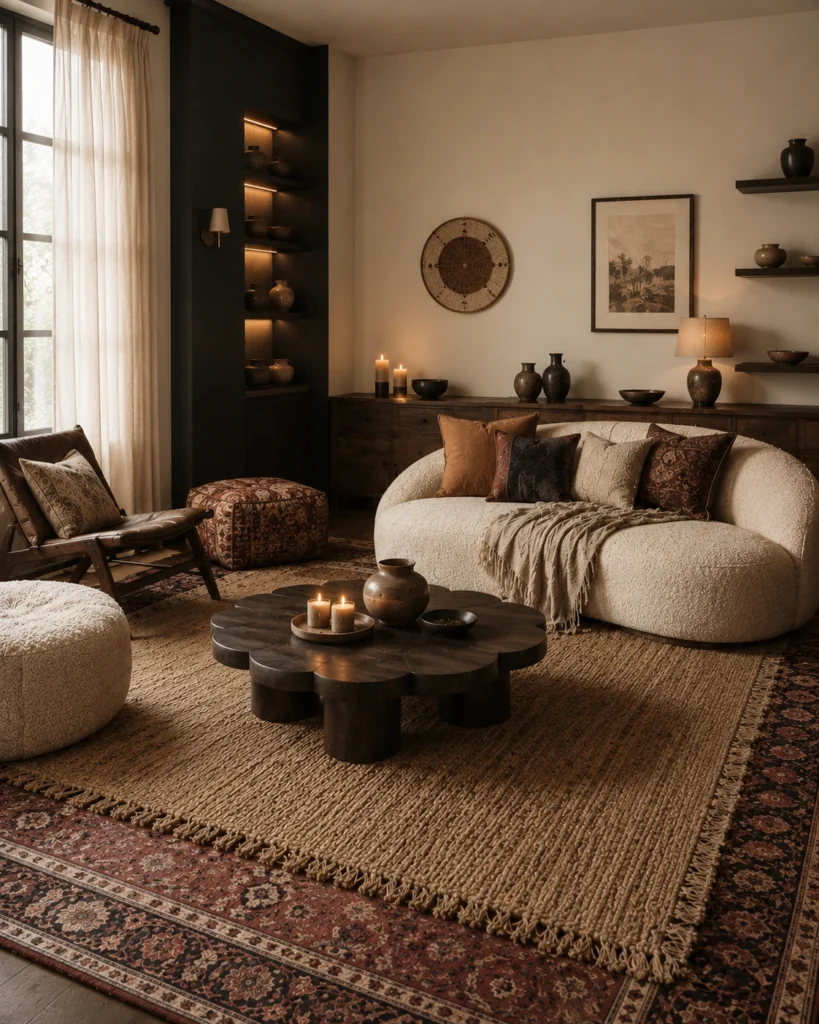
Layering rugs adds depth, but random layering looks messy. Start with a large neutral base like jute, then layer a patterned rug on top. This gives structure while still allowing personality to come through. Stick to a tight color palette—too many colors destroy the calm, cozy feel. The layering should feel intentional, not accidental. If it looks like you just threw rugs down, you missed the point.
Low Lighting with Lanterns
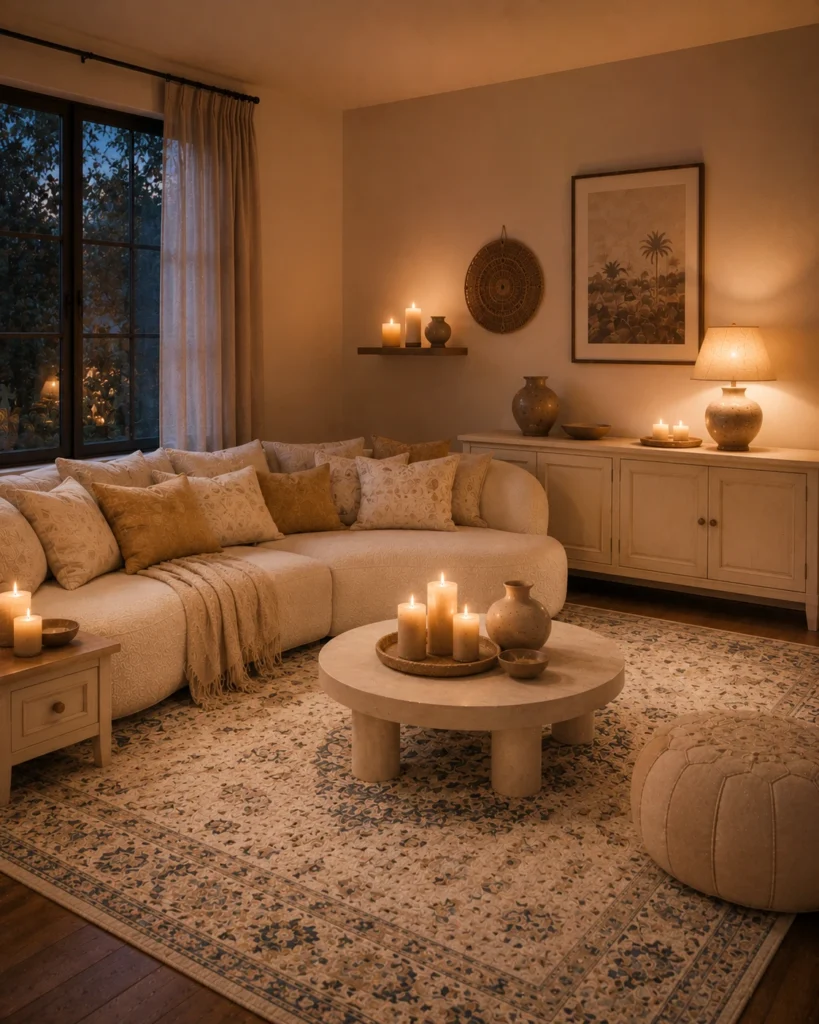
Overhead lighting kills the vibe of a dark boho room. Replace it with layered lighting—lanterns, floor lamps, and candles. The goal is a soft, diffused glow that enhances textures rather than flattening them. Position lighting at different heights to create visual movement. Avoid harsh white bulbs; warm tones are non-negotiable. If your lighting is wrong, nothing else in the room will feel right.
Earthy Color Palette with Black Base
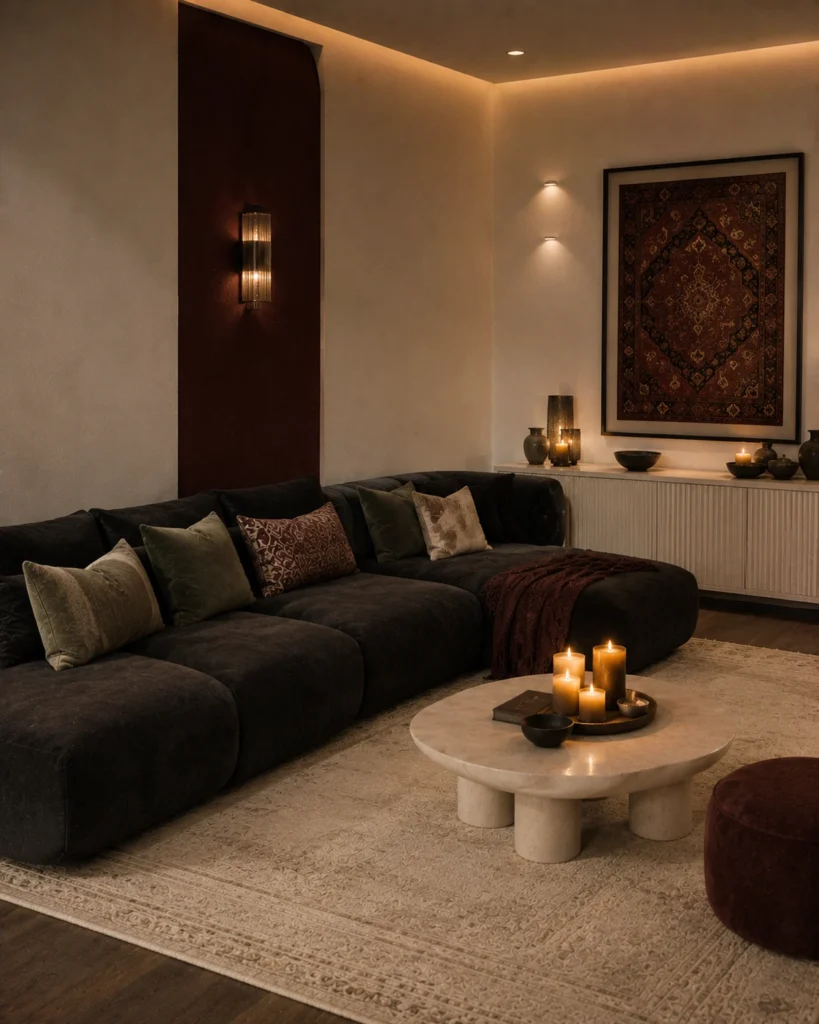
Using black as a base doesn’t mean everything should be black. That’s where most designs fail. Instead, build around it with earthy tones like terracotta, olive, and sand. These colors soften the darkness and make the room feel lived-in. Keep the palette controlled—too many variations dilute the aesthetic. You’re aiming for harmony, not variety.
Minimal Furniture with Statement Pieces
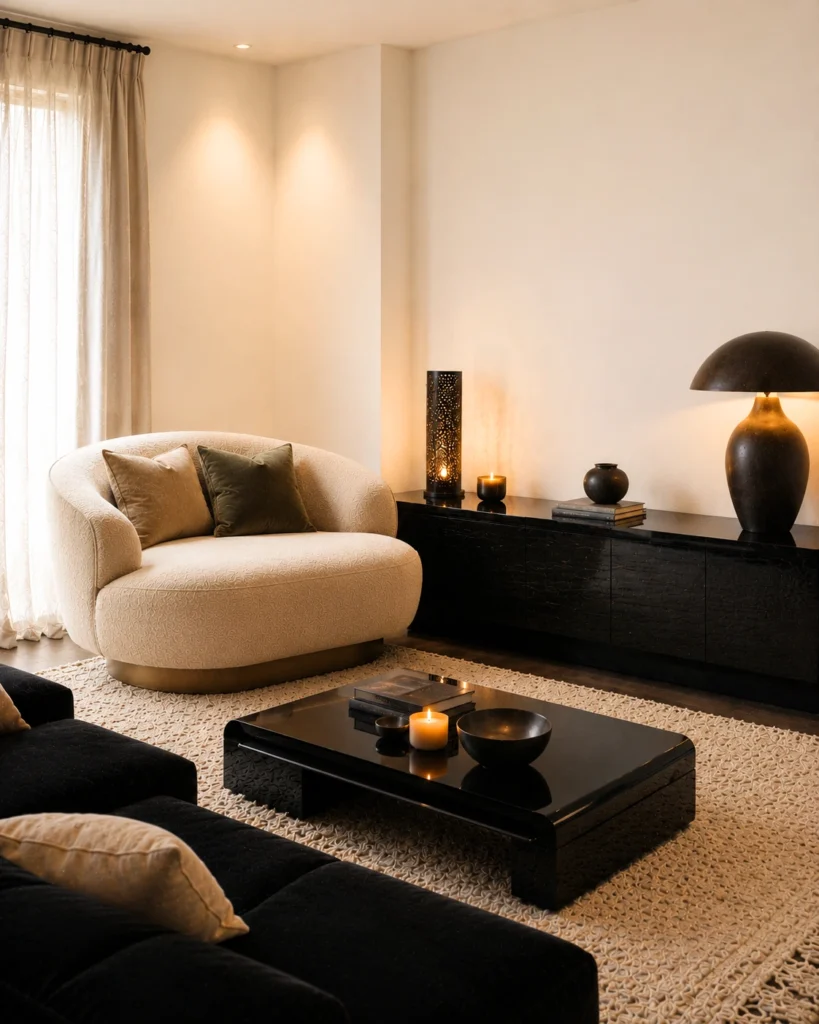
Stop overfurnishing. A dark boho room thrives on space. Choose fewer pieces, but make them count—a sculptural chair, a bold coffee table, or a unique lamp.Minimalism here isn’t emptiness; it’s clarity. Every piece should justify its presence. If it doesn’t add texture, function, or visual interest, remove it.
Woven Wall Decor on Dark Background
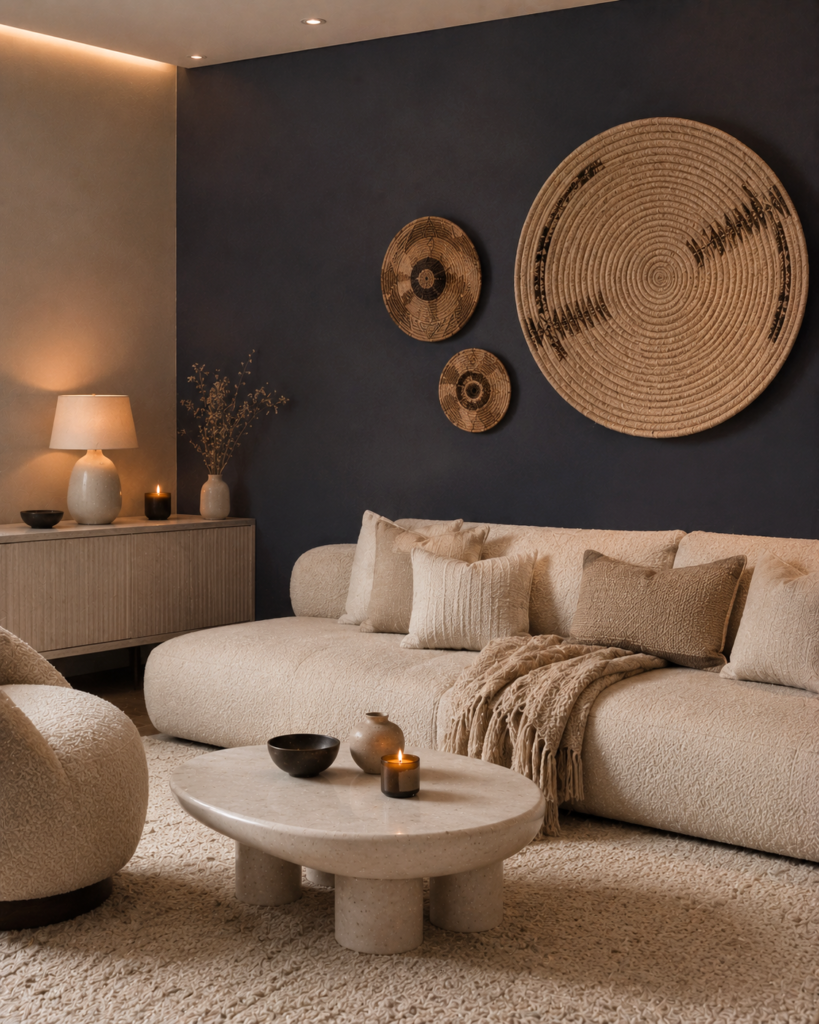
Woven wall hangings stand out beautifully against dark walls, but spacing is critical. Don’t cluster them randomly. Give each piece room so it can actually be seen.This is where restraint shows sophistication. One large woven piece often works better than five small ones competing for attention.
Indoor Plants with Deep Green Tones
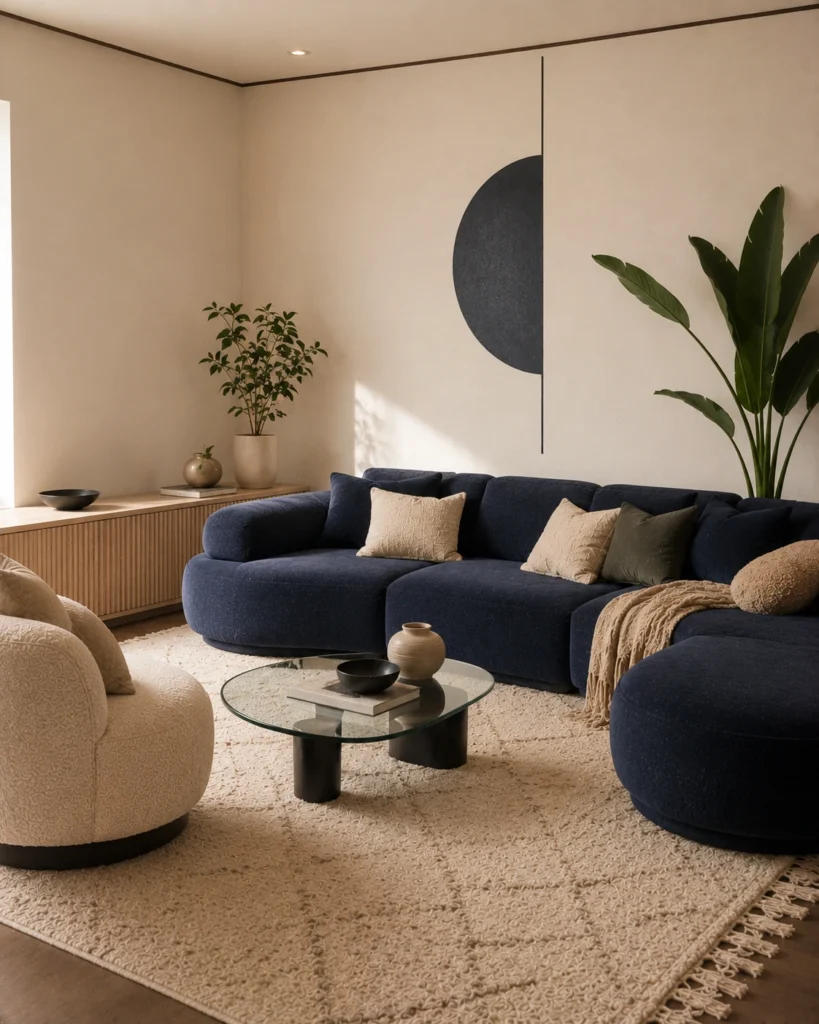
Plants bring life, but overdoing it turns your room into a jungle. Choose a few statement plants with deep green leaves and place them strategically.Contrast them against dark walls or corners where they can stand out. The goal is balance, not excess.
Textured Throw Blankets and Cushions
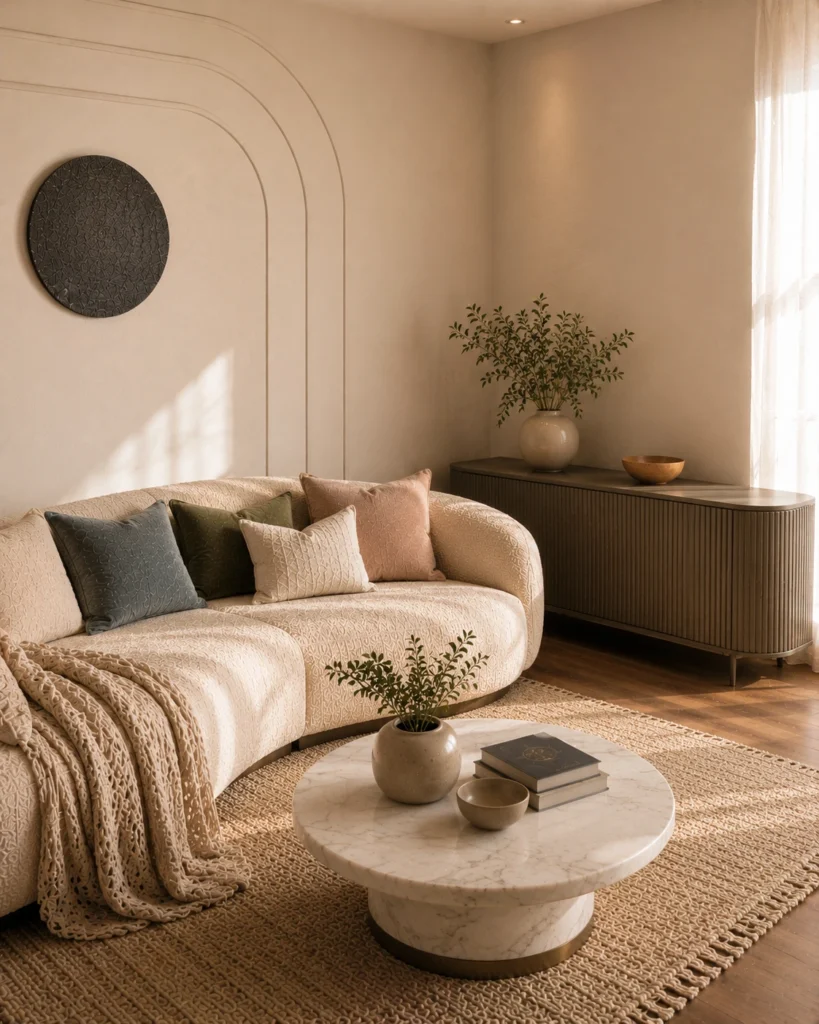
Texture is everything in a dark room. Without it, the space feels flat. Use a mix of materials—knit, linen, velvet—to create layers. But don’t pile endlessly. Too many cushions look cluttered, not cozy. Edit down to what actually enhances the space.
Dark Curtains with Soft Fabrics
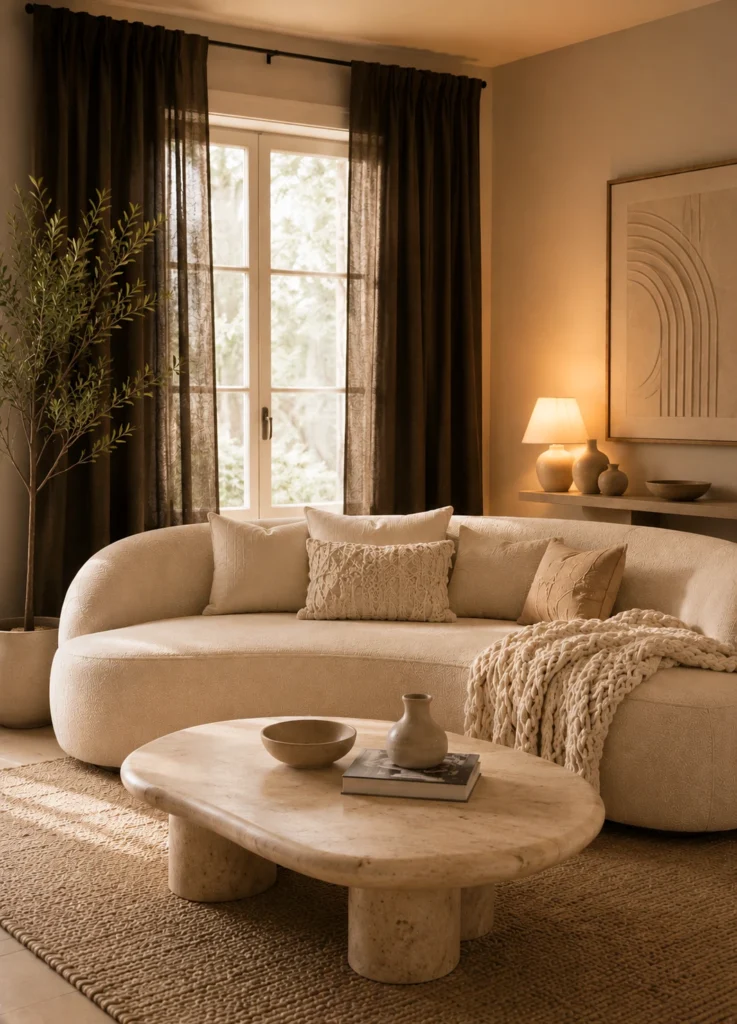
Heavy curtains can make a room feel suffocating if chosen poorly. Go for soft, flowing fabrics in dark tones instead of thick, rigid ones. They should frame the space, not dominate it. Let some light filter through to avoid a cave-like effect.
Vintage Furniture with Modern Balance
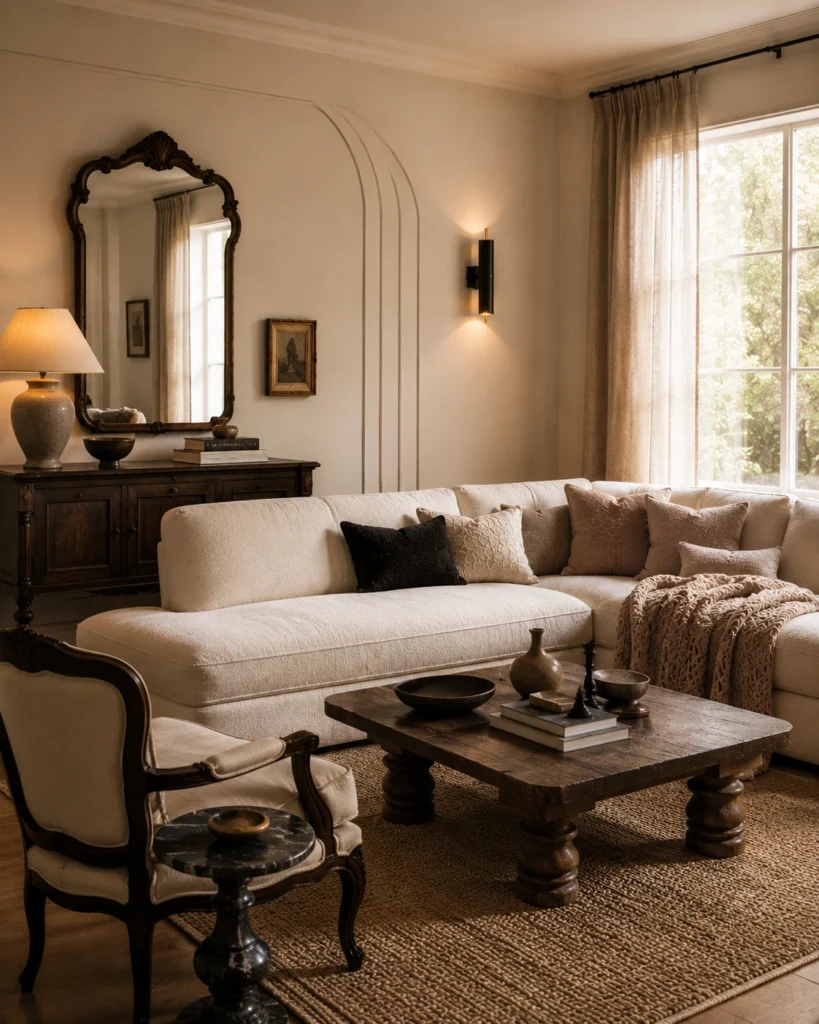
Mixing vintage pieces adds character, but going all vintage makes the space feel dated. Pair old pieces with clean, modern elements.This contrast keeps the room fresh while maintaining depth. Without it, you’re just recreating the past, not designing something intentional.
Neutral Base with Dark Accents
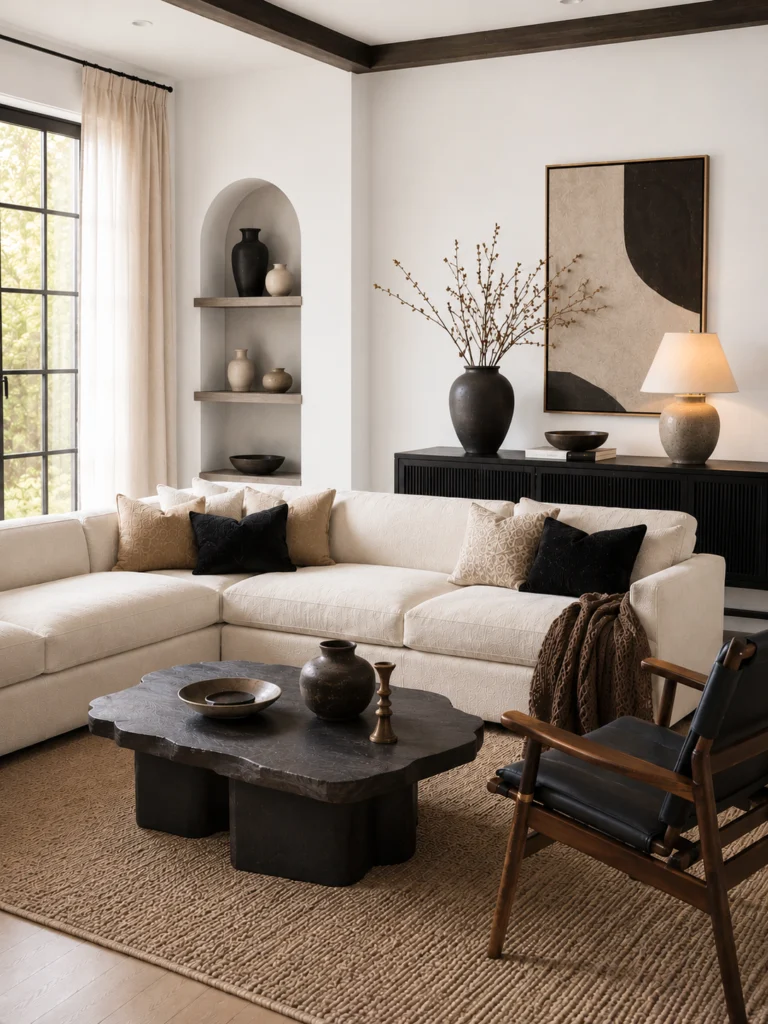
If full darkness feels too heavy, reverse the approach. Use a neutral base and add dark accents through furniture and decor. This gives you the mood without overwhelming the space. It’s a smarter approach if your room lacks natural light.
Statement Lighting Fixtures
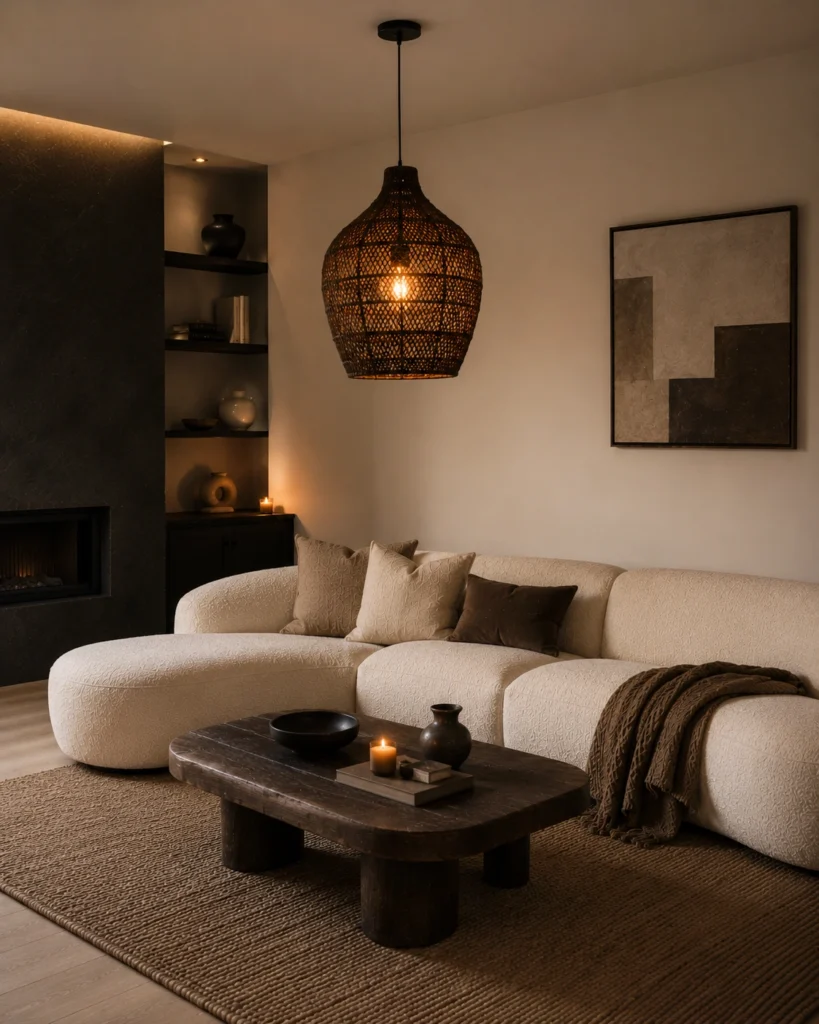
A bold light fixture can anchor the entire room. Choose something sculptural or handmade to add personality. But don’t overcomplicate it. One strong piece is enough. Anything more becomes visual noise.
Open Shelving with Curated Decor
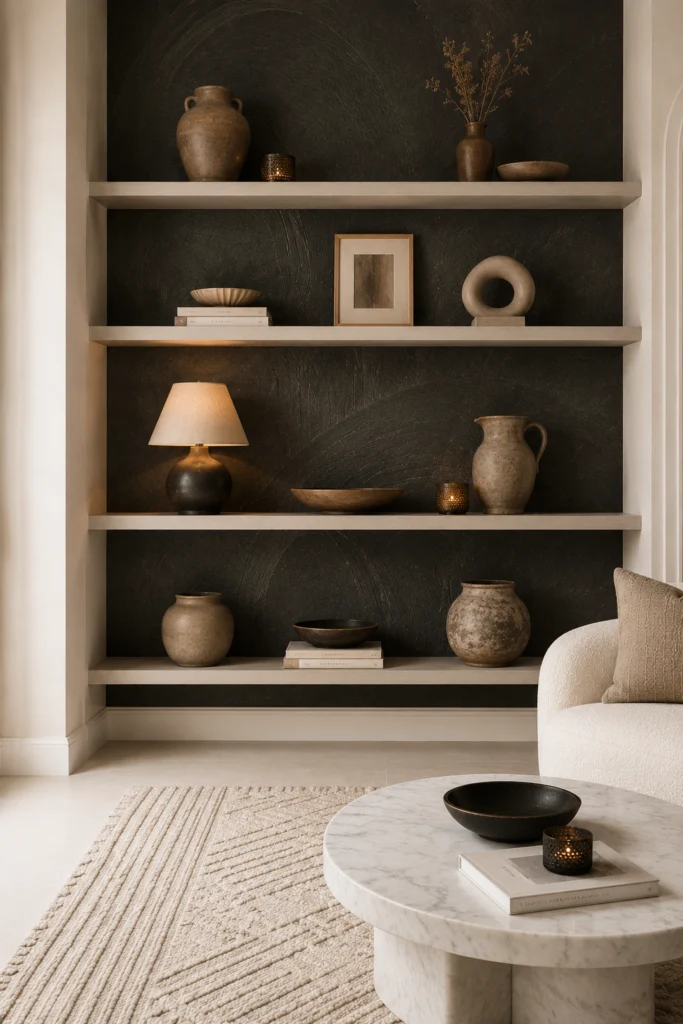
Open shelves expose your taste—or lack of it. Don’t fill them randomly. Curate carefully with books, ceramics, and a few meaningful objects.Negative space is just as important as what you display. If every inch is filled, it looks chaotic.
Dark Wood Flooring with Light Rugs
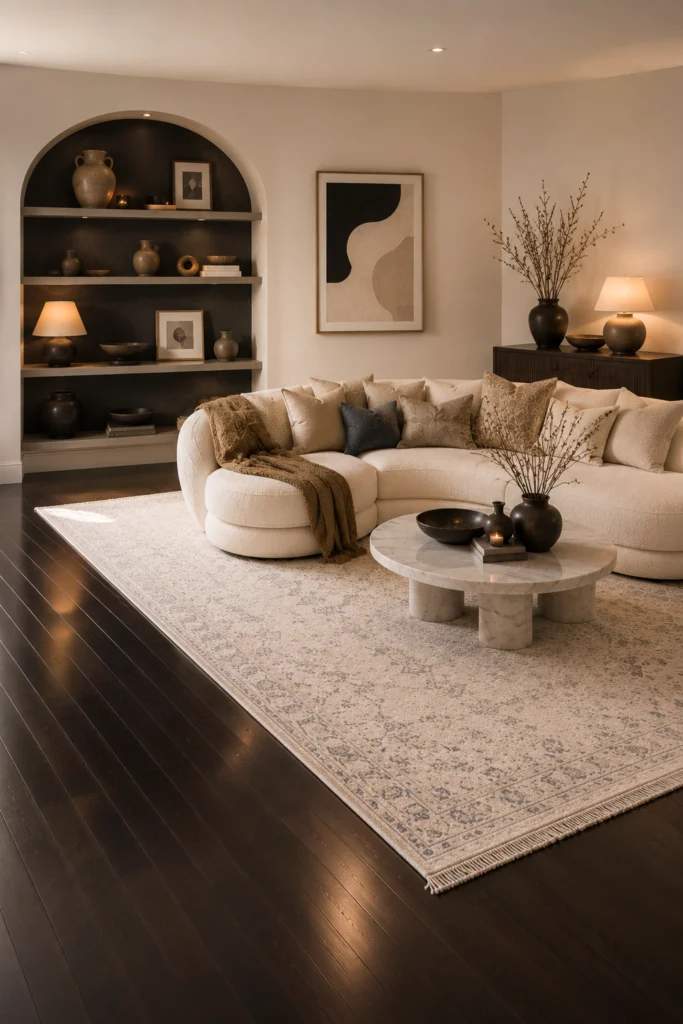
Dark flooring grounds the room, but it needs contrast. A lighter rug prevents the space from feeling too heavy.This balance keeps the room visually dynamic while maintaining warmth.
Minimal Wall Art with Strong Impact
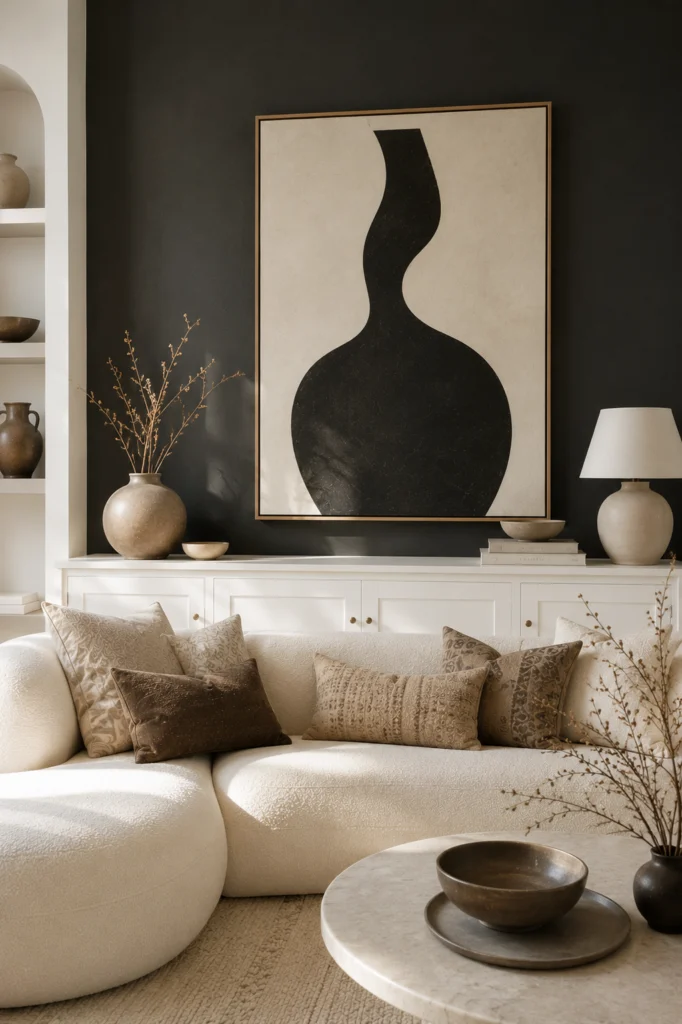
Stop filling every wall. One impactful piece often does more than multiple small ones. This approach keeps the room focused and avoids clutter.
Cozy Reading Nook
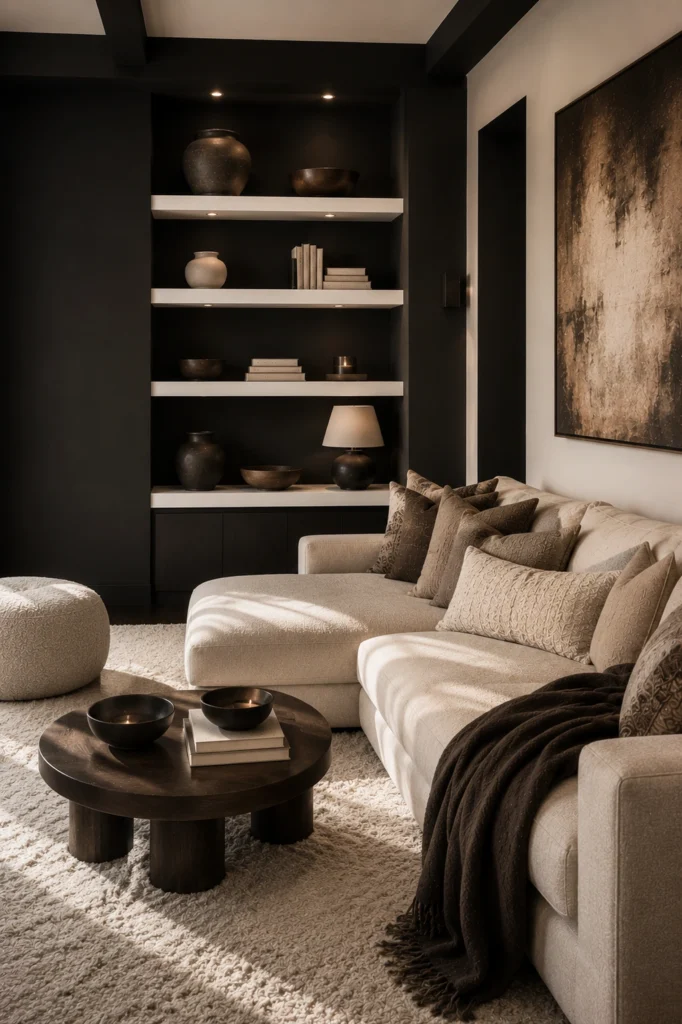
Create a small corner with a comfortable chair and soft lighting. This adds function, not just style.Make it inviting, not decorative. If it’s not usable, it’s pointless.
Layered Textures with Minimal Color
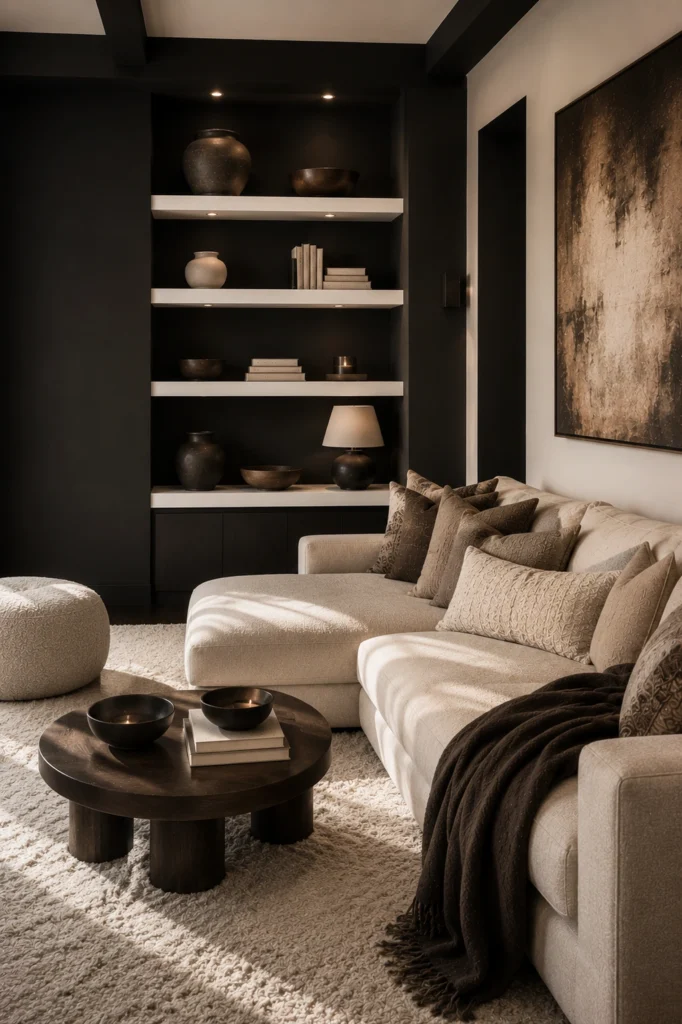
Instead of adding more colors, add more textures. This keeps the palette clean while still feeling rich.Texture creates interest without overwhelming the eye.
Black and Beige Contrast
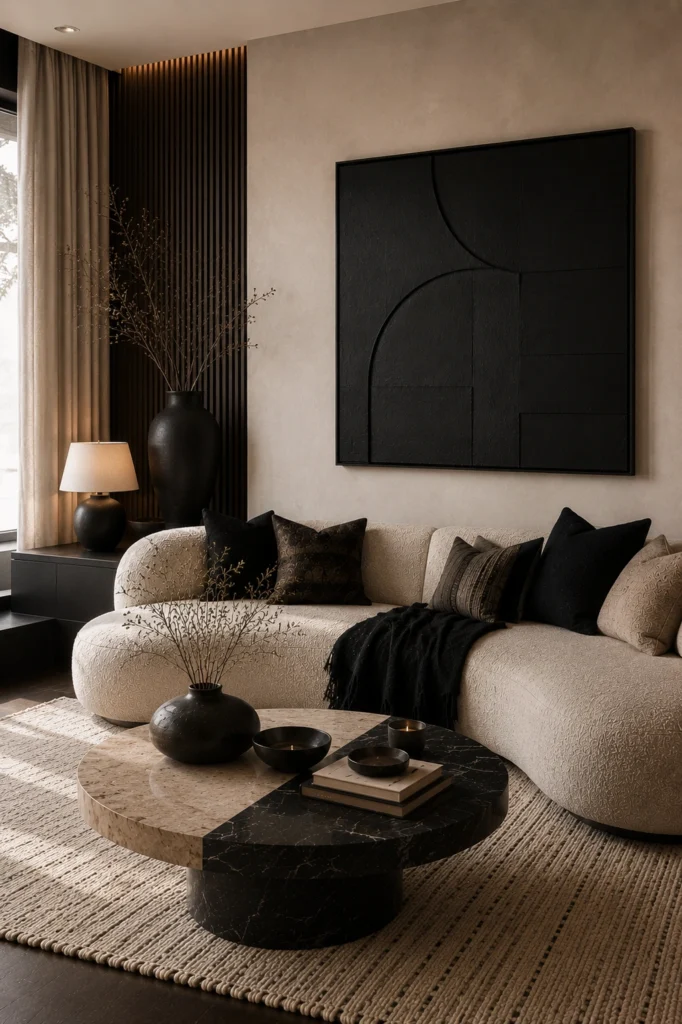
This combination works because it’s simple. Black adds depth; beige softens it.Stick to this contrast and avoid adding unnecessary colors that dilute the effect.
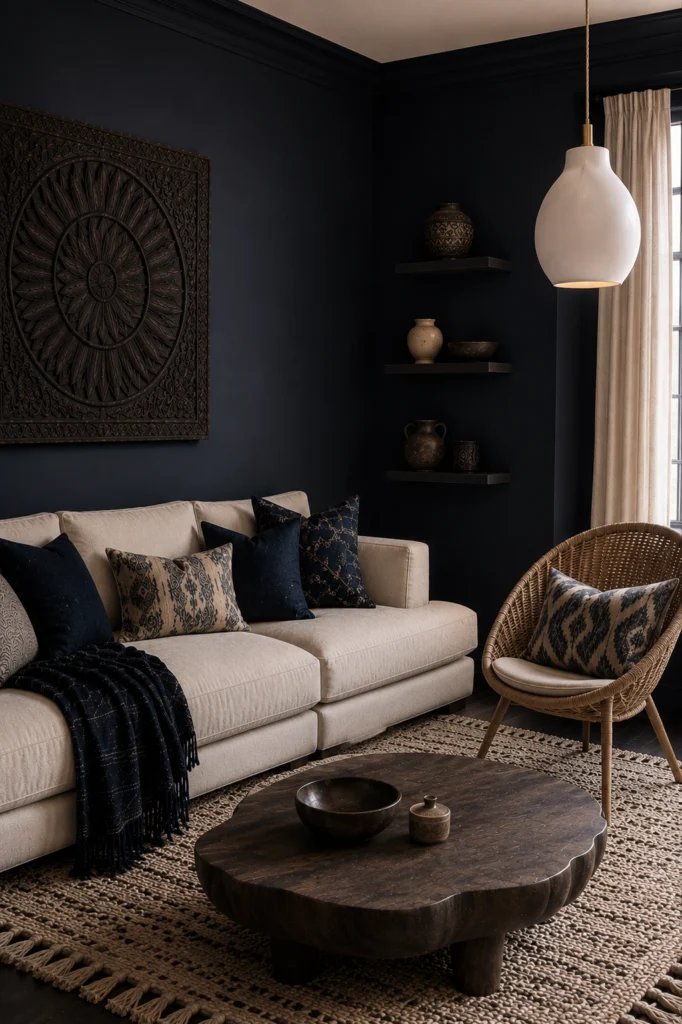
Handmade Decor Elements
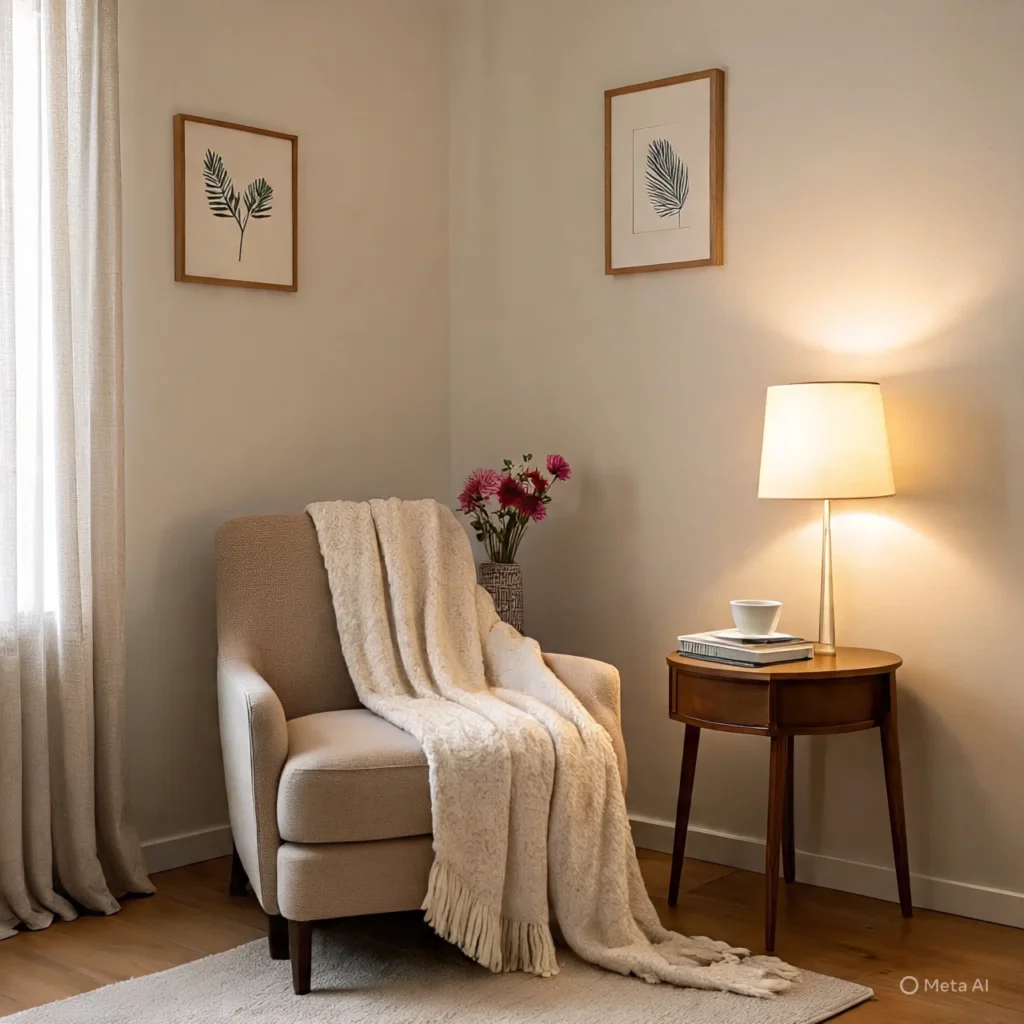
Handmade items bring authenticity, but too many look cluttered. Choose a few meaningful pieces. Quality over quantity—always.
Soft Ambient Lighting Layers
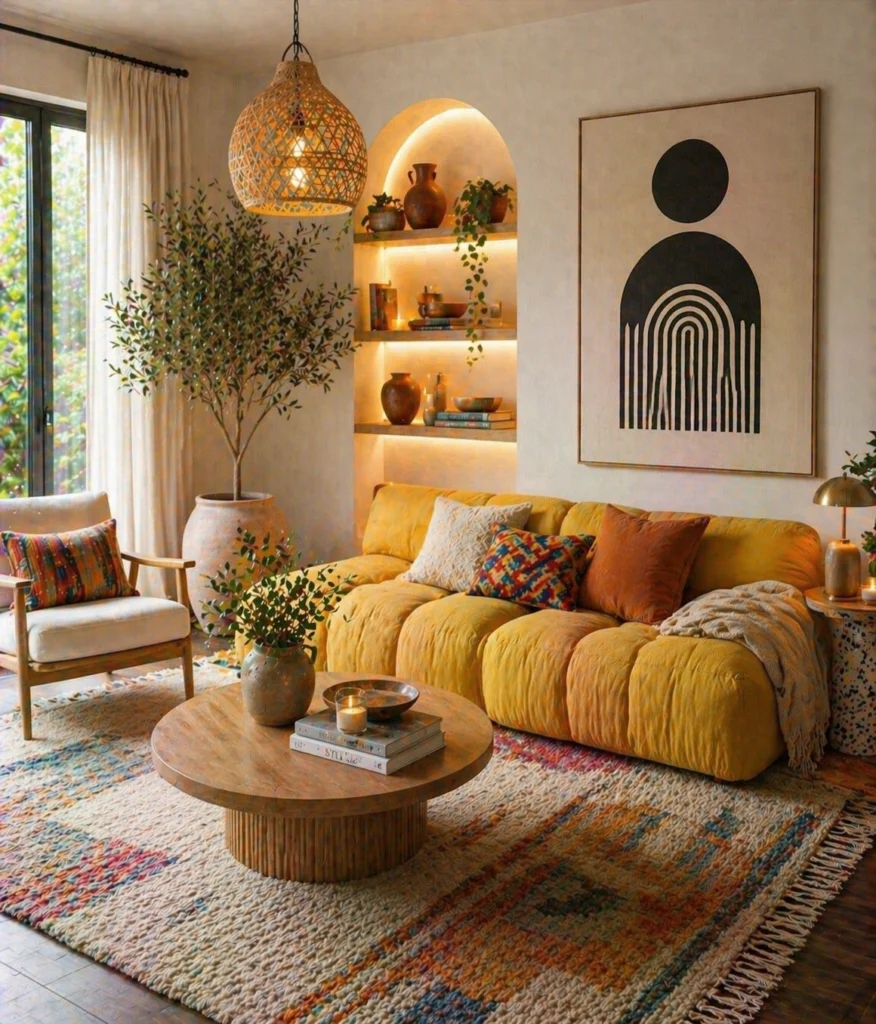
Lighting defines the entire mood. Use multiple sources—lamps, candles, and soft fixtures—to create layers.If your lighting is flat, your room will feel lifeless no matter how well it’s styled.