23 Moody Dining Room Ideas That Feel Elegant
Moody dining rooms aren’t about darkness—they’re about control, depth, and intentional restraint. Most people get this wrong by overloading the space with trendy décor instead of letting atmosphere do the work. True elegance comes from contrast, layered textures, and lighting that shapes the room rather than floods it. If your goal is sophistication, you need to think less about filling space and more about curating mood with precision.
Below are 23 ideas that actually deliver that refined, minimalist elegance—without looking try-hard or cluttered.
Deep Charcoal Walls with Warm Wood Table
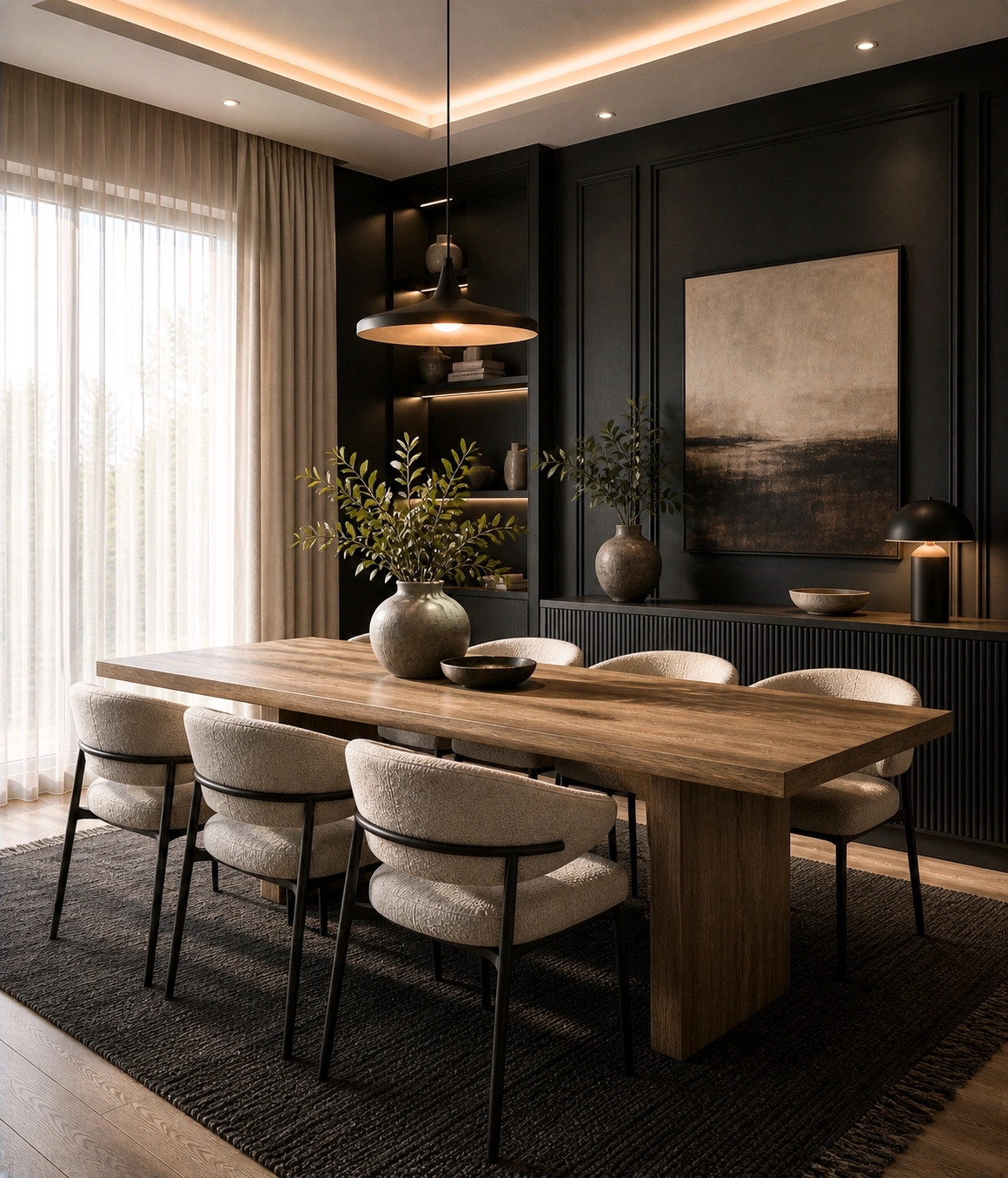
Charcoal walls create a grounded, cocoon-like effect that instantly elevates the dining experience. When paired with a warm wood table, the contrast feels intentional rather than heavy. The richness of the wood cuts through the darkness, preventing the space from feeling flat or lifeless. Keep décor minimal so the materials speak for themselves.
Lighting should be soft and directional, not overhead glare. A single pendant or low-hanging fixture creates intimacy while highlighting the table as the focal point. Avoid clutter—one centerpiece is enough. The goal is calm authority, not visual noise.
Black-on-Black Minimalist Dining
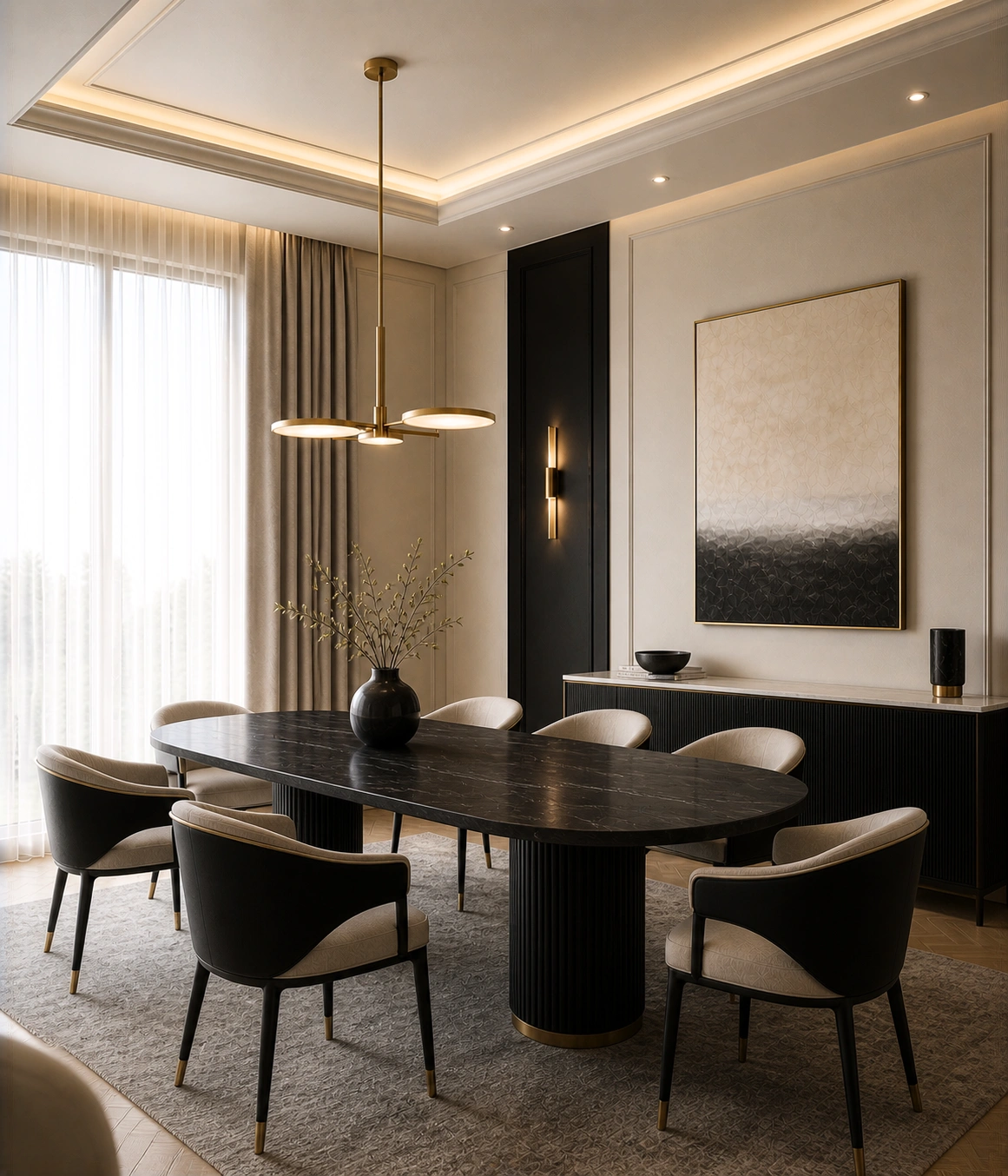
Most people misuse black by not varying texture. A black-on-black dining room works only when you layer finishes—matte walls, satin chairs, and a slightly reflective tabletop. This creates depth without introducing unnecessary color.Use subtle lighting to define edges and shapes. A hidden LED strip or a dim pendant can outline forms without overpowering the mood. This setup demands discipline—any random décor piece will ruin the aesthetic instantly.
Moody Olive Green with Brass Accents
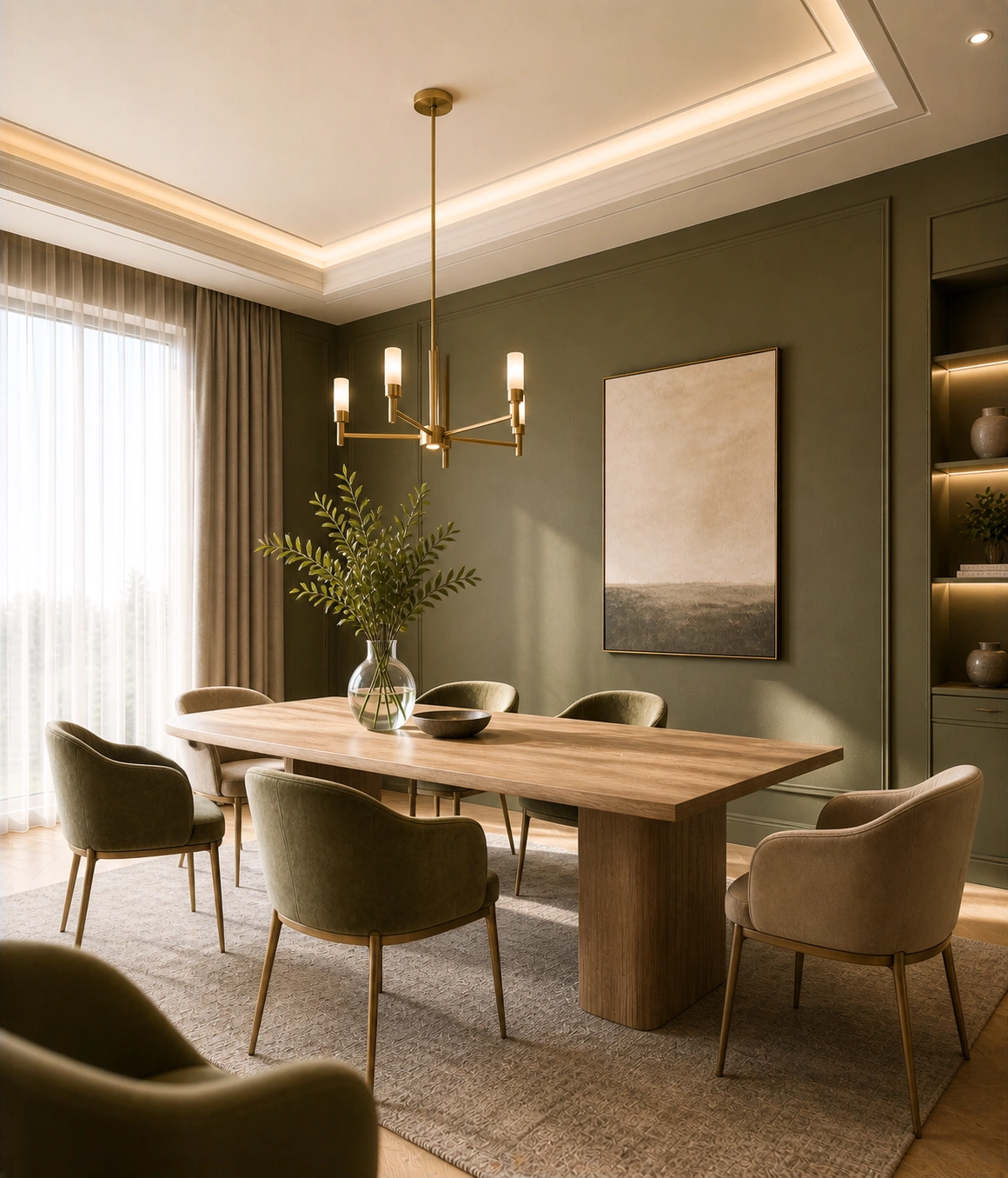
Olive green brings a natural depth that feels rich without being obvious. It’s more refined than standard dark green because it carries warmth. Pairing it with brass accents adds a subtle glow that prevents the room from feeling dull.Keep furniture clean-lined and avoid overly ornate details. Let the brass lighting fixture act as the visual anchor. This combination works because it balances earthiness with quiet luxury—without screaming for attention.
Dark Paneling with Neutral Upholstery
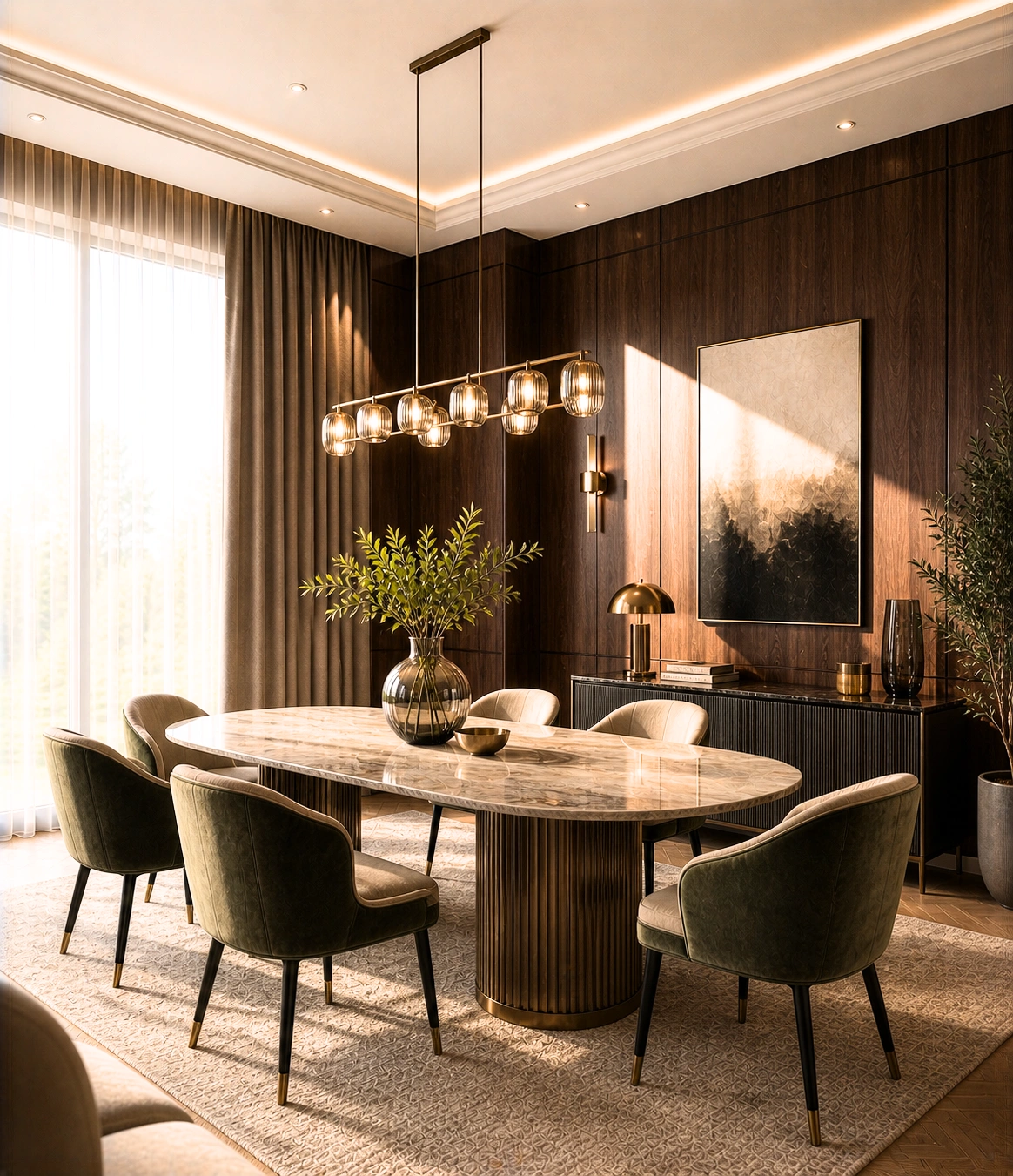
Wall paneling adds architectural depth that instantly upgrades a space. Dark wood paneling, when done right, feels timeless rather than heavy. To balance it, use neutral upholstered chairs that soften the overall look.
The contrast between structured walls and soft seating creates a layered environment. Avoid busy patterns—stick to clean textures. This is about restraint and precision, not decoration overload.
Matte Navy Walls with Gold Lighting
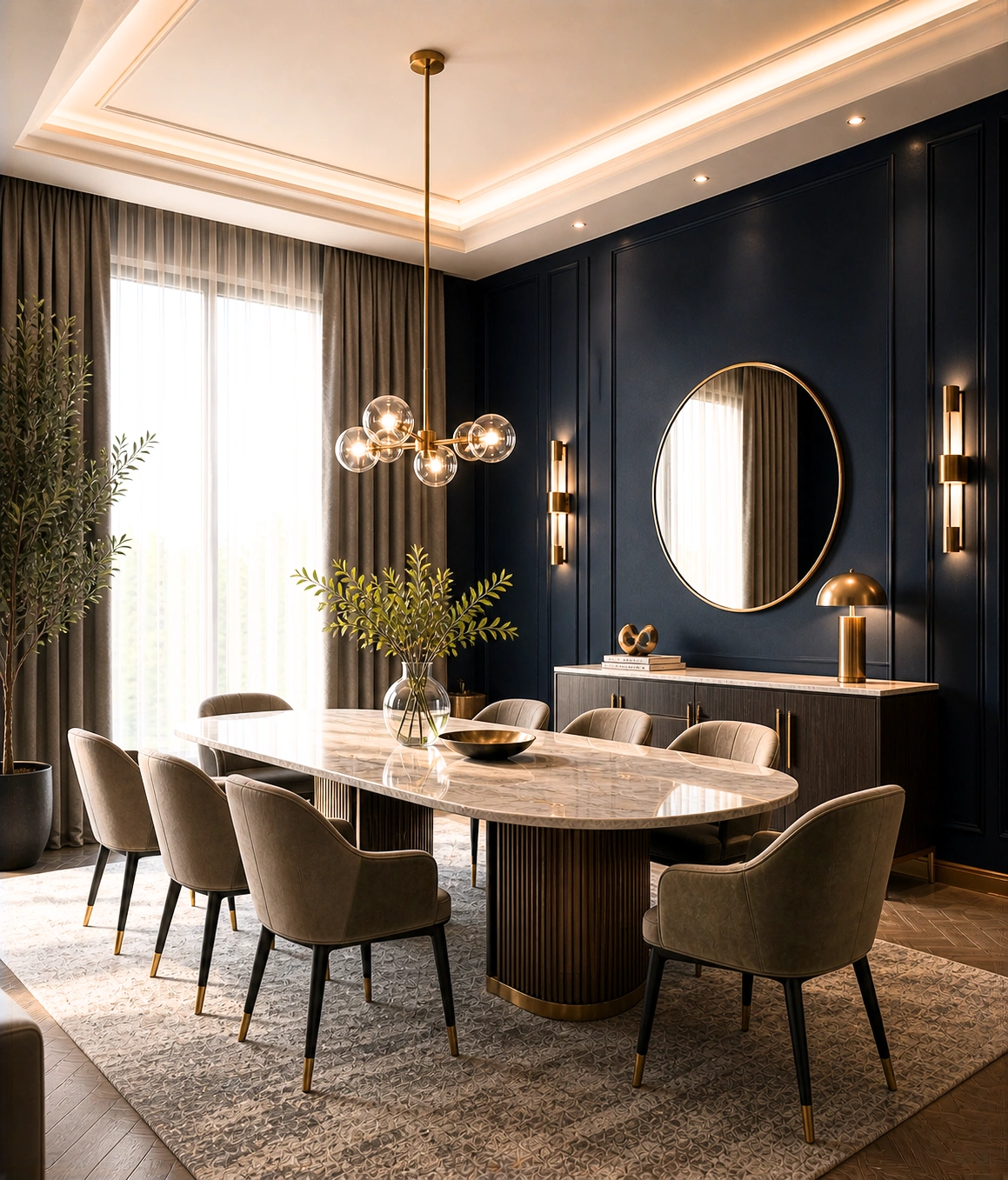
Navy is safer than black but still delivers depth. A matte finish avoids unwanted reflections and keeps the mood controlled. Gold lighting introduces just enough contrast to keep the space visually engaging.
Don’t overuse gold—one fixture is enough. Too many metallics will cheapen the look. Keep everything else minimal so the color and lighting can dominate without competition.
Minimalist Concrete Dining Space
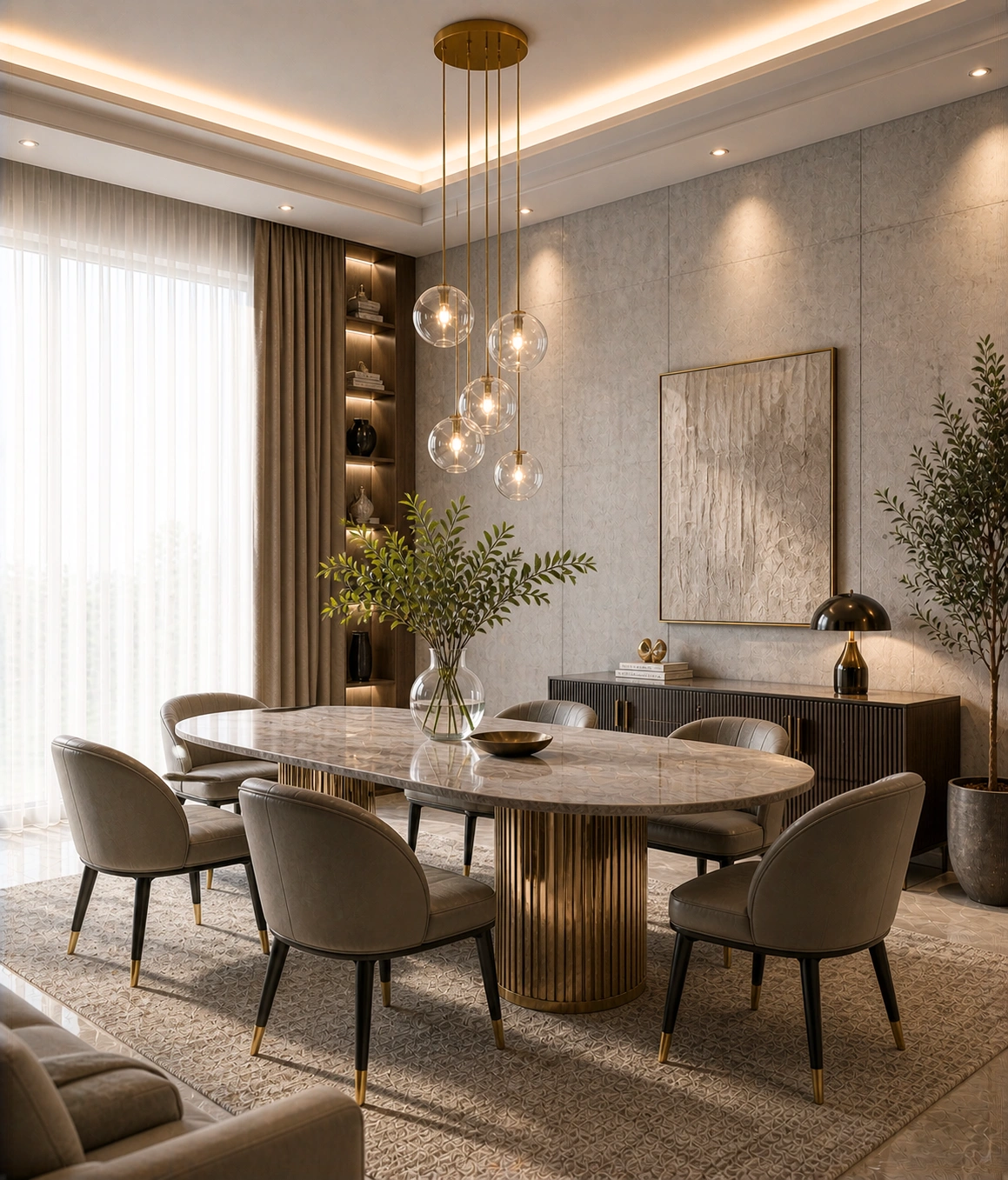
Concrete brings a raw, grounded aesthetic that feels modern and intentional. The key is balance—pair it with warm lighting and simple furniture to avoid a cold, unfinished look.This style works best when you resist adding unnecessary décor. Let the texture of the walls and surfaces define the space. Anything extra should have a purpose, not just fill space.
Dark Wallpaper with Subtle Patterns
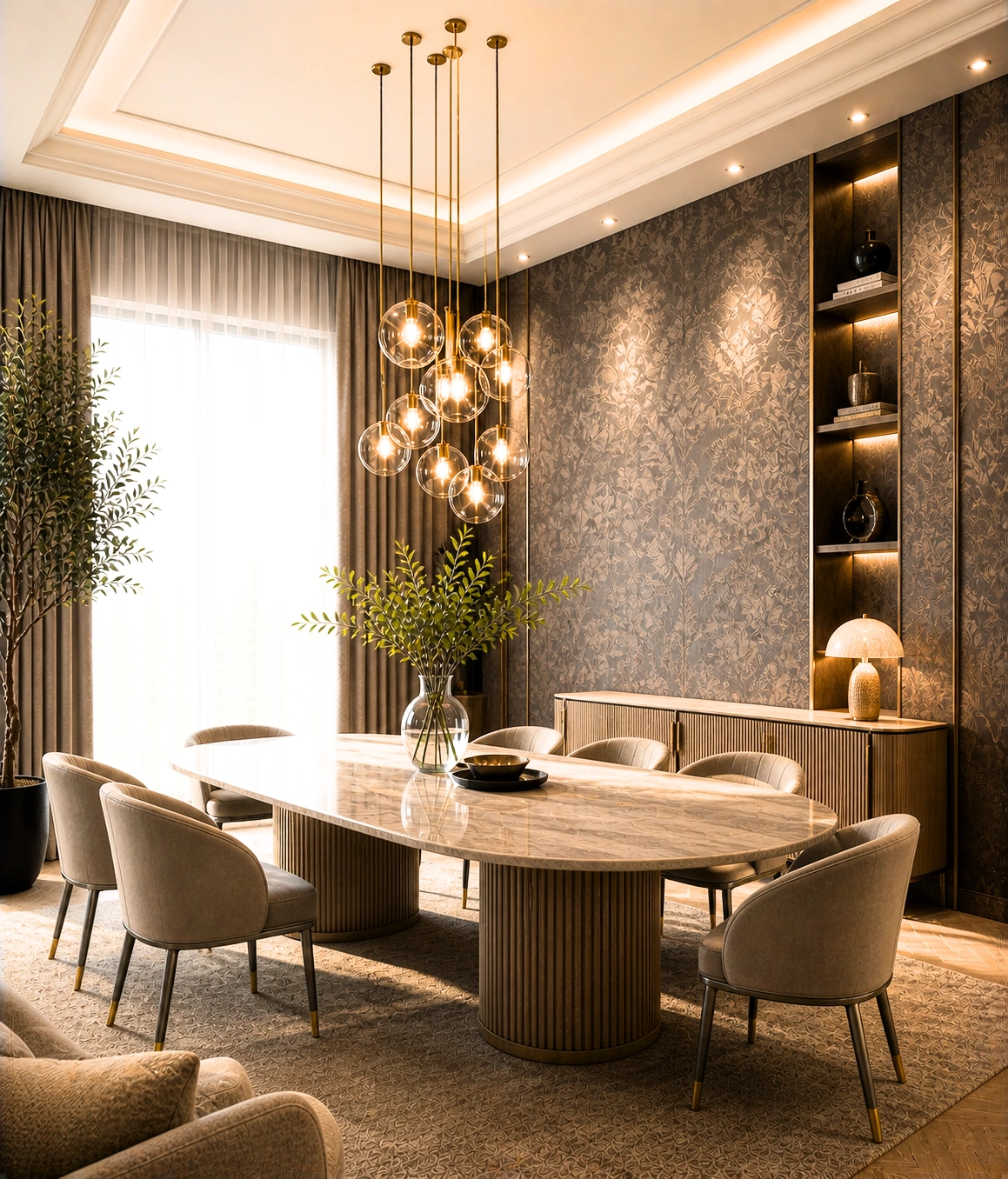
Subtle patterned wallpaper can add depth without overwhelming the room. The mistake people make is choosing loud designs—keep patterns understated and tonal.Pair it with simple furniture to avoid visual conflict. The wallpaper should enhance, not dominate. This approach creates a refined backdrop that feels layered and intentional.
Low Lighting with Statement Chandelier
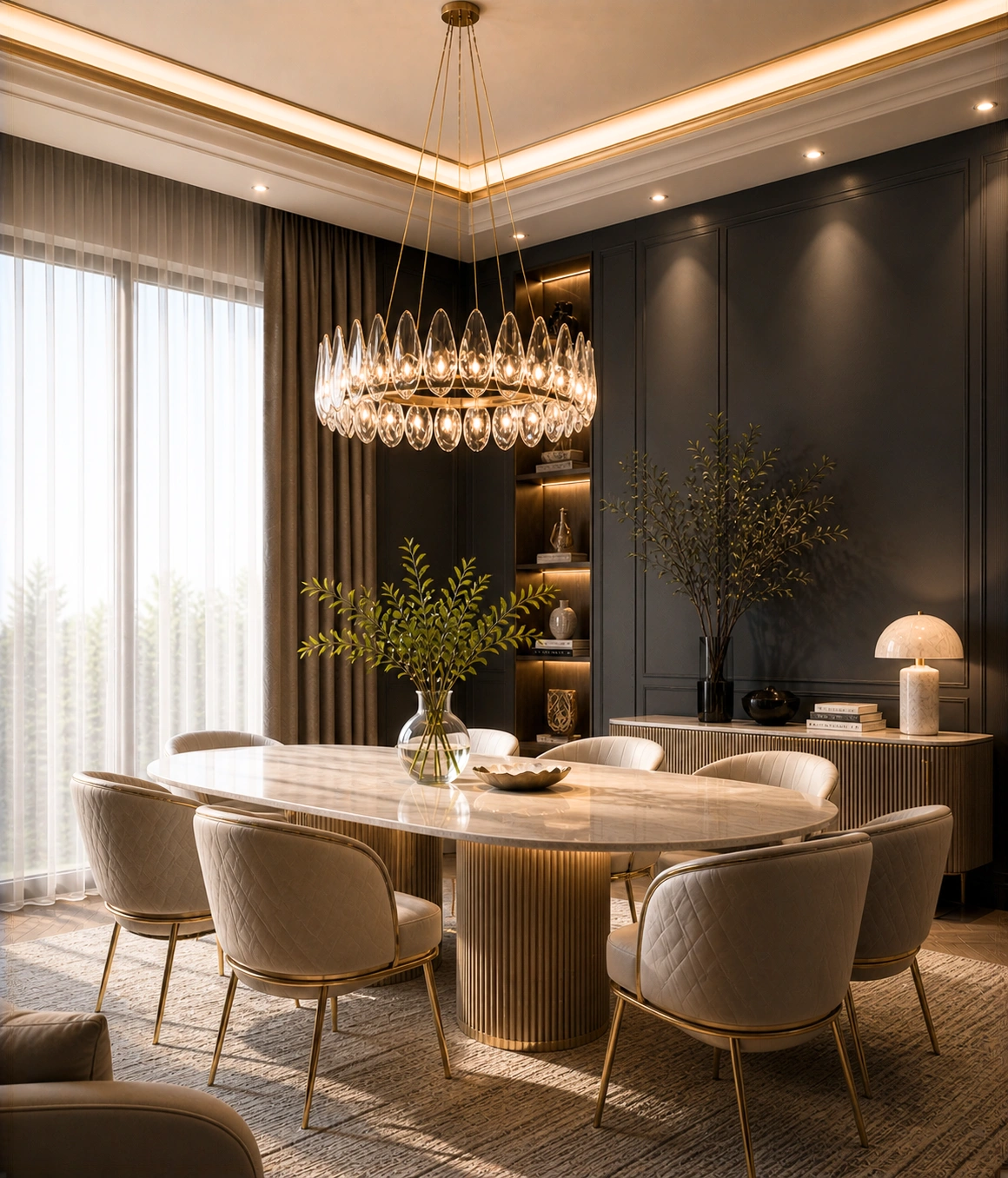
Lighting is everything in a moody dining room. A statement chandelier becomes the centerpiece when the rest of the room stays restrained.
Keep the brightness low and focused. The goal is to create a sense of intimacy, not visibility. If everything is equally lit, you’ve already failed the mood.
Black Marble Dining Table Focus
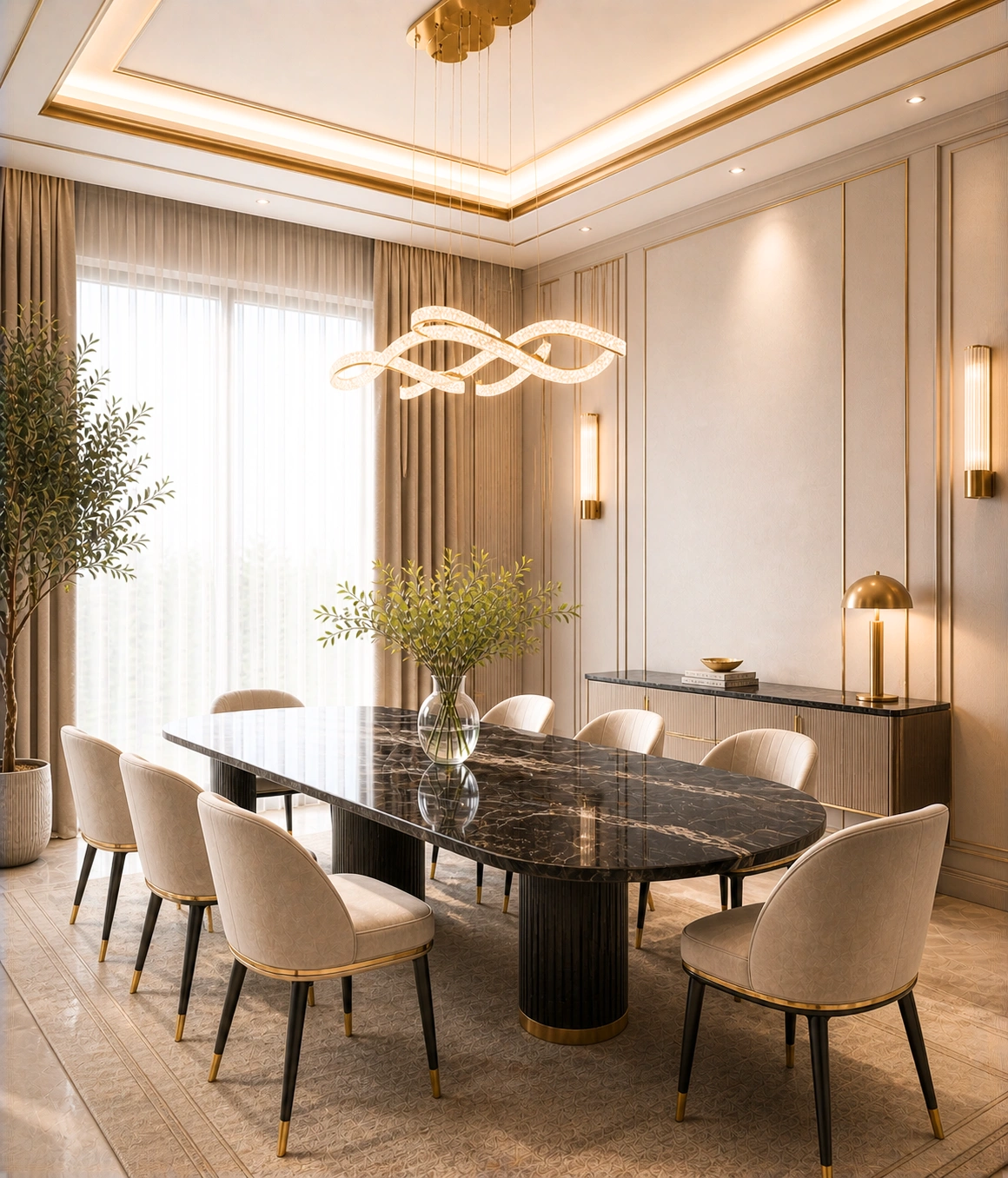
A black marble table brings instant luxury—but only if the surroundings don’t compete. Let it be the focal point by keeping everything else simple.Use lighting to highlight the surface texture. Avoid cluttering the table—one or two elements are enough. This is about showcasing material quality, not decoration.
Dark Ceiling for Dramatic Effect
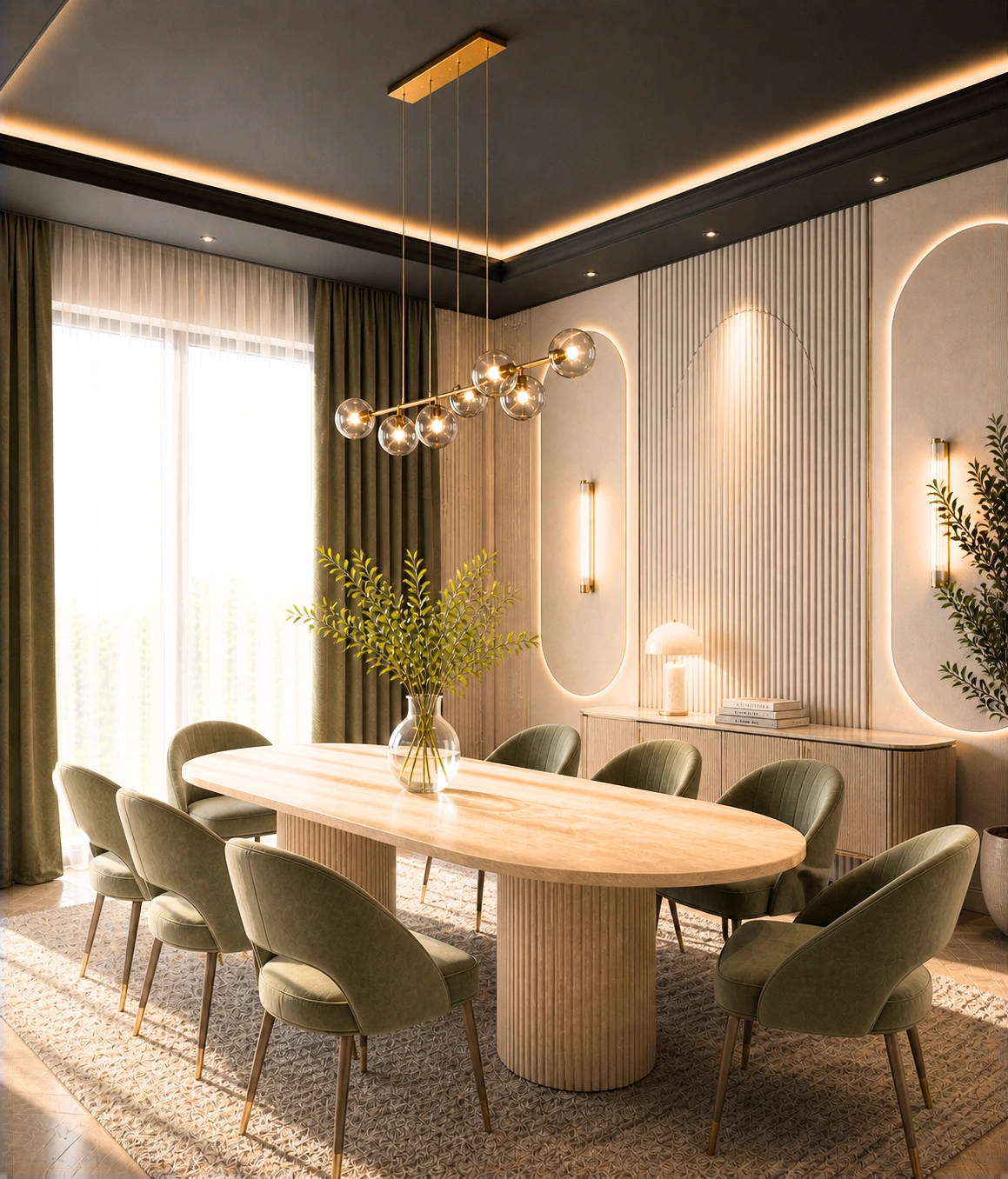
People ignore ceilings, and that’s a mistake. A dark ceiling creates a cocoon effect that enhances the overall mood.Pair it with lighter furniture to maintain balance. This subtle shift changes the entire perception of the space without adding clutter.
Velvet Seating in Deep Tones
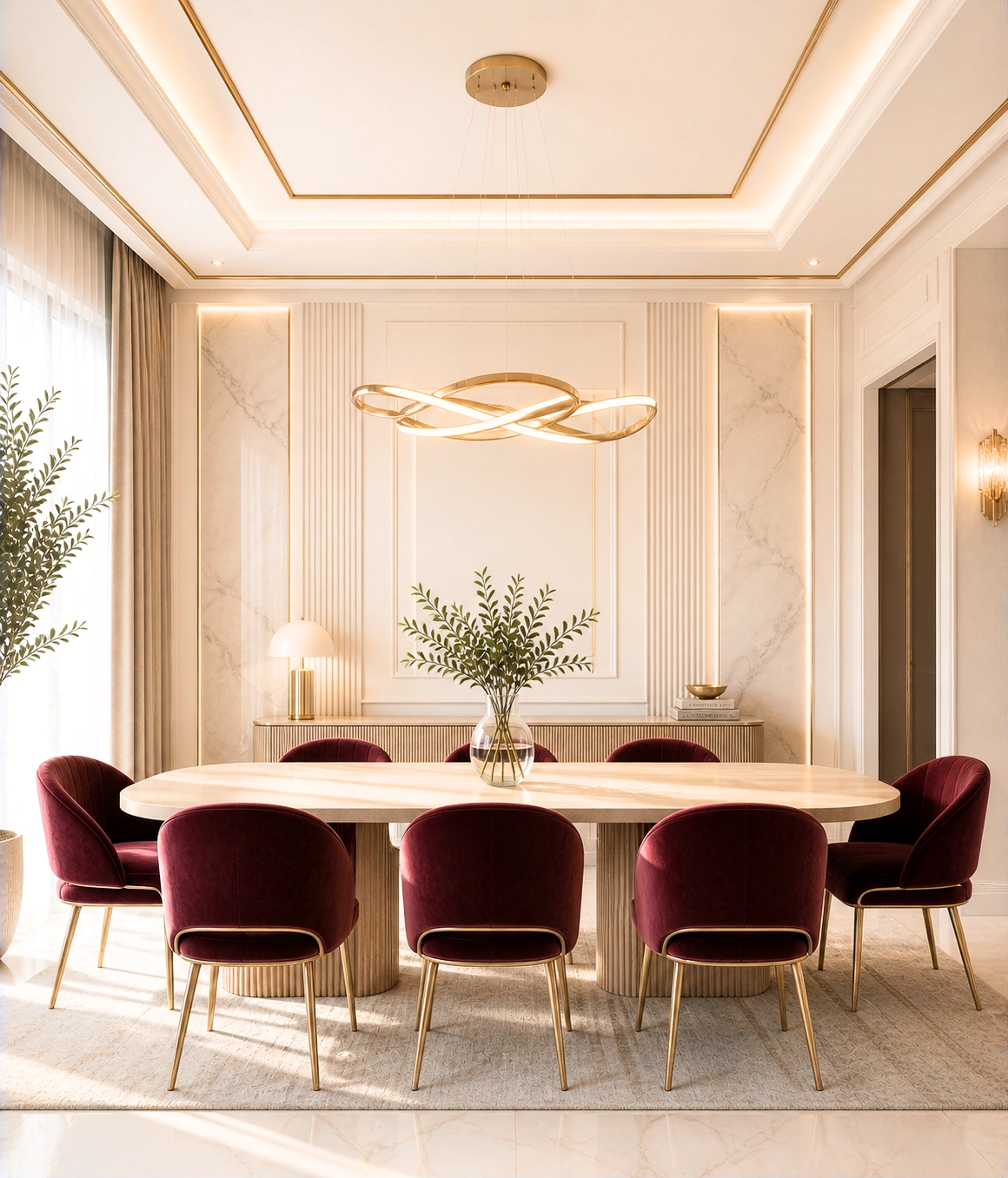
Velvet adds softness and luxury without needing extra décor. Deep tones like burgundy or forest green enhance the moody aesthetic.Keep the rest of the room minimal so the texture stands out. Overdoing materials will dilute the impact.
Monochrome Grey Palette
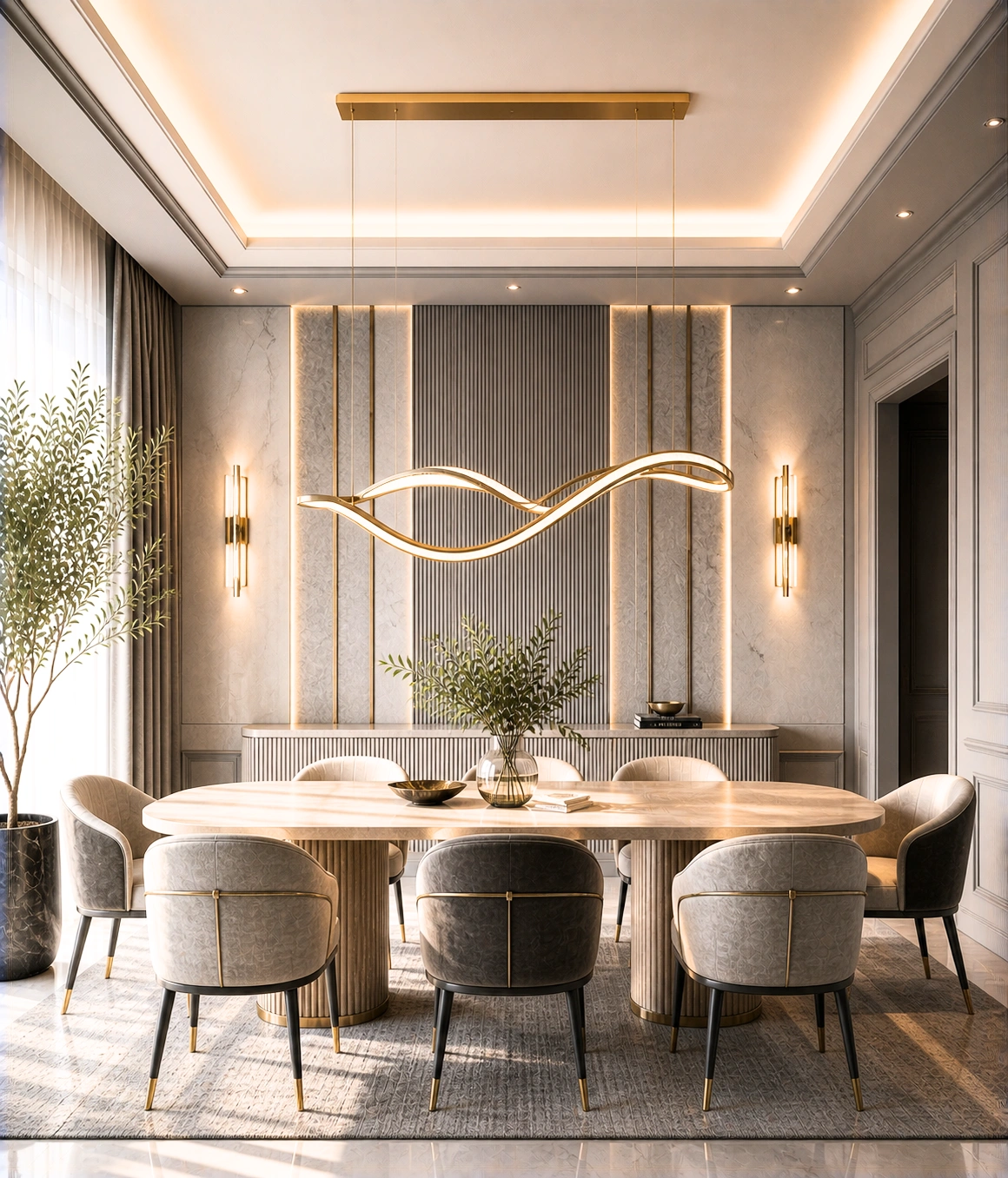
A monochrome grey palette works when you layer shades effectively. Flat grey looks lifeless—variation is key.Use different materials to create contrast. This keeps the space interesting without introducing new colors.
Dark Wood Everything
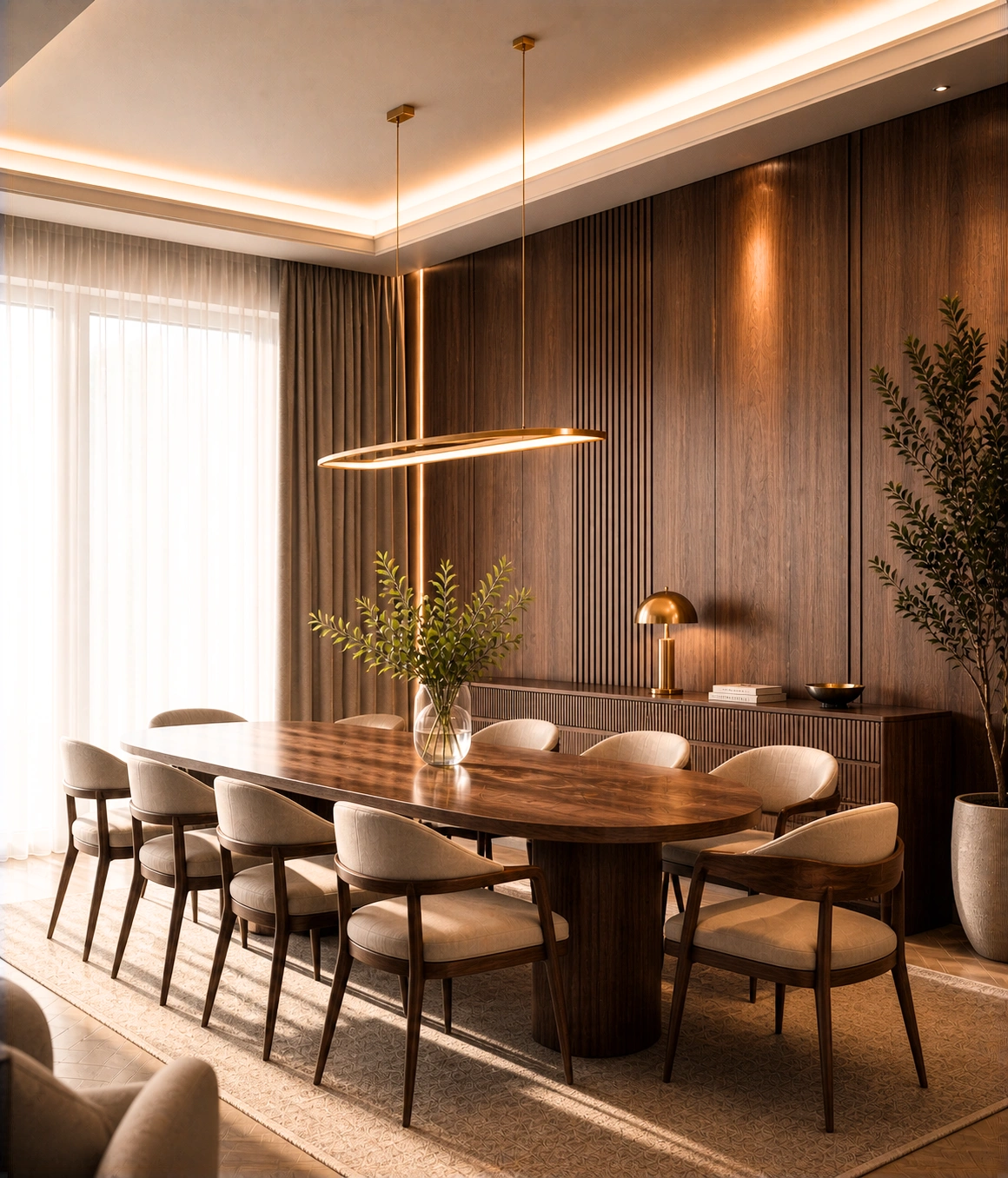
Consistency can be powerful. Using dark wood across walls, table, and chairs creates a unified look.Break monotony with lighting and subtle texture differences. Otherwise, the room will feel heavy and uninspired.
Minimal Art with Maximum Impact
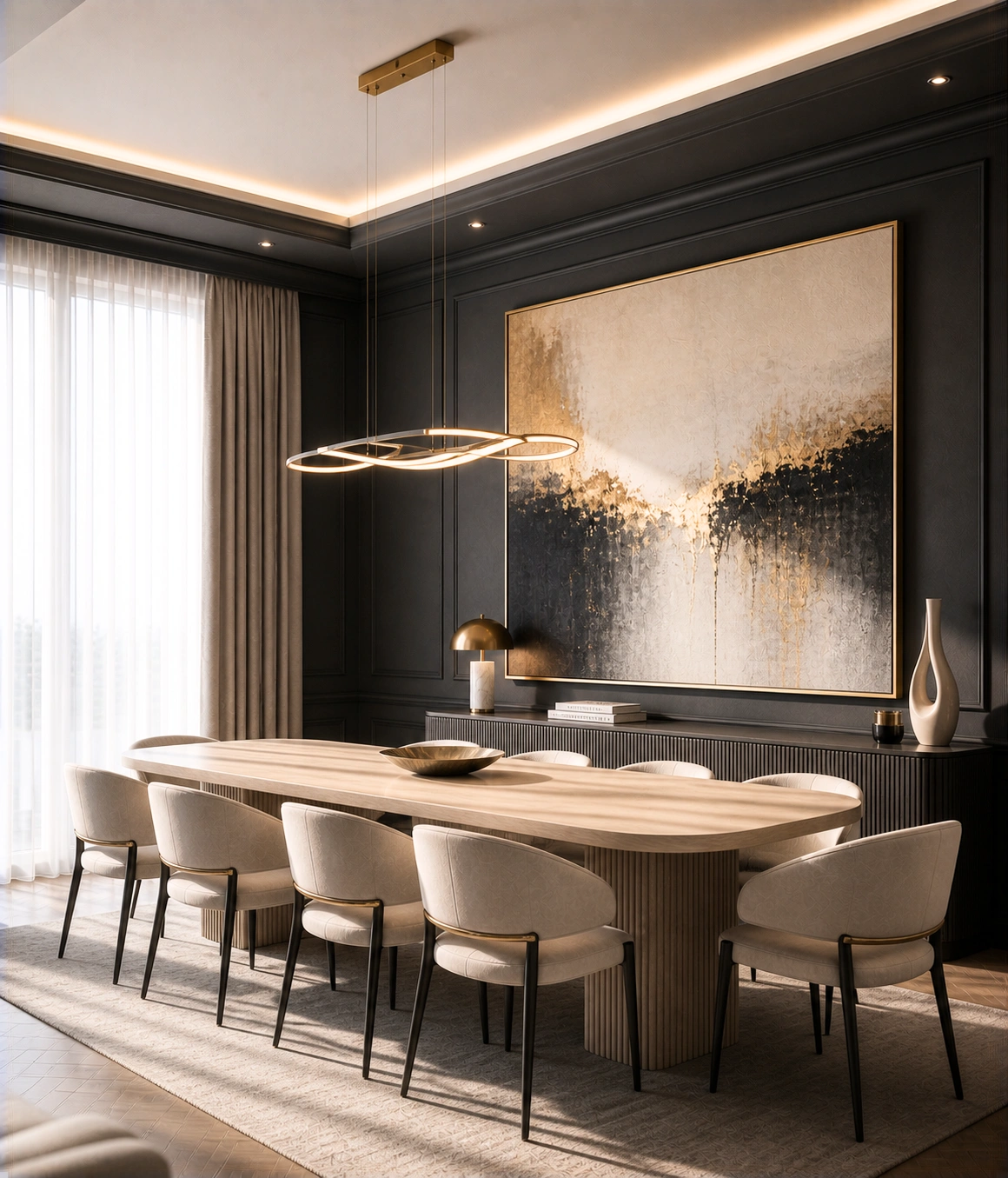
One large artwork is more effective than multiple small pieces. It anchors the room without cluttering it.Choose something bold but not chaotic. The goal is focus, not distraction.
Glass Table in Dark Setting
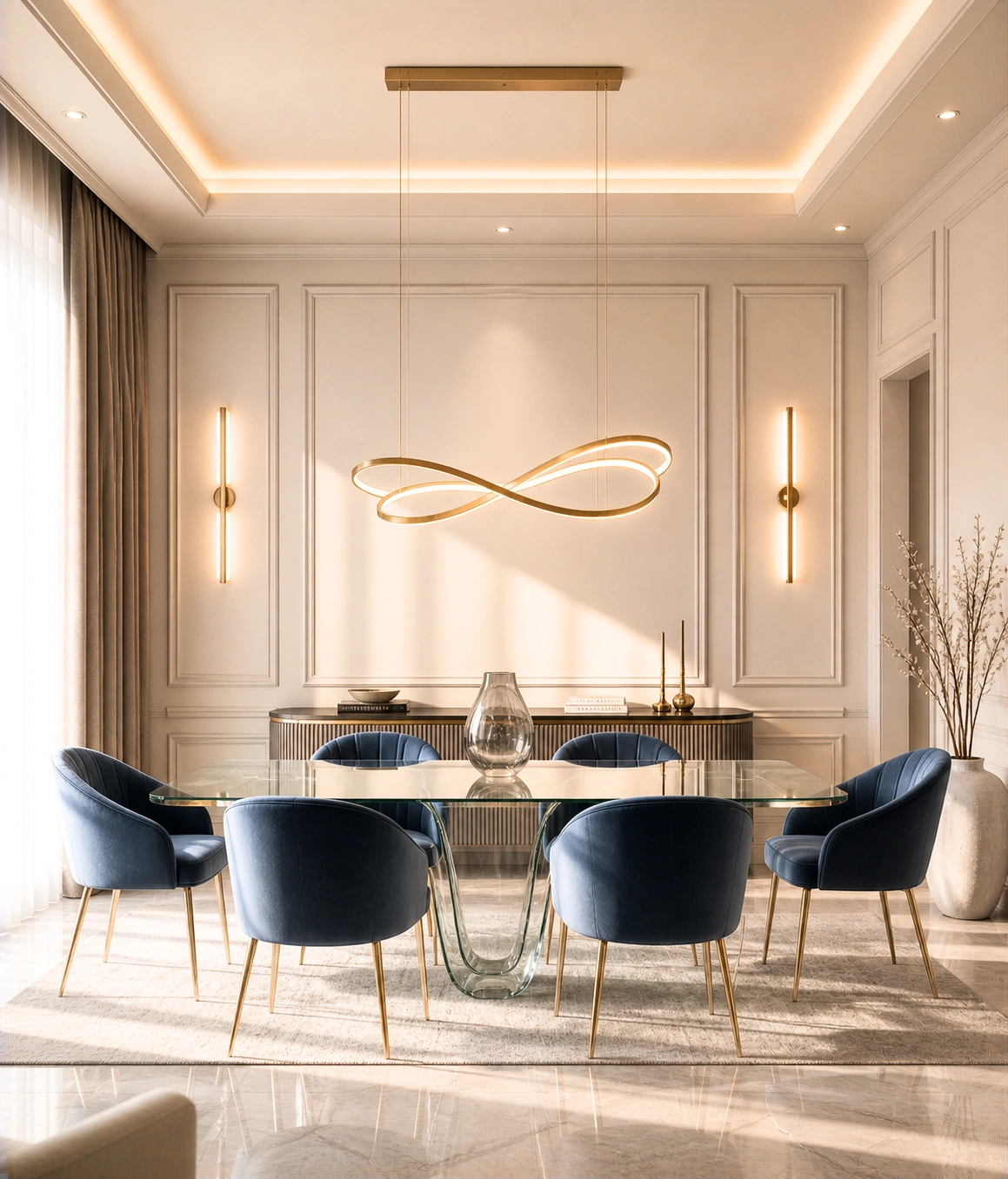
A glass table lightens a dark room without breaking the mood. It creates contrast through transparency.Keep surrounding elements simple so the balance remains intact.
Black and Beige Contrast
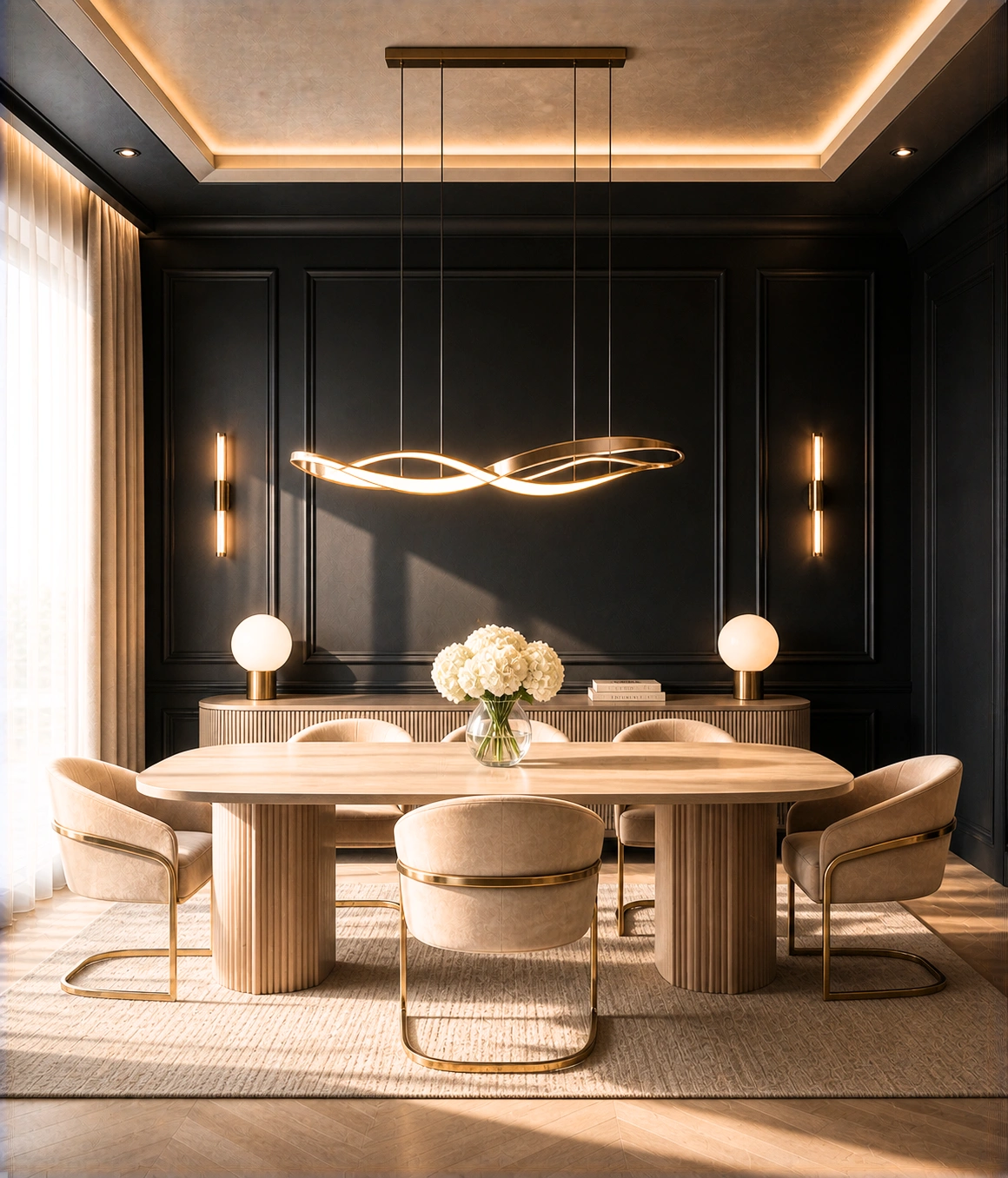
This combination works because it balances extremes. Black grounds the space, beige softens it.Avoid adding extra colors. The simplicity is what makes it elegant.
Sculptural Lighting Focus
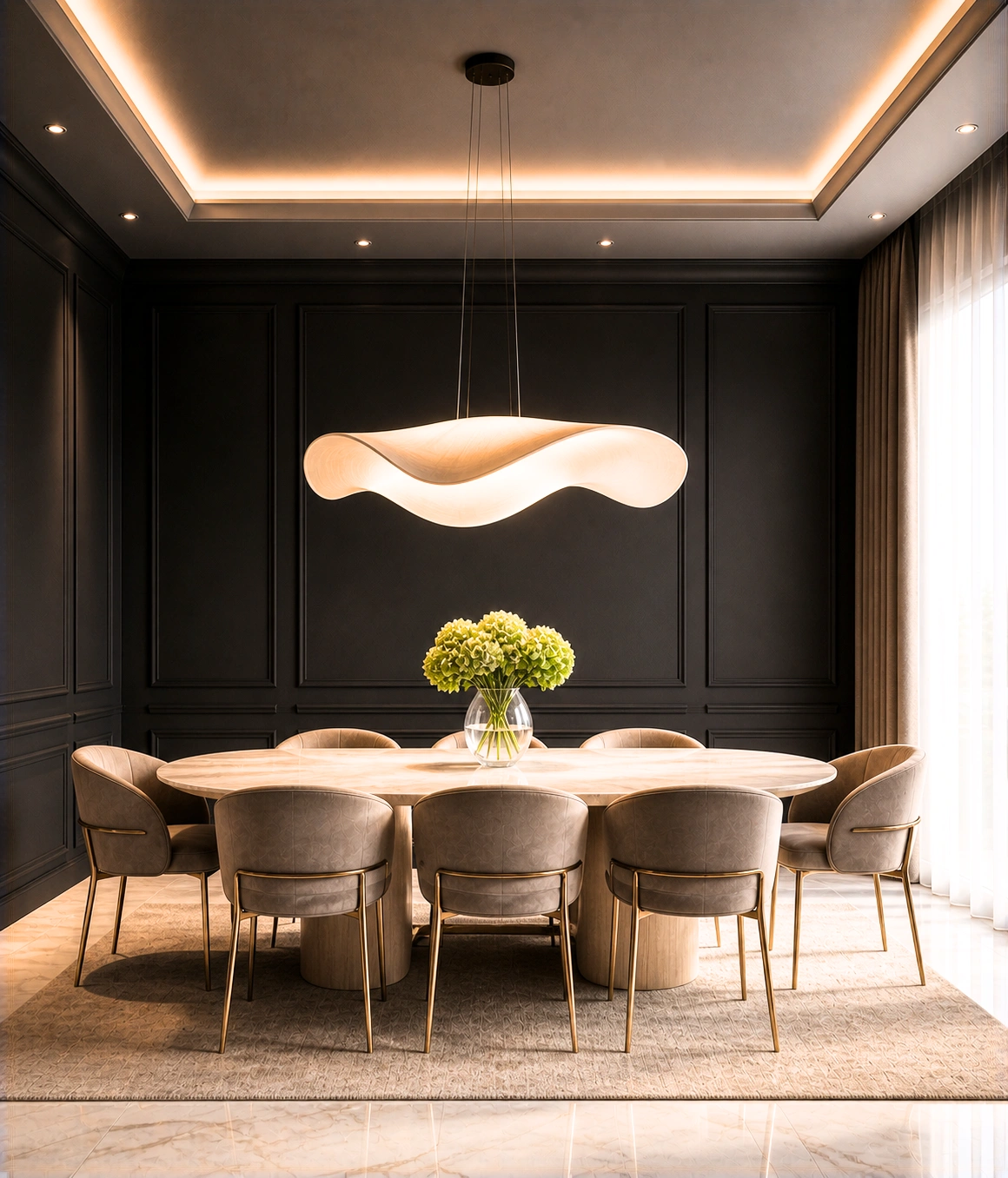
Lighting can act as art. A sculptural fixture adds personality without clutter.Everything else should step back. Otherwise, the effect is lost.
Dark Stone Accent Wall
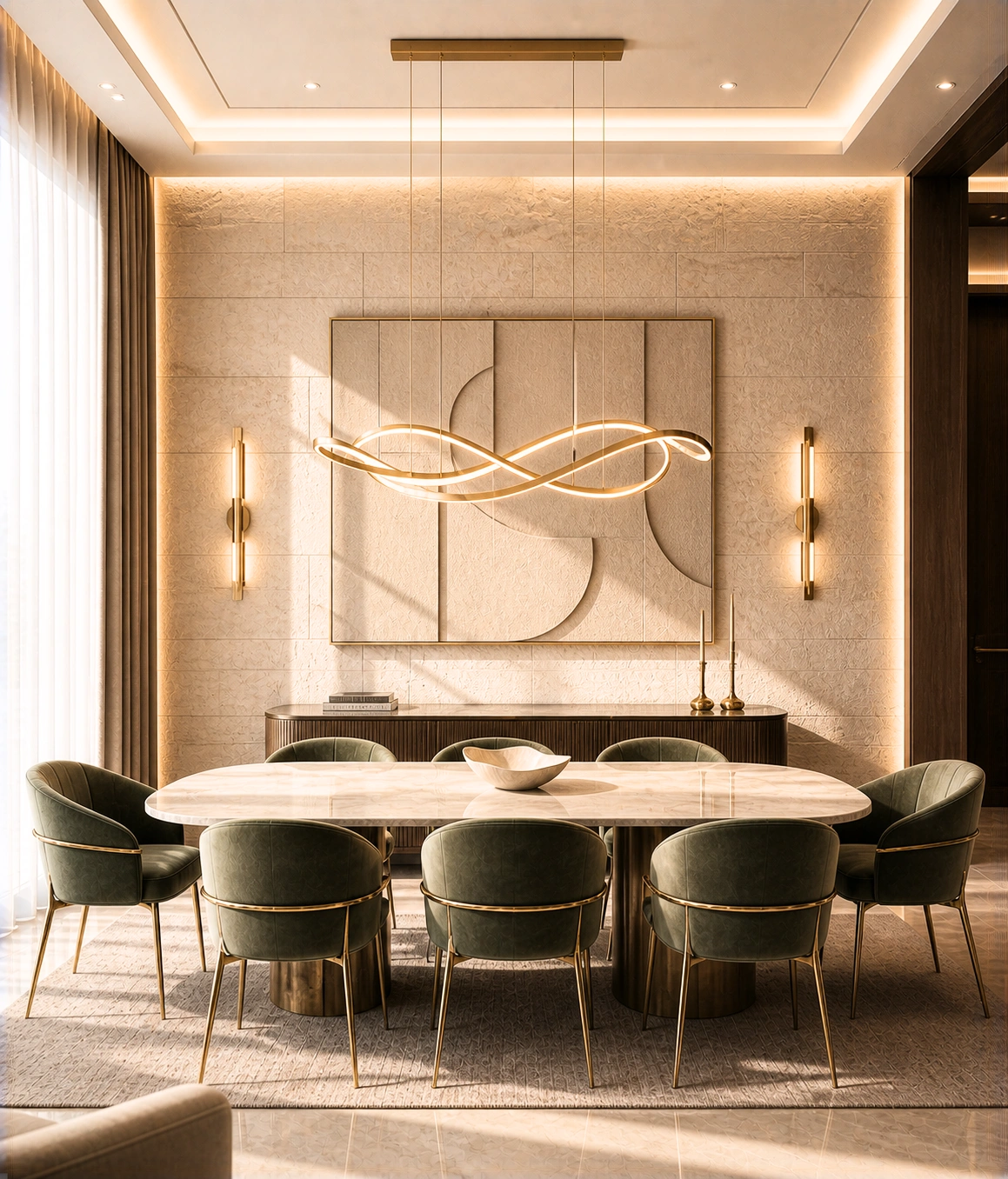
Stone adds texture and depth that paint can’t replicate.
Keep the rest minimal so the wall remains the highlight.
Moody Scandinavian Blend
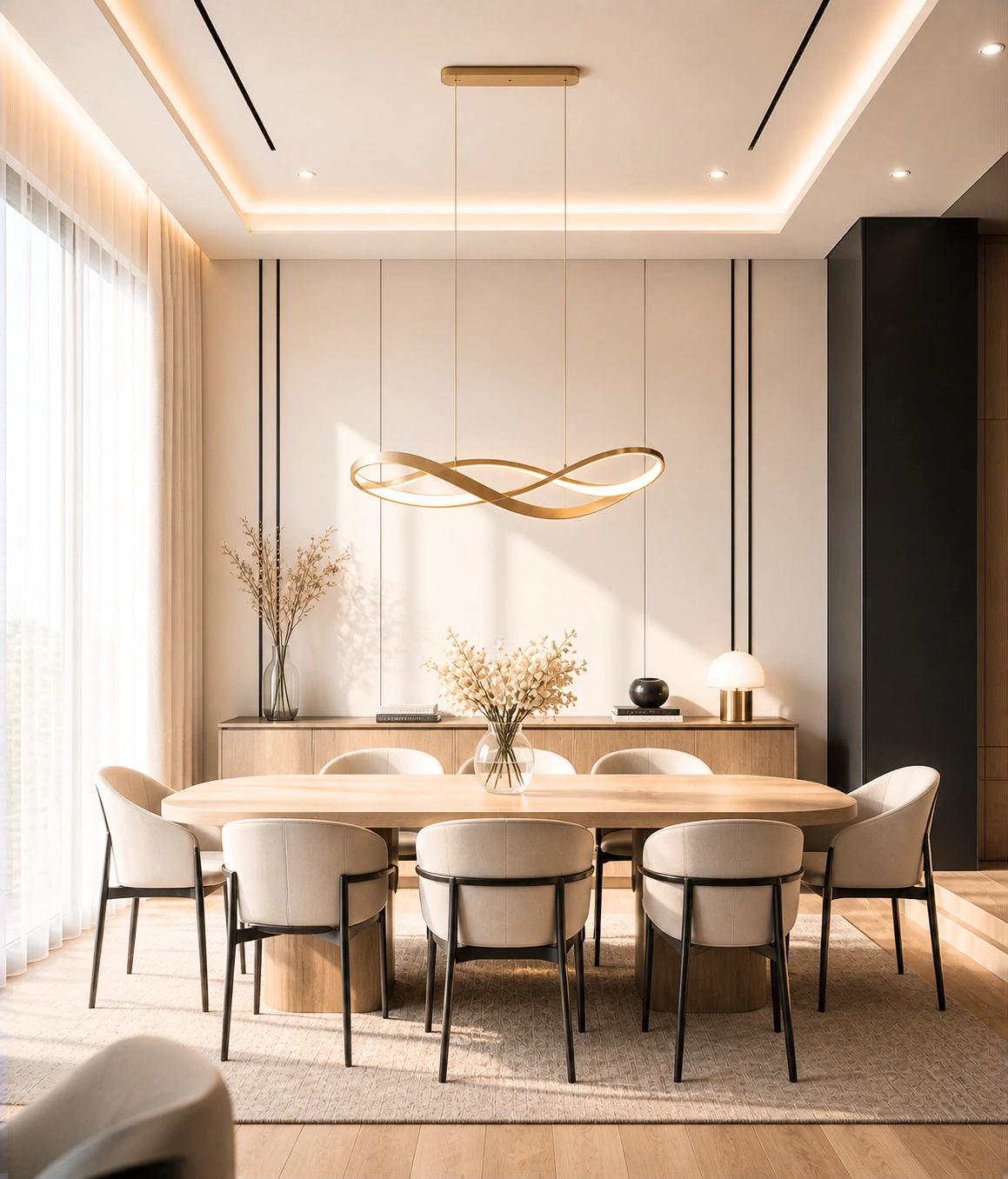
Combine clean lines with darker tones for a refined look.
Avoid over-decorating—Scandinavian style relies on restraint.
Candlelit Dining Atmosphere
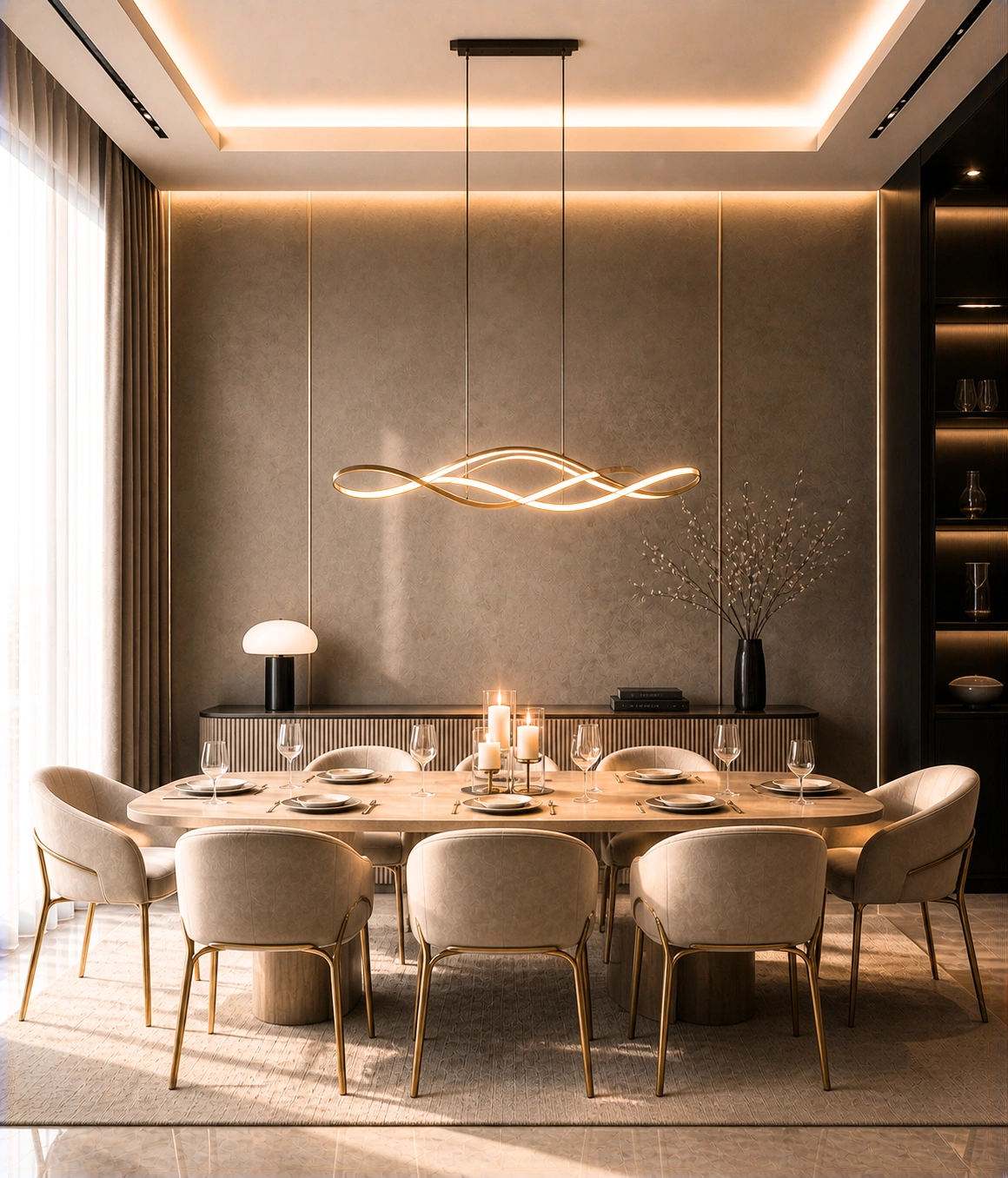
Candlelight creates natural warmth and movement.
Use it strategically, not excessively.
Dark Built-in Shelving
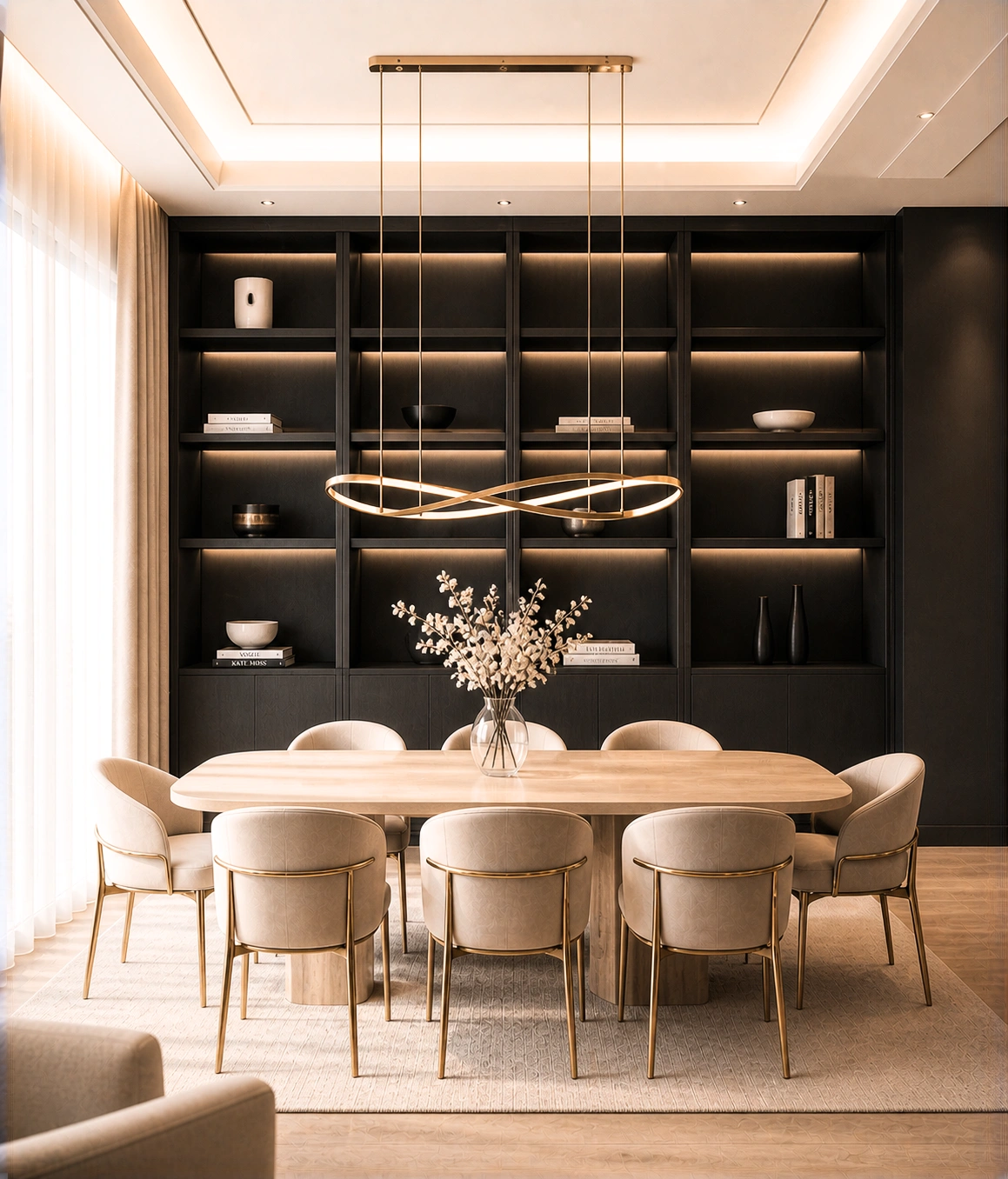
Built-ins add structure and storage without clutter.
Keep items curated, not crowded.
Textured Rugs in Dark Tones
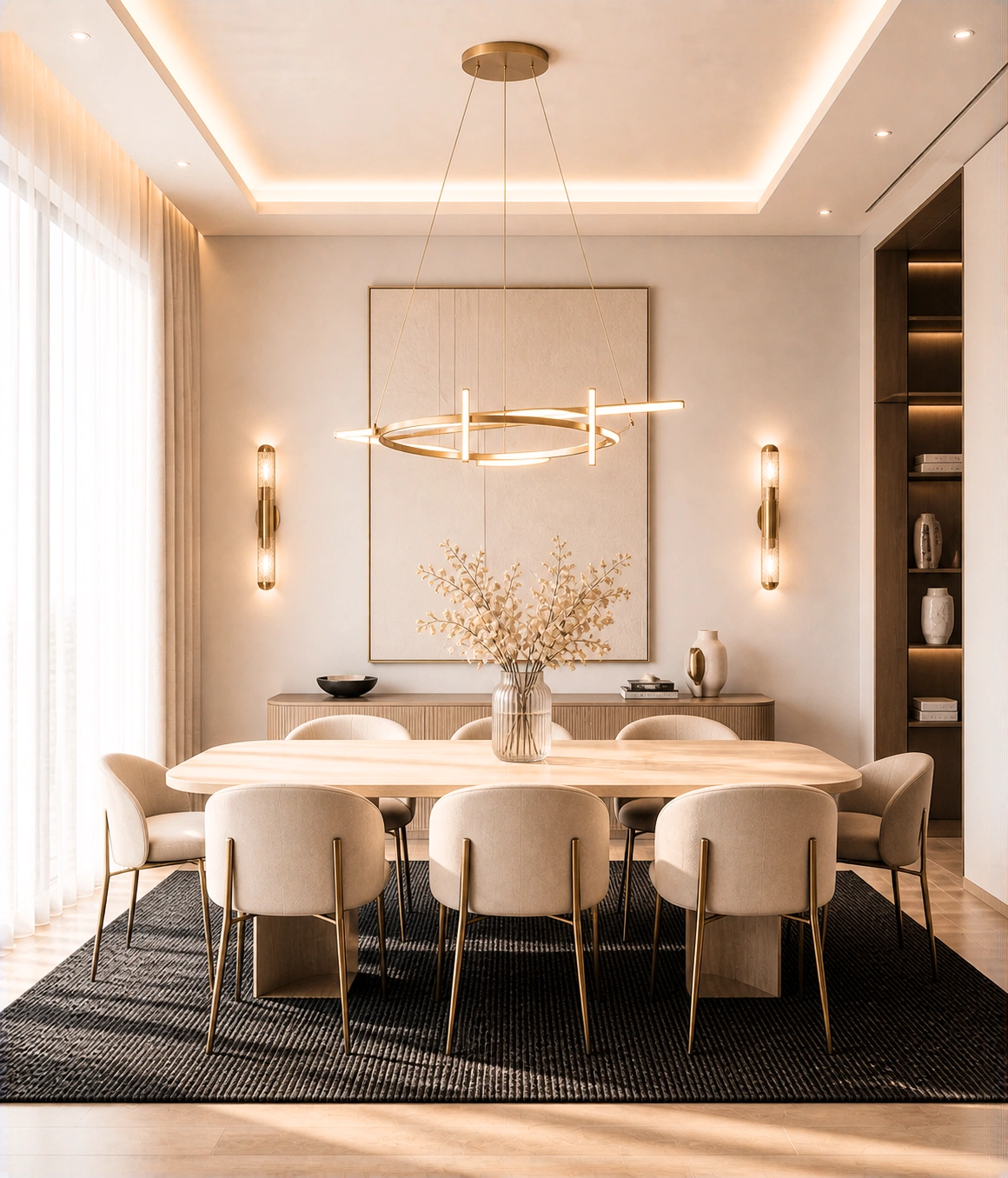
A rug grounds the space and adds warmth.
Choose texture over pattern for a cleaner look.
Ultra-Minimal Dining Setup
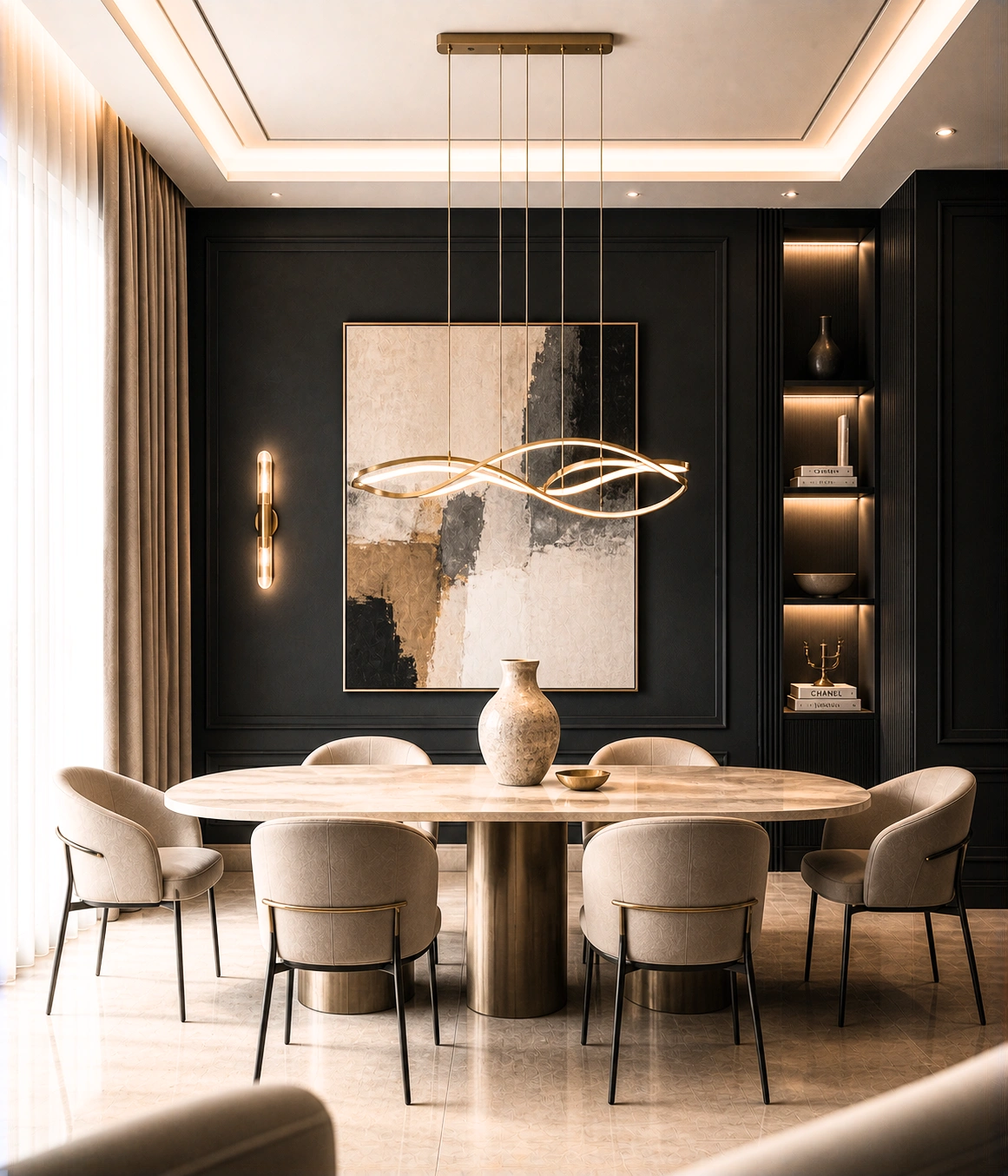
Most people overdo everything. This approach strips the room to essentials.If it feels empty, you’re doing it right. Elegance comes from restraint, not excess.