24 Japandi Bathroom Design Ideas That Feel Calm
Japandi design blends Japanese simplicity with Scandinavian warmth, creating bathrooms that feel calm and intentional. It’s not about decorating more—it’s about removing what doesn’t belong. Clean lines, natural materials, and muted tones define the space. If your bathroom feels busy or overdesigned, you’re working against this style. The ideas below focus on clarity, restraint, and real usability—not surface-level aesthetics.
Warm Wood Vanity with Clean Lines
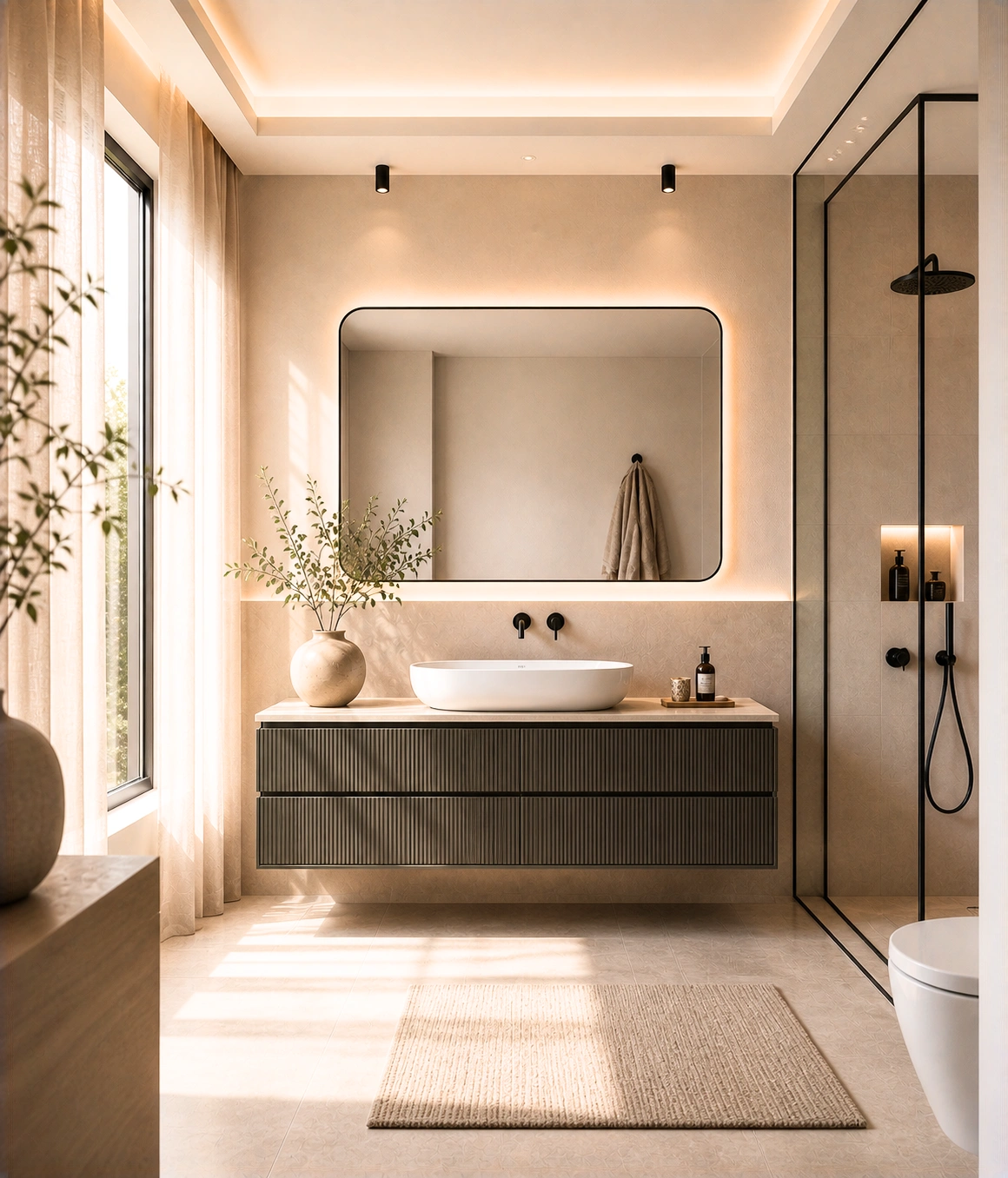
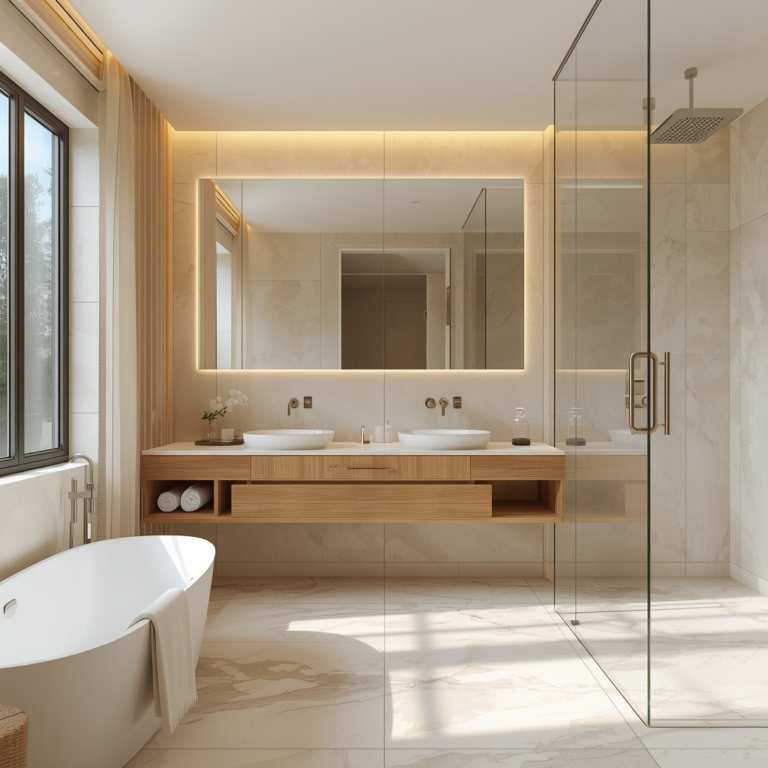
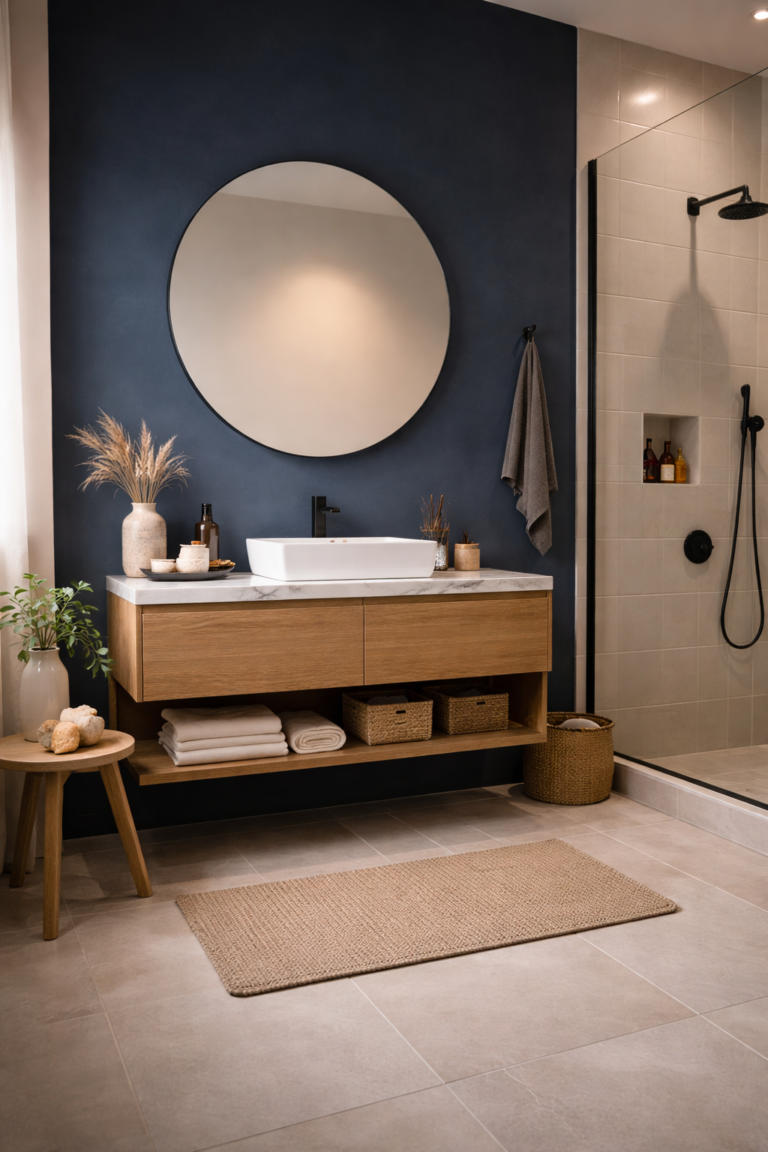
A floating wooden vanity sets the foundation for Japandi design by combining warmth with simplicity.Choose oak or walnut with flat panels and no visible handles.This keeps the look clean and avoids unnecessary visual noise.The floating design also creates a sense of openness.
It makes even small bathrooms feel lighter and more spacious.Pair it with a simple stone or ceramic sink in a neutral tone.Avoid over-accessorizing the countertop with multiple items.One small object or plant is more than enough.The focus should stay on material quality, not decoration.Restraint is what makes the space feel refined.
Neutral Earth Tone Palette
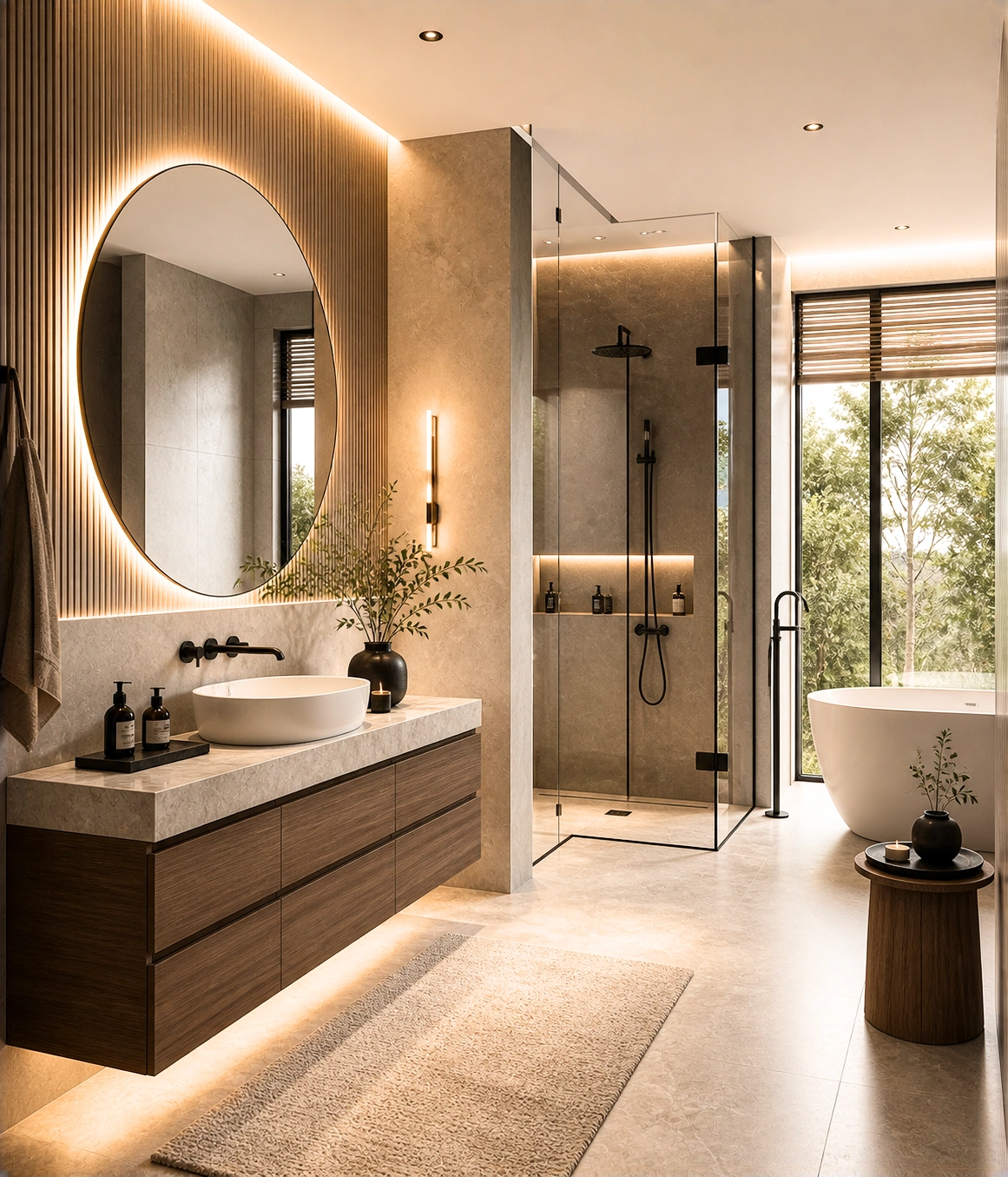
Japandi bathrooms rely on earthy tones to create a calming environment.Beige, taupe, warm gray, and off-white are ideal choices.Bright white alone feels too harsh and sterile.Adding warmth makes the space feel more inviting.These tones help reduce visual stress instantly.Layer similar shades instead of creating strong contrasts.Use slightly darker tones for cabinetry or flooring.This adds depth without making the space busy.The goal is harmony, not dramatic color differences.Everything should feel soft and balanced.
Freestanding Soaking Tub Focus
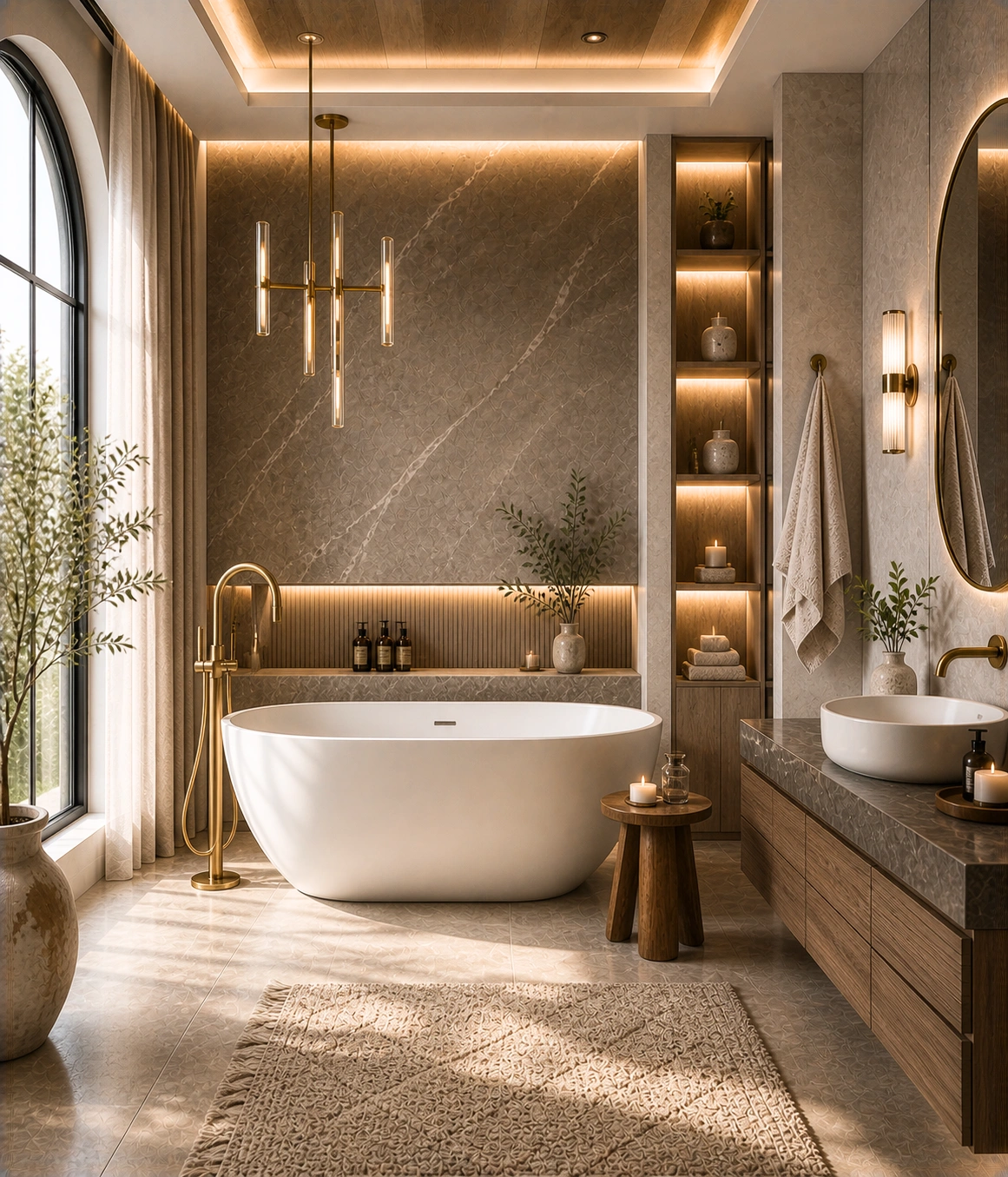
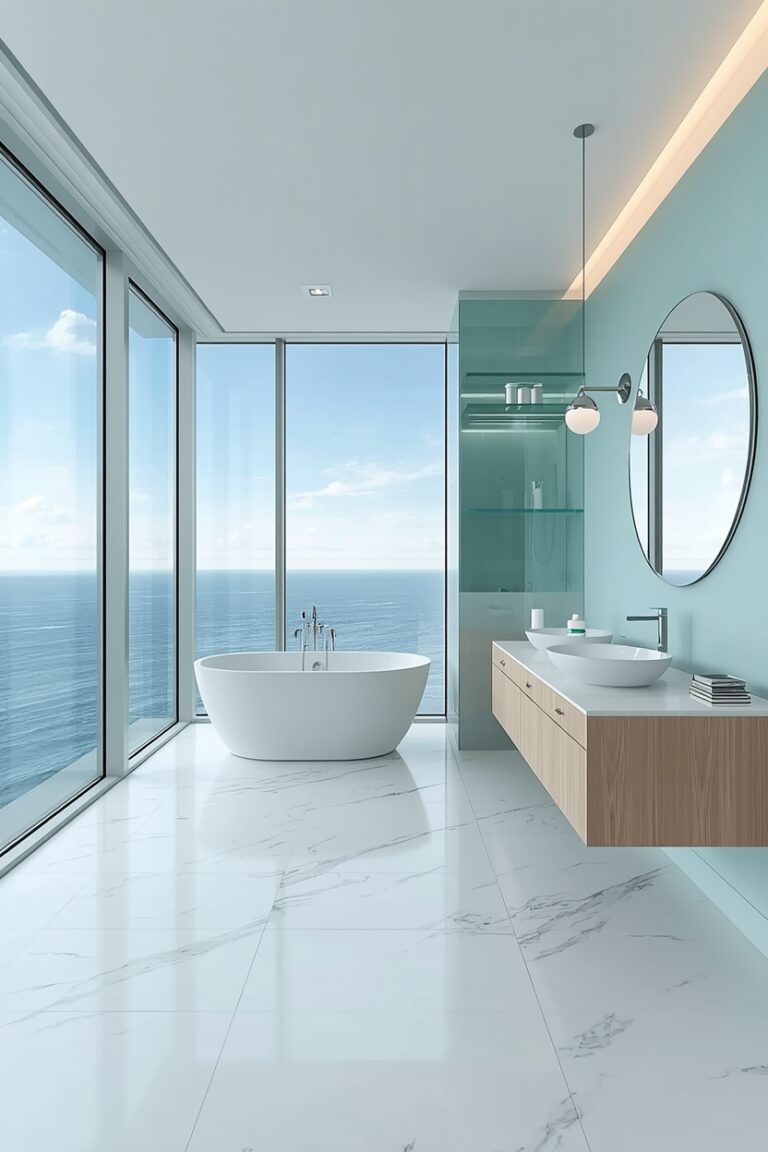
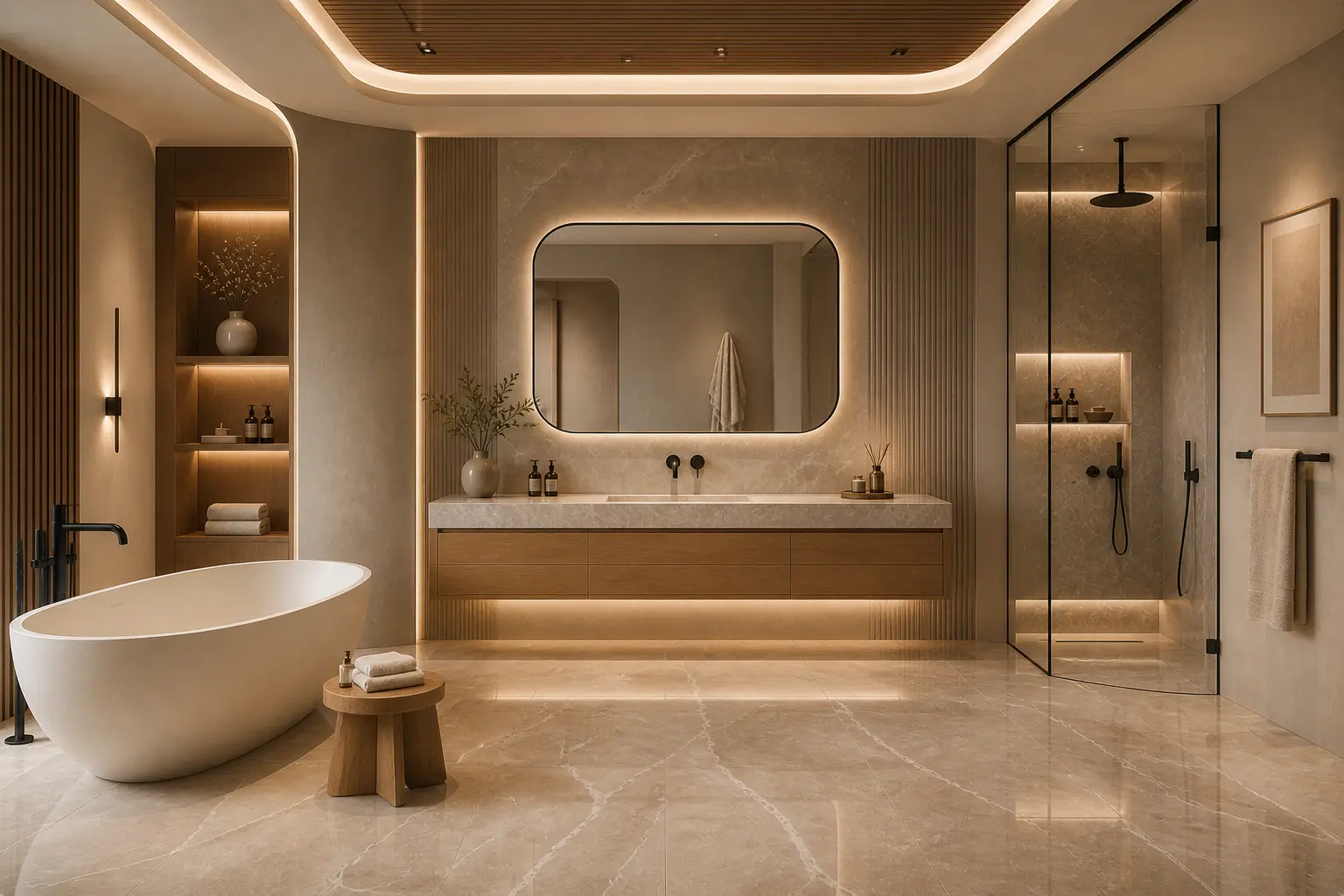
A freestanding tub becomes the focal point when everything else stays minimal.Avoid placing too many elements around it.Let the tub’s shape stand out on its own.This creates a calm and uncluttered visual impact.Simplicity is what gives it presence.Position the tub near natural light if possible.Add a small wooden stool or tray beside it.Do not overload the space with decor pieces.The area should feel quiet and open.Overstyling ruins the entire effect.
Stone and Wood Combination
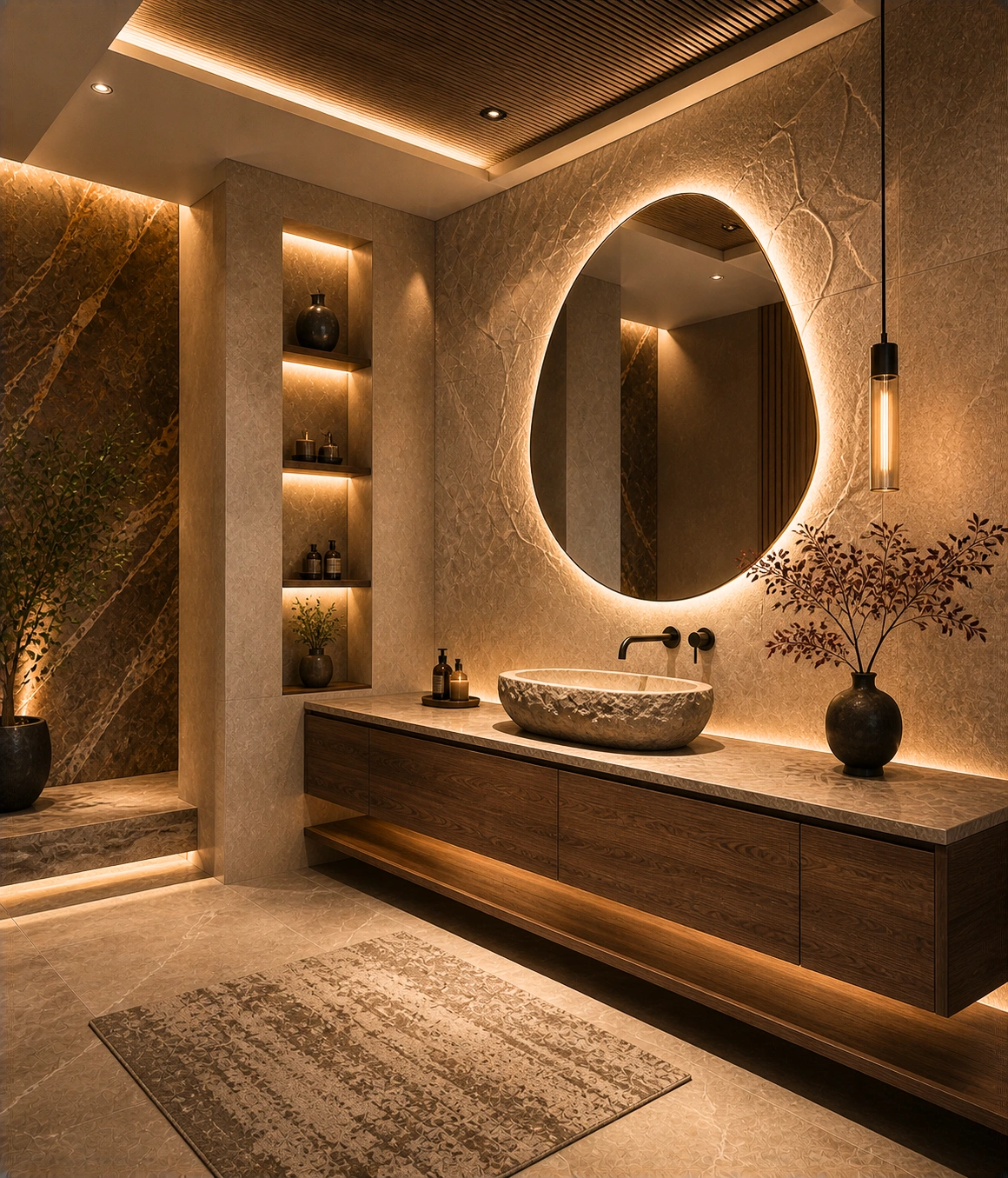
Combining stone and wood creates a strong natural contrast.Wood adds warmth while stone brings texture and grounding.This pairing defines the Japandi aesthetic clearly.Use stone for sinks or accent walls.Keep the palette neutral and cohesive.Avoid using both materials excessively across every surface.Too much variation creates visual clutter.Instead, highlight one or two key areas.Let each material stand out naturally.Balance matters more than quantity.
Minimal Open Shelving
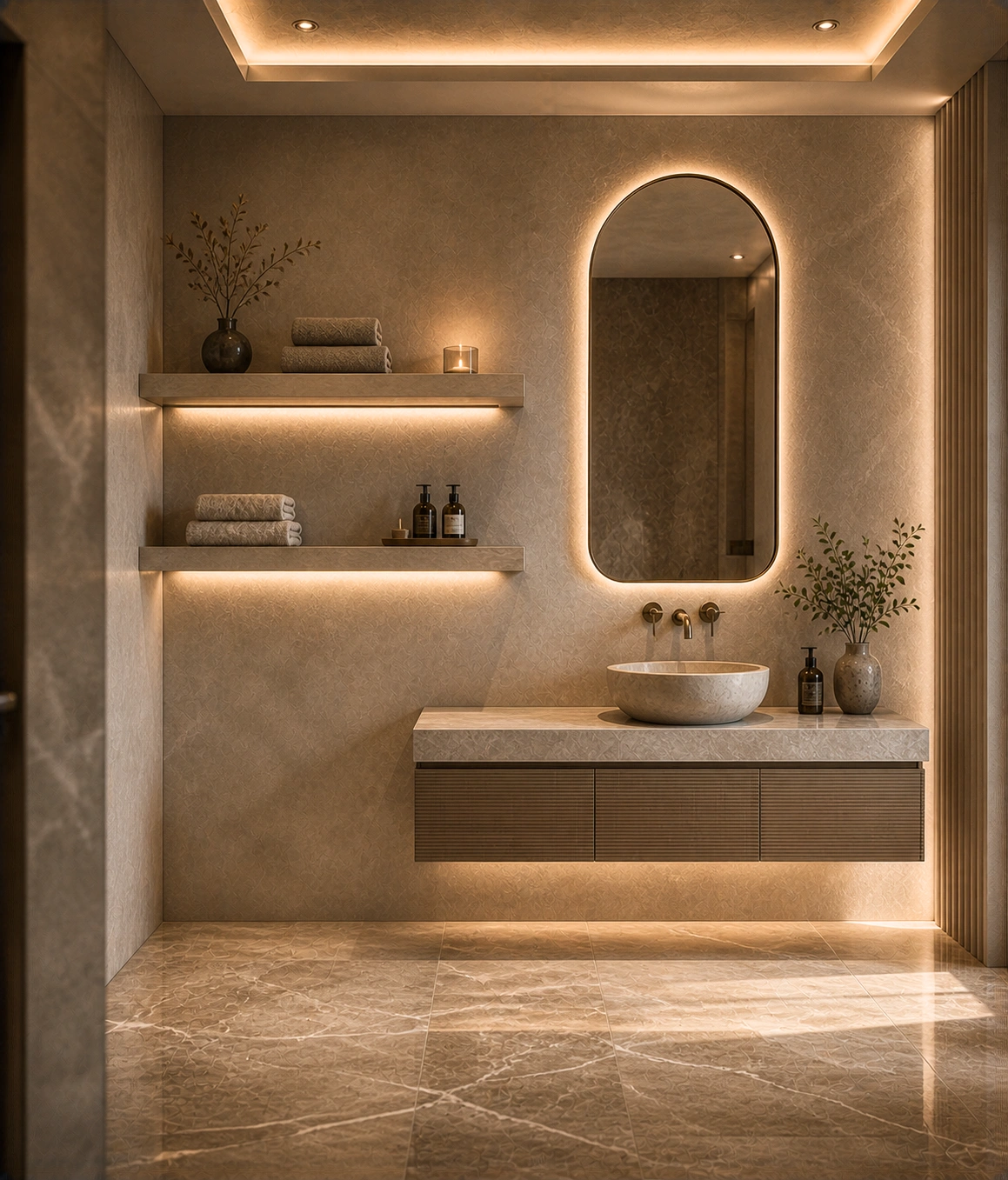
Open shelving works only if you maintain strict discipline.Limit shelves to two or three at most.Use them for neatly folded towels or essentials.Too many items will instantly look messy.Minimalism requires control, not just design.Keep spacing clean and uncluttered between objects.Avoid mixing too many textures or colors.Stick to neutral tones for consistency.Each shelf should feel intentional and calm.If it looks crowded, you’ve already gone too far.
Matte Black or Brushed Fixtu
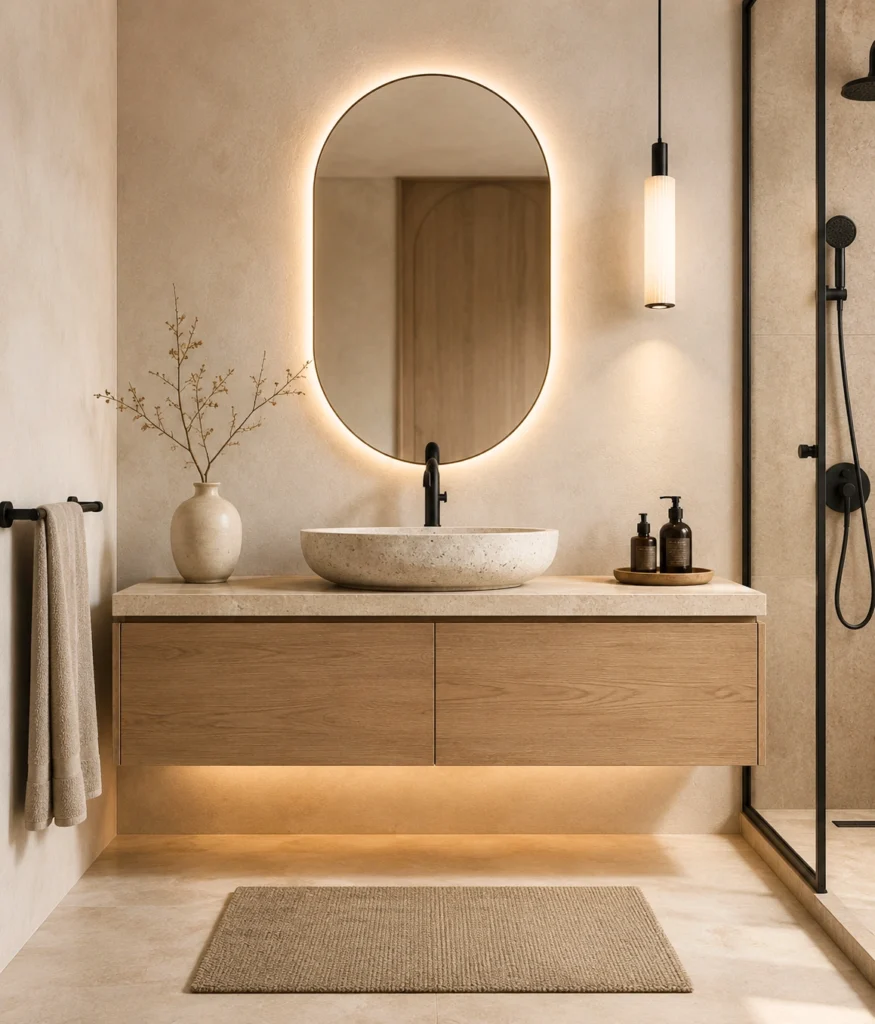
Fixtures have a strong impact on the overall look.Cheap shiny chrome often feels outdated and distracting.Matte black or brushed finishes add subtle contrast.They enhance the design without becoming loud.This keeps the aesthetic grounded and modern.Choose simple shapes with clean lines.Avoid overly decorative or bulky designs.Consistency across all fixtures is important.Mixing too many finishes breaks the harmony.Keep everything aligned with the minimal theme.
Soft Lighting Layers
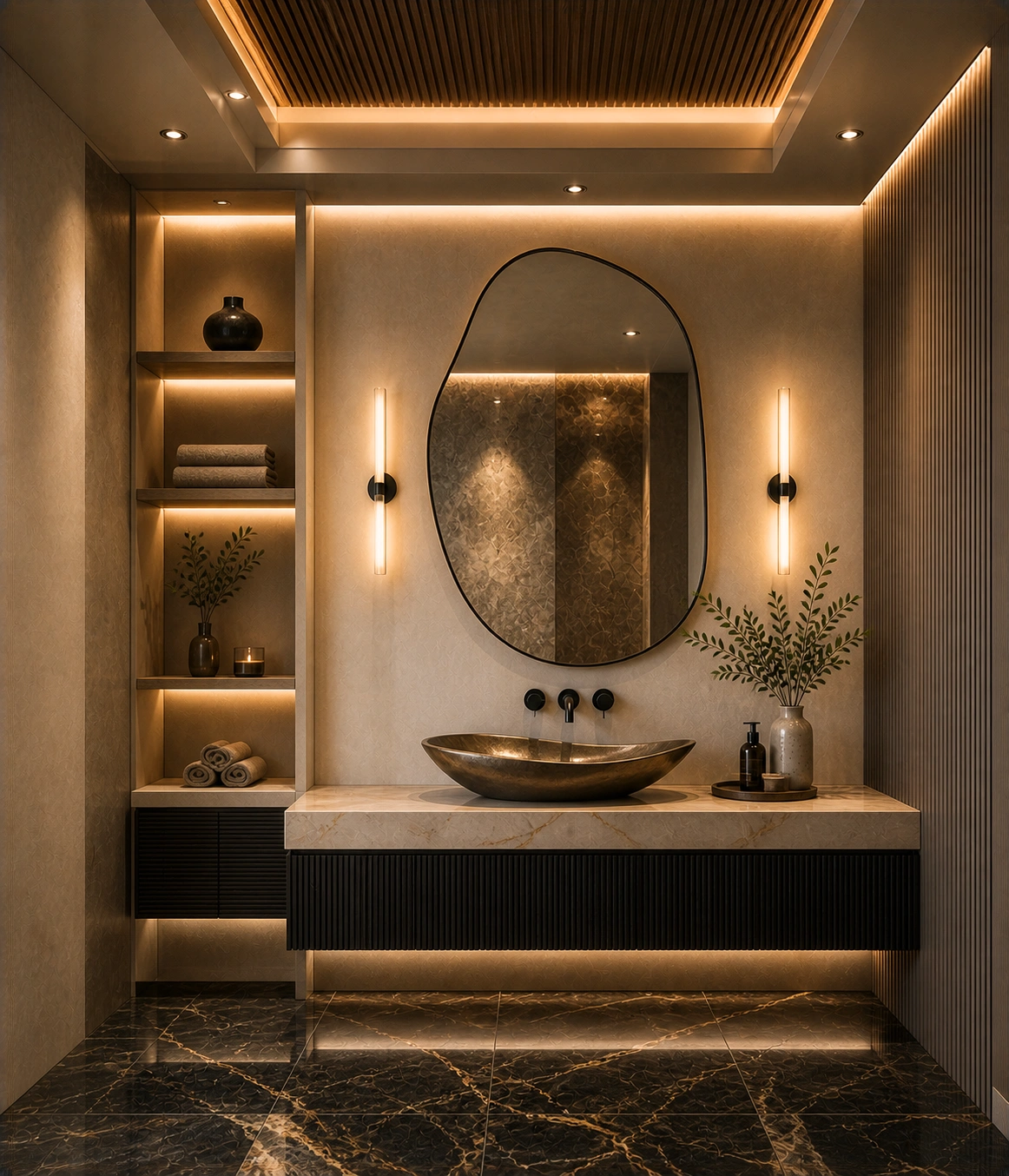
Lighting defines the mood more than any material.Harsh overhead lights destroy the calming effect.Japandi spaces rely on soft, diffused lighting.Warm tones create a relaxed atmosphere instantly.This makes the bathroom feel more like a retreat.Use wall sconces or hidden LED lighting.Avoid exposing strong direct light sources.Layer lighting for depth and softness.Every light should feel gentle, not sharp.The goal is comfort, not brightness.
Frameless Mirror Simplicity
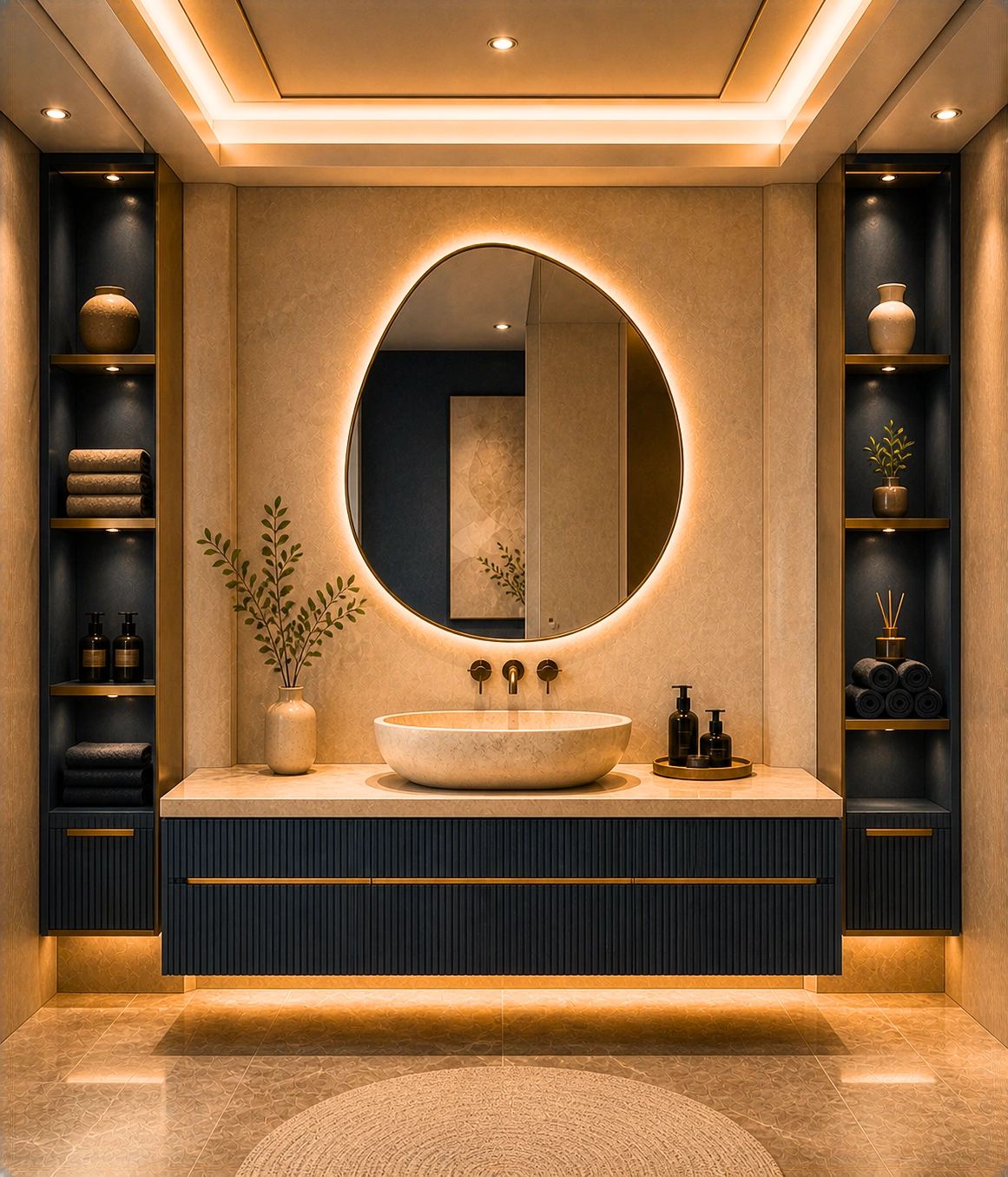
Mirrors should remain simple and unobtrusive.Frameless or thin-frame designs work best.Round shapes soften the overall look.This helps balance the straight lines in the space.The result feels clean and modern.Avoid heavy or decorative mirror frames.They add unnecessary visual weight.Keep proportions aligned with the vanity.The mirror should blend, not dominate.Simplicity keeps the focus balanced.
Indoor Plants for Balance
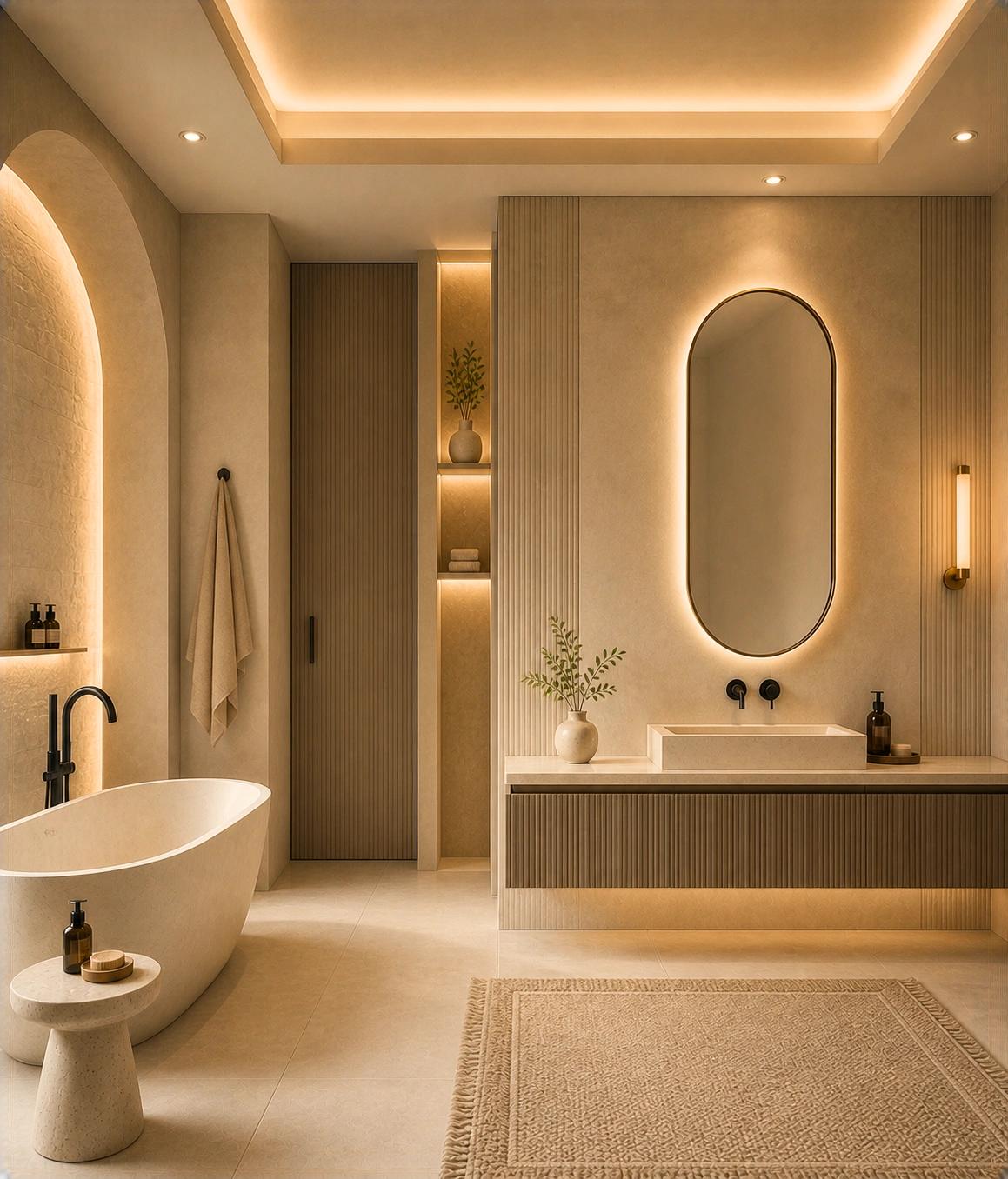
Plants introduce life into a neutral environment.They soften the minimal structure of the design.Choose small, simple greenery like ferns.Avoid large or overly dramatic plants.Subtlety is key in Japandi spaces.Limit the number of plants to one or two.Too many will break the calm atmosphere.Place them where natural light is available.Keep pots neutral and minimal.The goal is balance, not decoration.
Asymmetrical Balance Layout
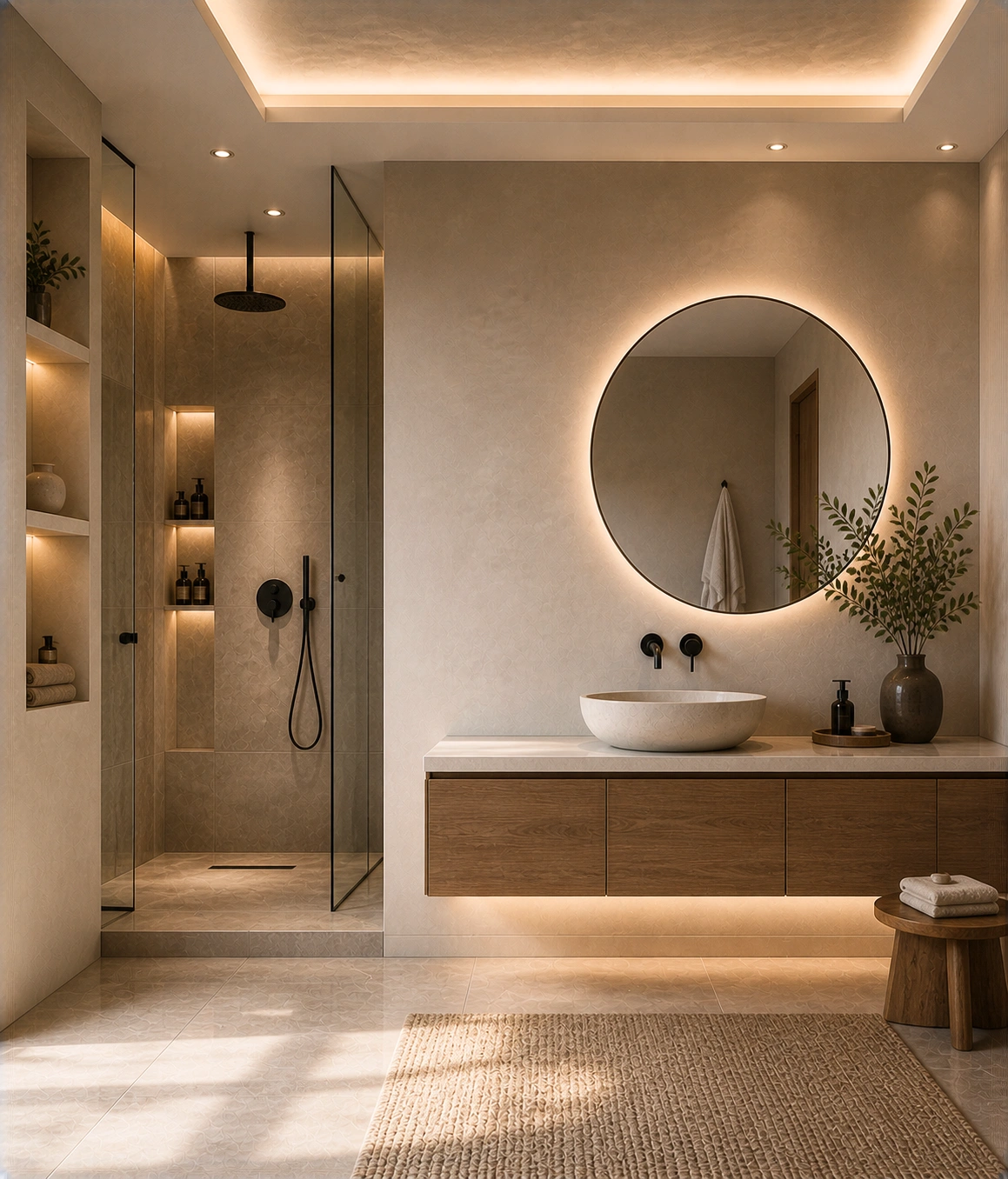
Perfect symmetry often feels staged and predictable.Japandi design leans toward natural, imperfect balance.Offset mirrors or lighting slightly for a relaxed feel.This creates a more organic and less rigid layout.The space feels intentional, not forced.Balance is still important, just not identical placement.Distribute visual weight across the room carefully.Avoid overcrowding one side with heavy elements.Keep spacing open and breathable.Subtle imbalance creates a more natural calm.
Wooden Bath Accessories
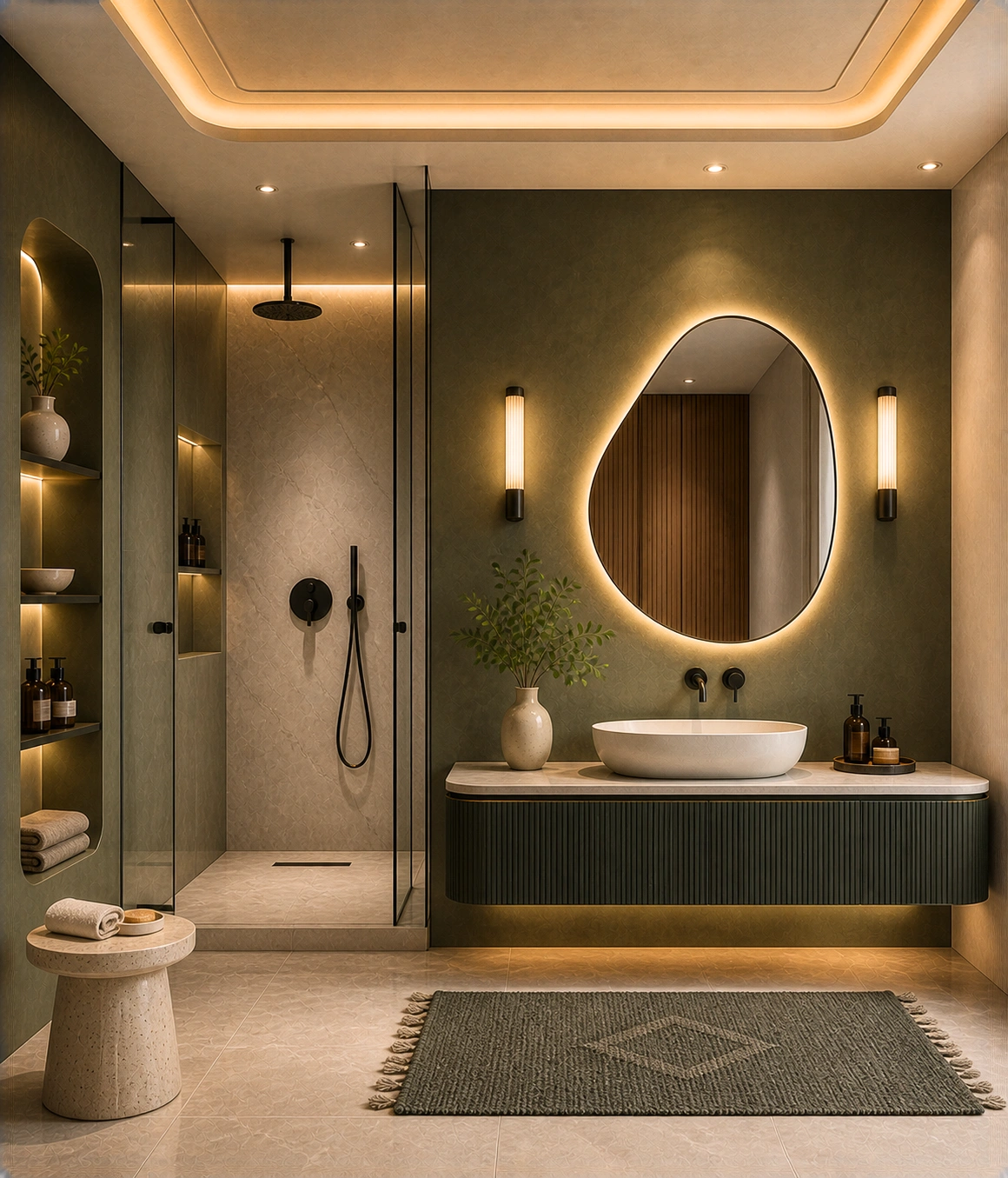
Accessories should match the core material palette.Wood works best for adding warmth and consistency.Use a small stool, tray, or bath caddy.Avoid plastic or glossy finishes completely.They break the natural aesthetic instantly.Keep accessories functional, not decorative.Every item should serve a purpose.Limit the number to avoid visual clutter.Simple shapes work better than complex designs.Consistency keeps the space grounded.
Large Window with Privacy
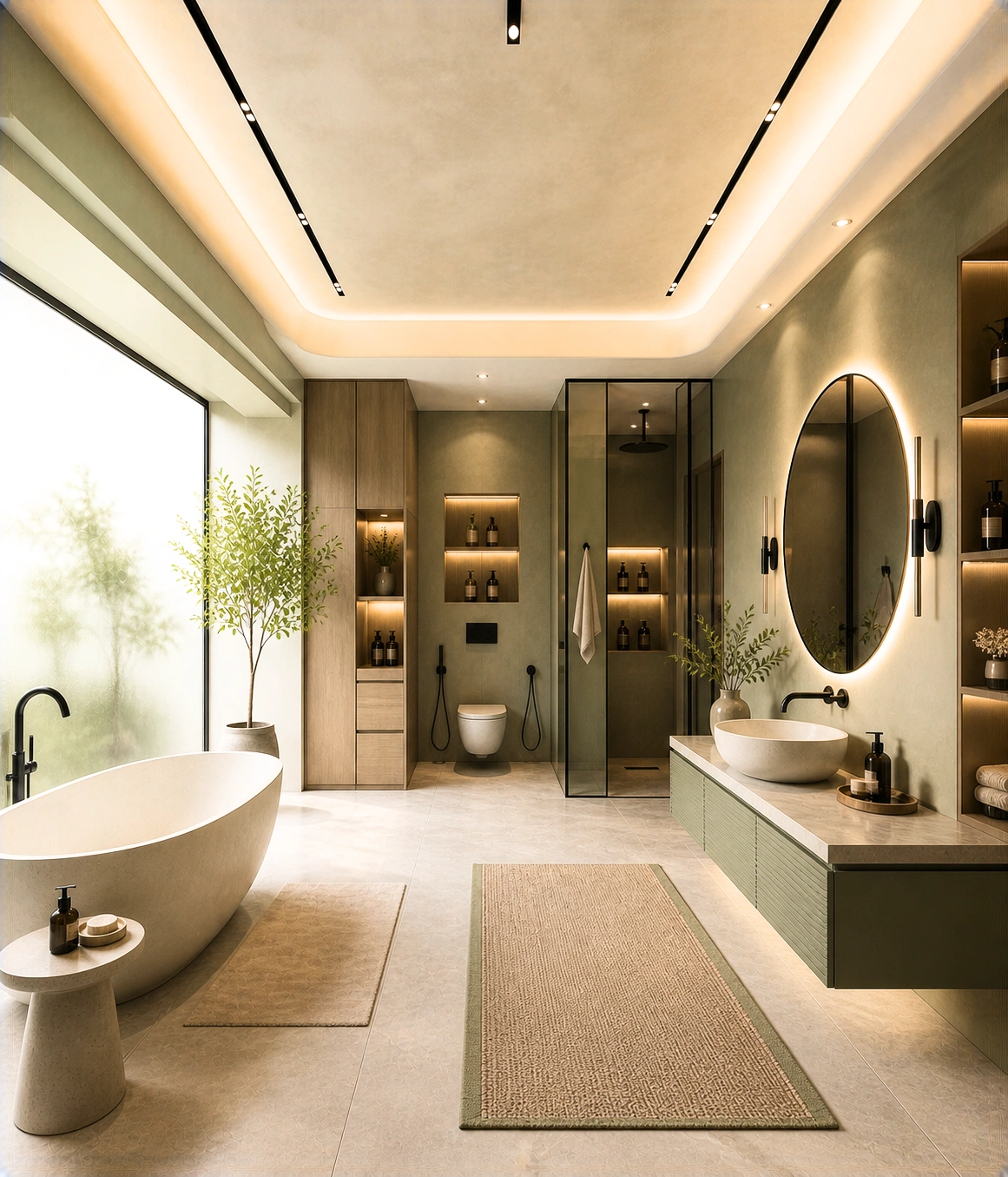
Natural light is essential for a Japandi bathroom.Large windows make the space feel open and calm.They reduce the need for artificial lighting.Light enhances the natural textures in the room.It creates a soft and relaxing atmosphere.Use frosted glass or sheer coverings for privacy.Avoid heavy curtains or dark blinds.They block light and feel visually heavy.Keep window treatments minimal and subtle.The goal is openness without exposure.
Seamless Flooring Design
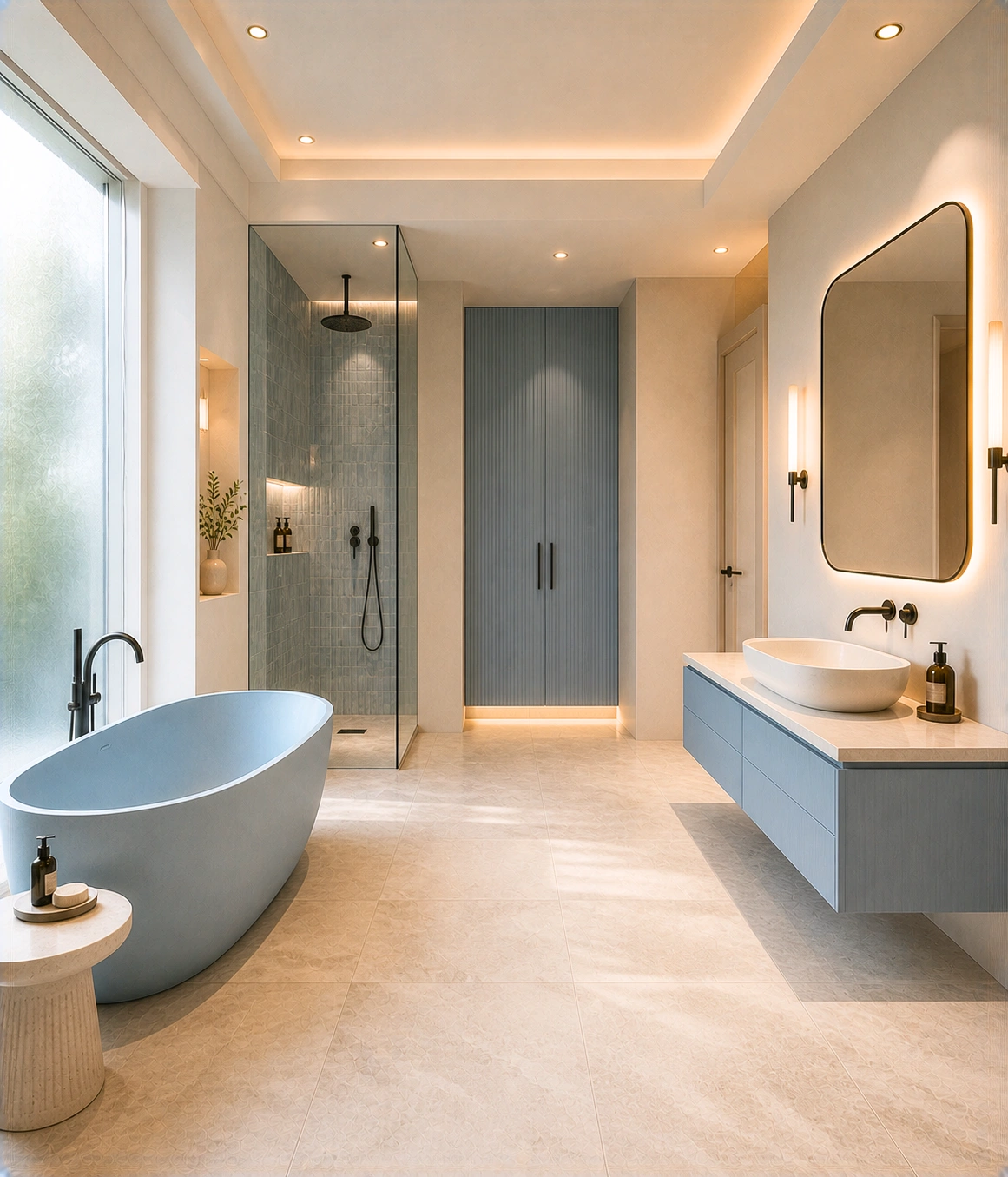
Too many flooring changes create visual breaks.Japandi design favors a continuous, seamless look.Use the same material across the space if possible.This makes the room feel larger and calmer.Flow is more important than variety.Choose natural materials like stone or matte tiles.Keep colors within a neutral range.Avoid bold patterns or high contrast designs.Consistency creates visual harmony.A smooth transition enhances simplicity.
Minimal Decor Philosophy
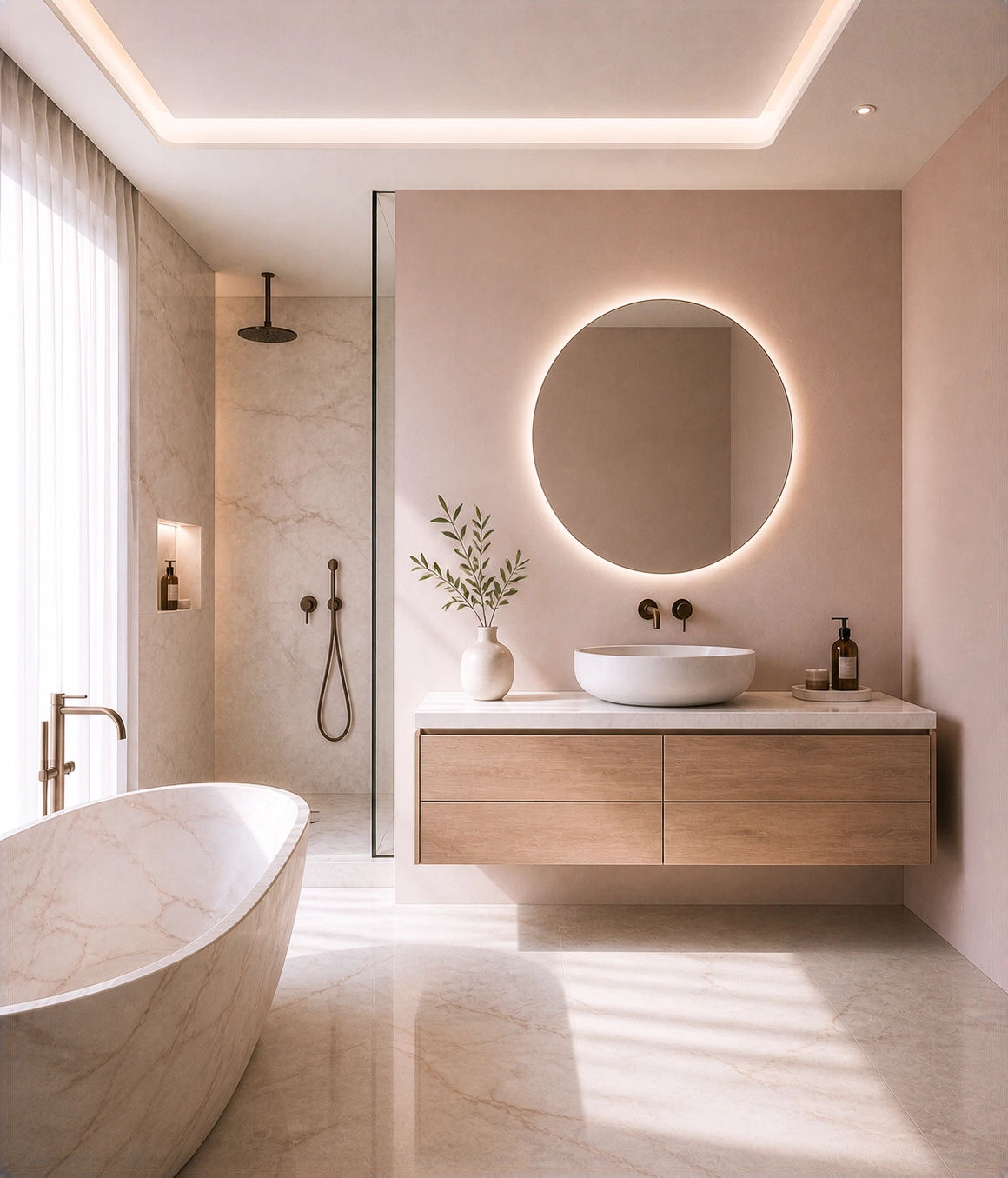
Japandi is about removing, not adding.Most bathrooms suffer from too much decoration.Clear surfaces create a sense of calm instantly.Let materials and structure define the space.Less truly becomes more here.Resist the urge to fill empty areas.Empty space is part of the design.Focus on quality over quantity.Each element should feel intentional.Clutter destroys the entire aesthetic.
Soft Contrast Elements
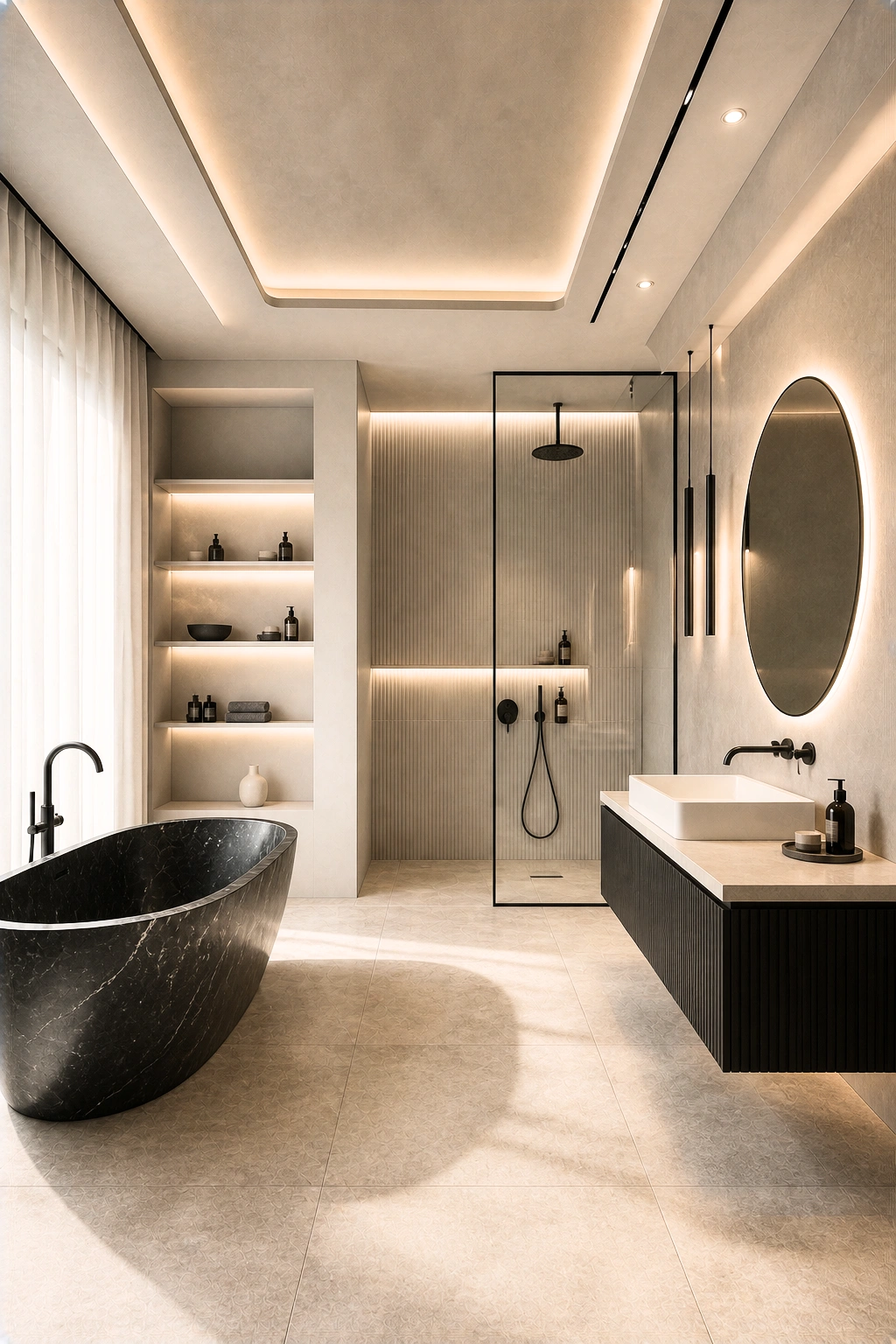
Contrast should feel subtle, not aggressive.Avoid stark black and white combinations.Use tonal differences within the same palette.This keeps the space visually calm.Soft contrast adds depth without tension.Layer light and slightly darker shades together.Keep transitions smooth and natural.Avoid sharp visual breaks between surfaces.Harmony matters more than drama.The effect should feel effortless.
Built-In Wall Niches
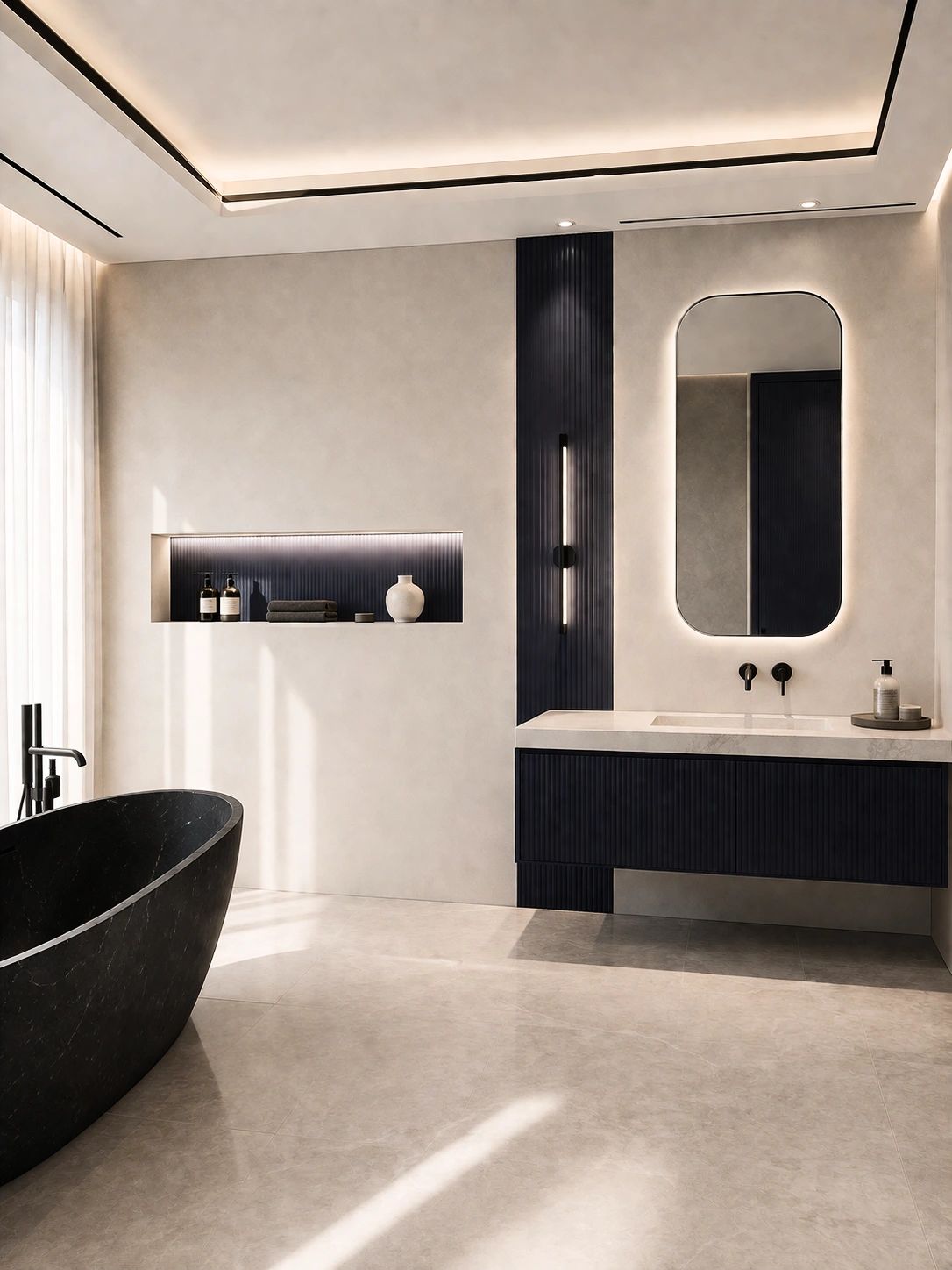
Wall niches replace bulky storage units.They keep essentials within reach without clutter.This maintains clean lines across the space.Built-in solutions feel more intentional.They improve both form and function.Keep niches aligned with wall finishes.Avoid adding contrasting borders or frames.Store only necessary items inside.Too many products will look messy.Simplicity keeps the design intact.
Organic Shapes and Curves
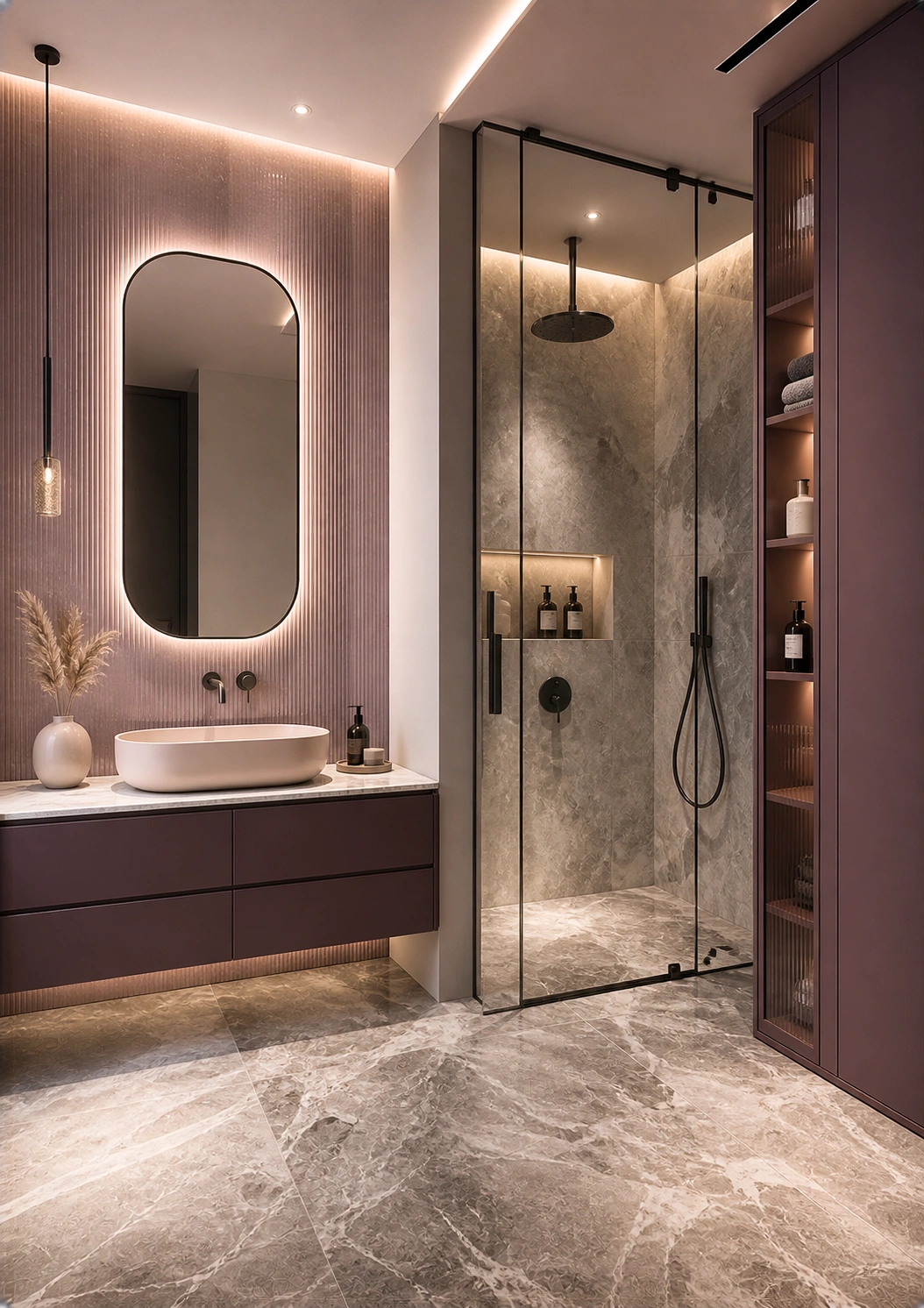
Straight lines dominate most modern bathrooms.Adding curves softens the overall look.Organic shapes feel more natural and calming.They reduce the harshness of rigid structures.This creates a balanced visual flow.Use rounded sinks, mirrors, or edges.Avoid overly complex or exaggerated forms.Keep curves subtle and functional.They should blend into the design.Gentle shapes enhance comfort.
Quiet Luxury Materials
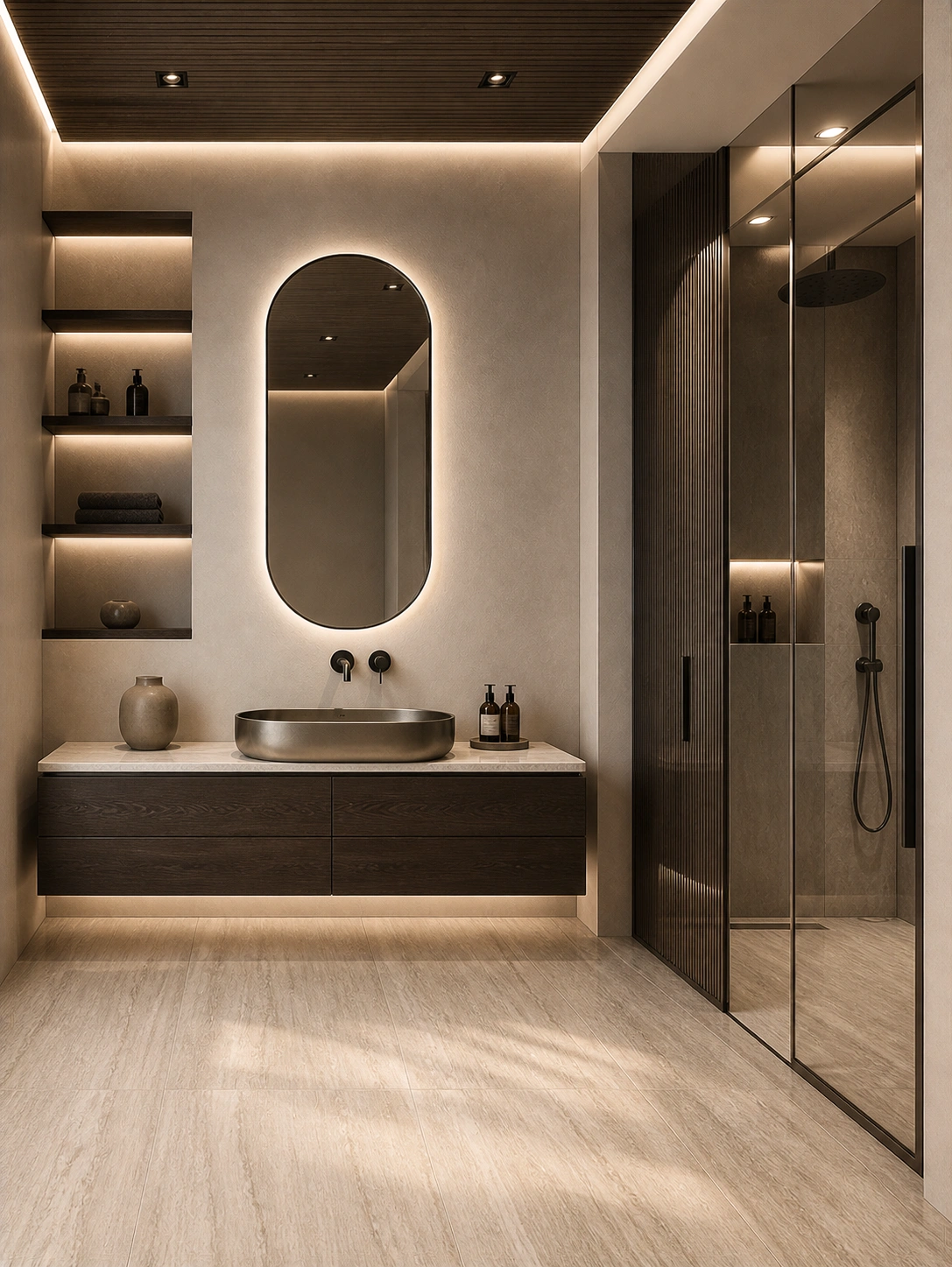
Japandi luxury is understated, not flashy.High-quality materials speak for themselves.Avoid glossy finishes or bold patterns.Stick to stone, wood, and matte surfaces.The focus is on texture and authenticity.Invest in fewer but better materials.Cheap finishes ruin the entire look.Keep everything cohesive and muted.Luxury should feel subtle and calm.Refinement comes from restraint.
Spa-Like Atmosphere Finish
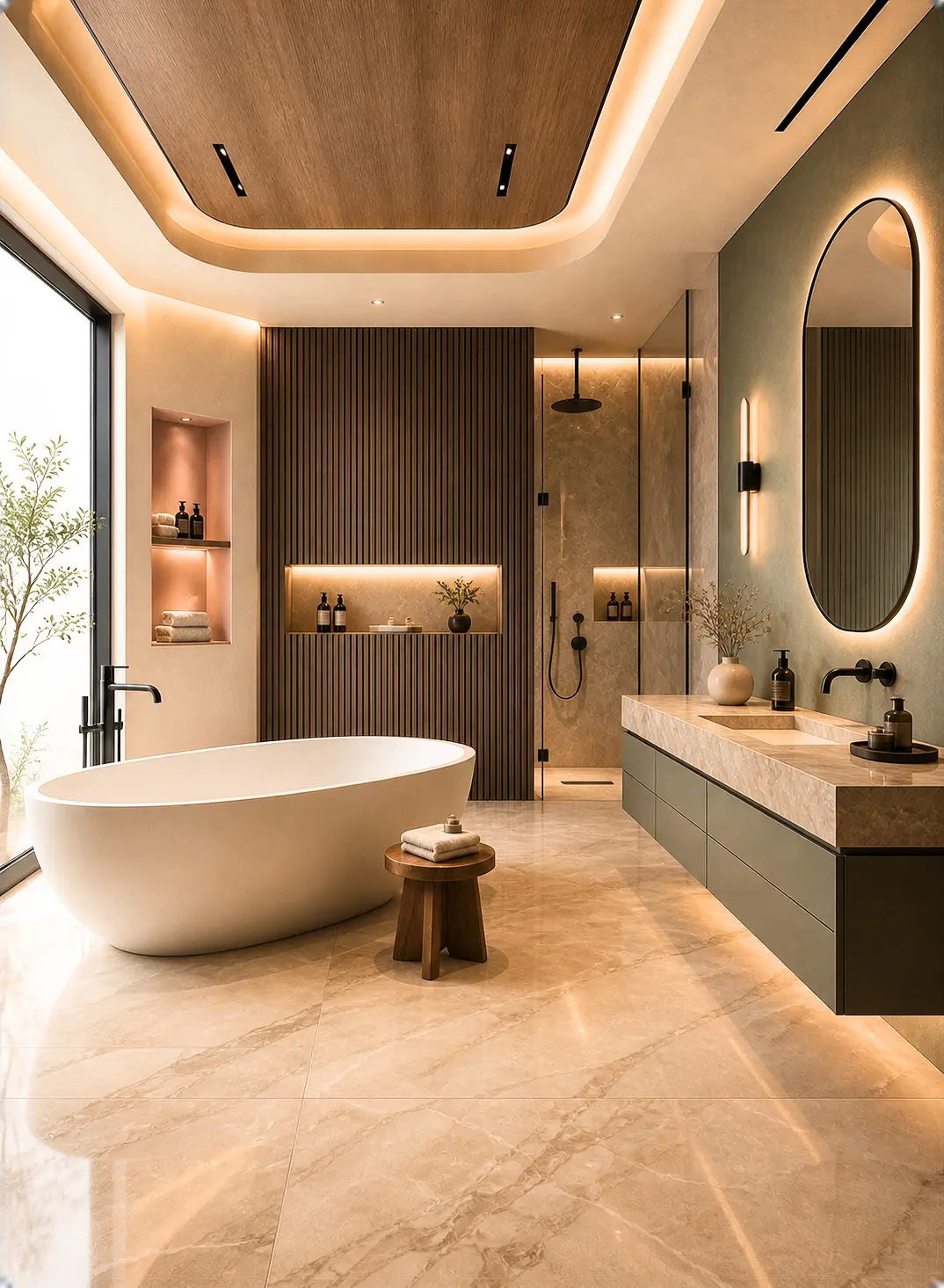
The final goal is a spa-like experience.Every element should contribute to calmness.Remove anything that feels distracting.The space should feel quiet and open.Relaxation is the core purpose.Use warm lighting and natural textures.Keep scents and materials subtle.Avoid visual overload at all costs.Everything should feel intentional and slow.If it feels busy, you’ve done too much.